The National Hurricane Center is narrowing the forecast path of Hurricane Isaias, while strongly emphasizing the importance of preparation for a dangerous storm impact in the western Florida panhandle region and Mississippi delta. Everyone in the area should pay close attention, inland flooding will be a concern.
Isaias is anticipated to intensify just prior to landfall over warm water overnight tonight and start moving forward very quickly. This can push the wind driven water very severely into the northern Florida panhandle region and coastal area. The storm surge can be very dangerous. Coastal evacuations are beginning and all preparation should be rushed to completion.
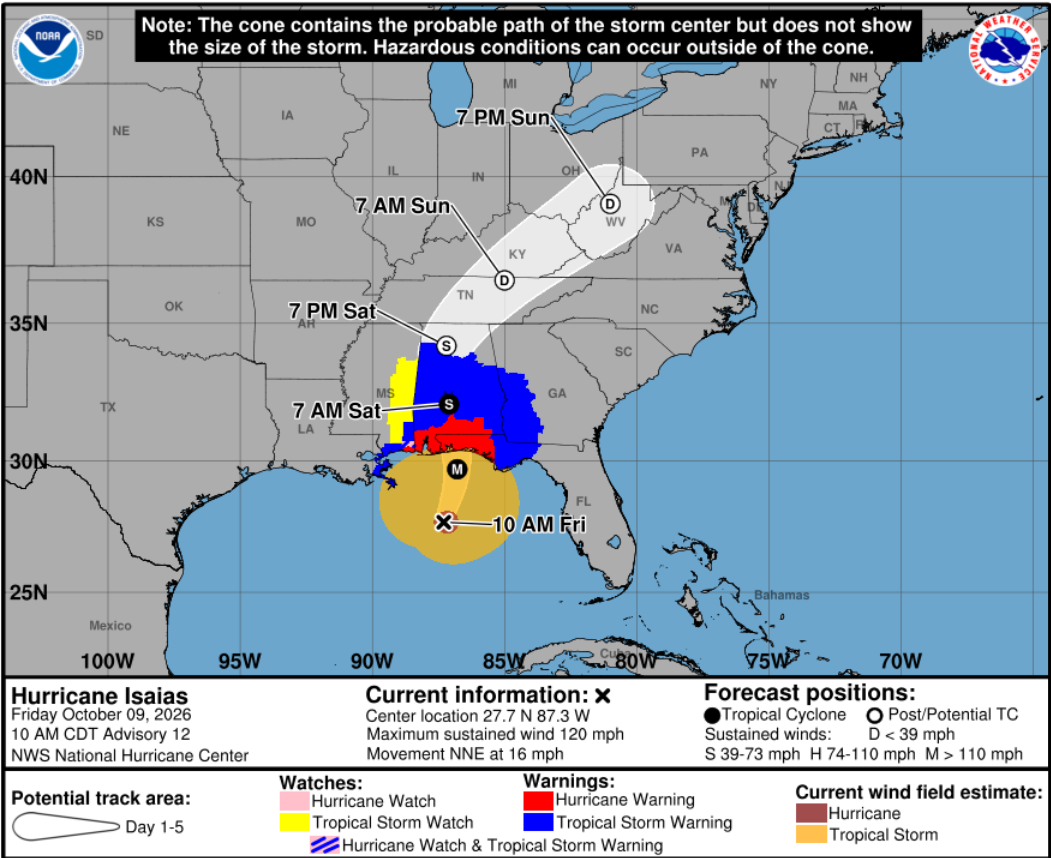
[National Hurricane Center] – At 1000 AM CDT (1500 UTC), the center of Hurricane Isaias was located near latitude 27.7 North, longitude 87.3 West. Isaias is moving toward the north-northeast near 16 mph (26 km/h). This motion is expected to continue through this evening, followed by a northward motion on Saturday. On the forecast track, Isaias is expected to approach the U.S. northern Gulf Coast this afternoon and make landfall within the warning area this evening.
Maximum sustained winds are near 120 mph (195 km/h) with higher gusts. Isaias is a category 3 hurricane on the Saffir-Simpson Hurricane Wind Scale. Fluctuations in intensity are possible through this afternoon, but Isaias is expected to be at or near major hurricane strength when it makes landfall this evening. Weakening is expected beginning tonight after Isaias makes landfall, and the storm is likely to become post-tropical by late Saturday.
Hurricane-force winds extend outward up to 35 miles (55 km) from the center and tropical-storm-force winds extend outward up to 205 miles (335 km). (more)
Communication is important. Update your friends and family contact list. Stay in touch with family and friends, let them know your plans. Select a single point of contact for communication from you that all others can then contact for updates if needed.
CTH Recommendations for solid Prep ARE HERE
The buzzsaw for Isaias is approximately 70 miles at current conditions (35 miles from center). This is the area of greatest wind damage. Hurricanes spin counterclockwise. The coastal flooding will be most extreme on the right side of Isaias as the wind pushes the water toward the coastline.
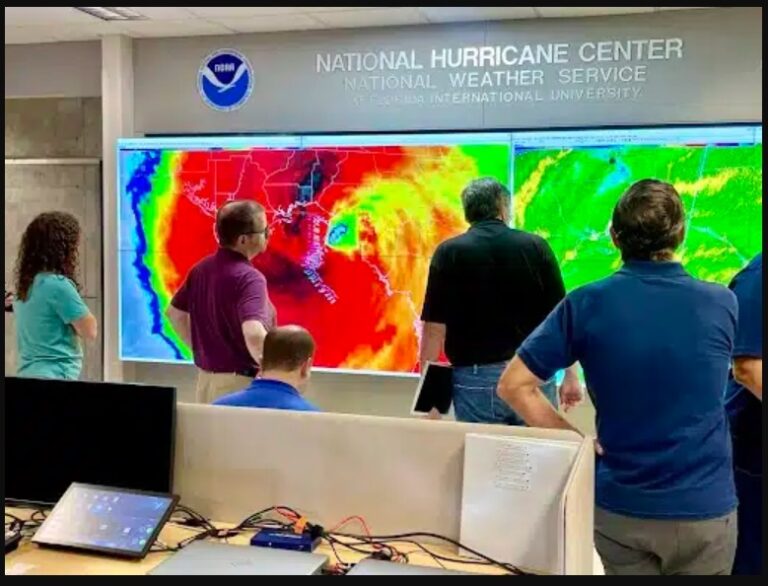 With the storm core at 70 miles, if the hurricane maintains traditional forward speed (16 to 20mph) the impact zone will feel the buzzsaw effect for approximately 4 hours. If you are in that 70-mile-wide area, those four hours can feel very long, nervewracking and very destabilizing.
If you are at/near the coast, in the zone of eyewall uncertainty, the time to get out is today. Don’t wait.
Take all mandatory evacuations seriously. If you are inland from the eyewall, prepare yourself for a long duration of extensive wind damage (4+ hrs) followed by an extended power outage and constant rain.
As many long-time readers will know, we do have a little bit more than average experience dealing with the aftermath of hurricanes. I am not an expert in the before part; you need to heed the local, very local, professionals who will guide you through any preparation and neighborhood specific guidelines for your immediate area.
But when it comes to the ‘after part’, well, as a long-time CERT recovery member perhaps I can guide you through the expectation and you might find some value. Consider this little word salad a buffet, absorb what might be of value pass over anything else.
When the winds reach around 45 to 60 mph generally the area will lose power. Don’t expect the power to be turned back on until it is safe.
Hurricanes can be frightening; downright scary. There’s nothing quite like going through a few to reset your outlook on just how Mother Nature can deliver a cleansing cycle to an entire geographic region.
Telephone and power poles, yes, even the concrete ones, can, and likely will, snap like toothpicks. There’s a sound when you are inside a hurricane that you can never forget. It ain’t a howl, it’s a roar. A damn scary roar that just won’t quit…. it will… eventually, but at the time you are hearing it, it doesn’t seem like it will ever end.
A constant, and pure rage of scary wind that doesn’t ebb and flow like normal wind and storms… hurricane wind just starts and stays, sometimes for hours. Relentless and damn scary…. it just won’t let up. And then, depending on her irrelevant opinion toward your insignificant presence, she stops.
Then silence. No birds. No frogs. No crickets. No sound.
Nature goes mute. It’s weird.
We have no idea how much ambient noise is around us, until it stops.
Oh, if she wants, she’ll keep dumping buckets on you as she wanders away. Buckets. Not pails, garbage can sized buckets.
After the scour, yup, nature too has a rinse cycle.
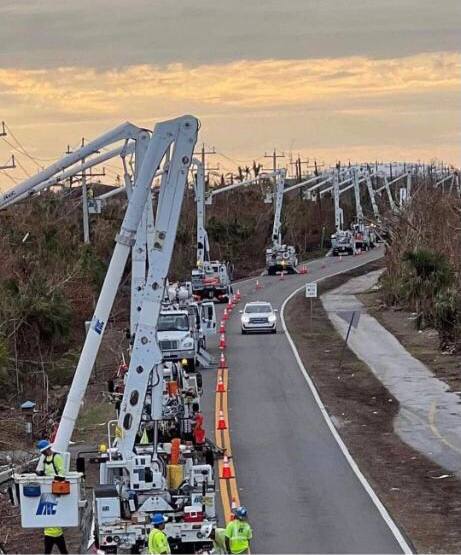 If your town, city or hamlet is not underwater, there will be convoys coming to construct a pre-planned electricity grid recovery process. Convoys from every city, town and state from the east-coast to the mid-west.
A glorious melding of dirty fingernails all arriving for the meet-up. Depending on your proximity to the bigger picture objectives at hand, you will cherish their arrival.
But first, there will be an assessment.
The convoys will stage at pre-determined locations using radios for communication. Street-by-street everything needs to be evaluated prior to thinking about beginning to rebuild a grid. Your patience within this process is needed; heck, it ain’t like you’ve got a choice in the matter…. so just stay positive.
Meanwhile, you might walk outside and find yourself a stranger in your neighborhood.
It will all be cattywampus.
Trees gone, crap everywhere, if you don’t need to travel, DON’T.
I mean CRAP e.v.e.r.y.w.h.e.r.e.
Stay away from power-lines.
Try to stay within your immediate neighborhood for the first 36-48 hours. Keep the roadways and main arteries clear for recovery workers, power companies and fuel trucks.
Be entirely prepared to be lost in your own neighborhood and town for days, weeks, and even months. Unknown to you – your subconscious mind is like a human GPS mapping system. When that raging Helene takes away the subconscious landmarks, I guarantee you – you are gonna get lost, make wrong turns, miss the exit etc.
It’s kinda funny and weird at the same time.
 Your brain is wired to turn left at the big oak next to the Church, and the road to your house is likely two streets past the 7-11 or Circle-k. You don’t even notice that’s how you travel around town; that’s just your brain working – it is what it is.
Well, now the big oak is gone; so too is the Circle-K and 7-11 signs. Like I said, everything is cattywampus. Your brain-memory will need to reboot and rewire. In the interim, you’re going to get lost… don’t get frustrated.
No street signs. Likely no stop signs. No traffic lights.
Remember, when it is safe to drive, every single intersection must be treated like a four-way stop…. and YOU ARE GOING TO HAVE TO PAY ATTENTION. Even the major intersections.
You’ll need to override your brain tendency to use memory in transit. You’ll need to pay close attention and watch for those who are not paying close attention. Travel sparingly, it’s just safer.
Check on your-self first, then your neighbors. It doesn’t matter if you’ve never said a word to the guy in the blue house before. It isn’t normalville now.
Break out of your box and check on the blue house down the street too. In the aftermath, there’s no class structure. Without power, the big fancy house on the corner with a pool is just a bigger mess. Everyone is equally a mess.
The first responders in your neighborhood are YOU.
You, the wife, your family, Mrs. Wilson next door; Joe down the street; Bob’s twin boys and the gal with the red car are all in this together. If you don’t ordinarily cotton to toxic masculinity, you will worship it in the aftermath of a hurricane. Git-r-done lives there.
Don’t stand around griping with a 40′ tree blocking the main road to your neighborhood. Figure out who’s got chainsaws, who knows how to correctly use them, and set about safely clearing the road. If every neighborhood starts clearing their own roadways, the recovery crews can then move in for the details.
Stage one recovery focuses on major arteries… then secondary… then neighborhood etc. It’s a process. Oh, and don’t get mad if your fancy mailbox is ploughed over by a focused front-end loader who is on a priority mission to clear a path. Just deal with it. Those same front-end loaders will also be removing feet of sand from coastal roads. Don’t go sightseeing… stay in your neighborhood.
For the first 36-48 hours, please try to stay close to home, in your neighborhood. Another reason to stay close to home is the sketchy people who can sometimes surface, looters etc. Staying close to home and having contact with your neighbors is just reasonable and safer.
Phase-1 recovery is necessarily, well, scruffy…. we’re just moving and managing the mess; not trying to clean it up yet. It’ll be ok. There are going to be roofing nails everywhere, and you will likely get multiple flat tires in the weeks after the hurricane.
After this storm half of the people living near the landfall location are going to fit into two categories, two types of people: (1) those with a new roof; or (2) those with a blue roof (tarp).
Keep a joyous heart filled with thankfulness; and if you can’t muster it, then just pretend. Don’t be a jerk. You will be surrounded by jerks…. elevate yourself. If you need to do a few minutes of cussing, take a walk. Keep your wits about you and stay calm.
Now, when the recovery teams arrive…. If you are on the road and there’s a convoy of utility trucks on the road, pull over. Treat power trucks and tanker trucks like ambulances and emergency vehicles. Pull over, give them a clear road and let them pass.
When everyone gets to work, if you see a lineman, pole-digger or crew say thanks. Just simple “thanks”. Wave at them and give them a thumb-up. No need to get unnecessarily familiar, a simple: “thank you for your help” will suffice. You know, ordinary people skills.
Many of these smaller crews will be sleeping in cots, or in their trucks while they are working never-ending shifts. Some will be staging at evacuation shelters, likely schools and such. The need to shelter people and recovery crews might also delay the re-opening of schools.
 Once you eventually start getting power back, if you see a crew in a restaurant, same thing applies… “thanks guys”.
Same goes for the tanker truckers. The convenience stores with gas pumps are part of the priority network. Those will get power before other locales without power. Fuel outlets are a priority. Fuel is the lifeblood of recovery. Hospitals, first responders, emergency facilities, fuel outlets, then comes commercial and residential.
Remember, this is important – YOU are the first responder for your neighborhood. Don’t quit. Recovery is a process. Depending on the scale of the impact zone, the process can take days, weeks and even months.
Take care of your family first; then friends and neighborhood, and generally make a conscious decision to be a part of any needed solution.
Pray together and be strong together. It might sound goofy to some, but don’t be bashful about being openly thankful in prayer.
It will be ok.
It might be a massive pain in the a**, but in the end, it’ll be ok.

Sundance you are so spot on and helpful with this advice.
“Keep a joyous heart filled with thankfulness. (And if you can’t muster it, just pretend).”
“If you need a few minutes cussing, take a walk. Keep your wits about you and stay calm.”
“It will be o.k.”
Sundance, you know trouble and how to get through it. Great advice, and a big smile.
Thankful, thankful, thankful.
Currently sitting on Clearwater Beach. We are being spared from this storm but are praying for friends in the crosshairs up in Pensacola.
eye-Zay-us go away…don’t come back another day.
🙏
Prayers up for those in the path,,,,,
May God bless and protect all who are in the path of the hurricane.
Where did this name come from? Never heard of it before.