Machiavelli said, “It must be remembered that there is nothing more difficult to plan, more doubtful of success, nor more dangerous to manage than a new system. For the initiator has the enmity of all who would profit by the preservation of the old institution and merely lukewarm defenders in those who gain by the new ones.” A prescient and oft repeated quote that is pertinent to the situation.
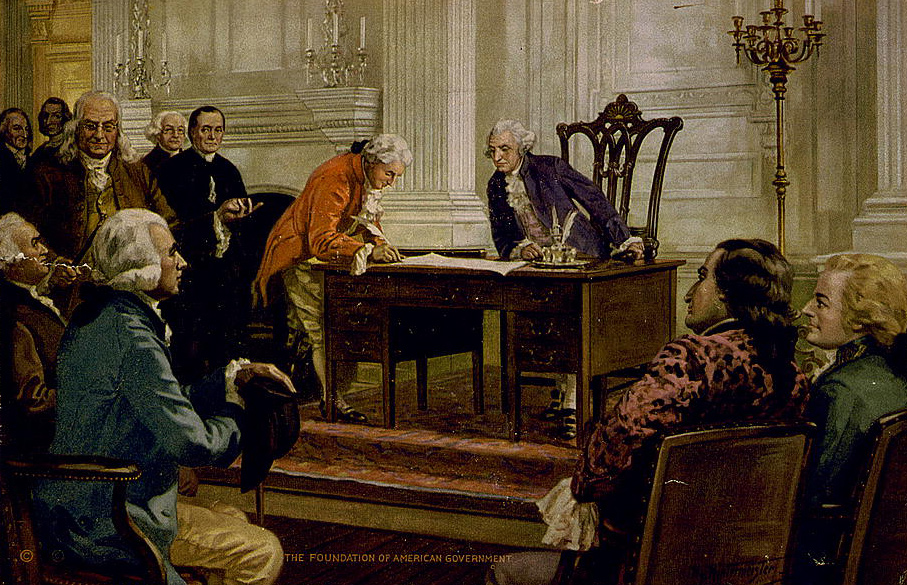
When our founders created the system of government for our constitutional republic, they built in layers of protection from federal control over the lives of people in the states. Over time those protections have been eroded as the federal bureaucracy has seized power. One of the biggest changes that led to the creation of the permanent political class was the 17th amendment.
Our founders created a system where Senators were appointed by the state legislatures. In this original system the senate was bound by obligation to look out for the best interests of their specific states. Under the ‘advise and consent‘ rules of Senate confirmation for executive branch appointments, the intent was to ensure the presidential appointee -who would now carry out regulatory activity- would not undermine the independent position of the states.
The nucleus of corruption amid every element of the federal institutions of government is the United States Senate. The U.S. Senate, also known as the “upper chamber,” is the single most powerful elected element in modern federal government.
The Intelligence Branch is the most powerful branch of government. However, the U.S. Senate is the most powerful assembly of federally elected officials. We pretend the IC branch doesn’t exist; that’s part of our problem. At least we admit the Senate exists.
All other elected federal corruption is dependent on a corrupt and ineffective Senate. If we correct the problems with the Senate and reconnect the representation within the chamber to the state-level legislative bodies, we will then see immediate change. However, there would be ZERO institutional allies in this effort.
 When the 17th amendment (direct voting for Senators) took the place of state appointments, the perspective of ‘advise and consent’ changed. The senate was now in the position of ensuring the presidential appointee did not undermine the power of the permanent bureaucracy, which is the root of power for the upper-chamber.
Senate committees, Homeland Security, Judiciary, Intelligence, Armed Services, Foreign Relations, etc. now consists of members who carry an imbalanced level of power within government. The senate now controls who will be in charge of executive branch agencies like the DOJ, DHS, FBI, CIA, ODNI, DoD, State Dept and NSA, from the position of their own power and control in Washington DC.
In essence, the 17th amendment flipped the intent of the constitution from protecting the individual states to protecting the federal government.
Almost every source of federal issue: ex. spending, intervention and foreign assistance, conflict with the states, burdensome regulation, surveillance and spying on American citizens, the two-tiered justice system and the erosion of liberty & individual rights (see COVID examples), can be sourced back to the problem created by the 17th amendment.
Because of the scale of their power, the Senate will not give up control easily; and every institution of society and government will actively work to block/stop We The People from taking back control of the upper chamber. Every entity from Wall Street to multinational corporations, big tech, banks, foreign governments and world organizations would align against us. When you truly understand the epicenter of the corruption, then you are able to see the tentacles extending from it.
It would be easy to say “repeal the 17th amendment;“ it is ‘another kettle of fish’ entirely to walk through the process to make that happen. Yes, ultimately, we do need a full repeal of the 17th amendment and return the selection of the senators from each state with a nomination and appointment process within the state legislature. [Common Explainer Here]
Seventeenth Amendment- “The Senate of the United States shall be composed of two Senators from each State, elected by the people thereof, for six years; and each Senator shall have one vote. The electors in each State shall have the qualifications requisite for electors of the most numerous branch of the State legislatures.
When vacancies happen in the representation of any State in the Senate, the executive authority of such State shall issue writs of election to fill such vacancies: Provided, That the legislature of any State may empower the executive thereof to make temporary appointments until the people fill the vacancies by election as the legislature may direct.” (link)
 Prior to the 17th amendment, there was significant state level corruption as business interests and senate candidates worked in power groups with party officials to attain the position. Politicians seeking Senate seats began campaigning for state legislative candidates in order to assemble support.
The state legislative races then became a process of influence amid powerful interests seeking to support their Senate candidate. Get the right people in the State legislature and you can get the Senator appointed.
Those state-level entities, bankers, wealthy people of influence, later became the permanent K-Street lobbying groups once the 17th amendment was ratified. In essence, they just shifted the location of their influence operation from the state to an office in Washington DC. [Those same power groups, albeit much larger, now write the physical legislation we see in congress.] Additionally, prior to the 17th amendment, there were issues of vacancies in federal senate seats as state legislatures could not agree on an individual Senator.
The biggest issue following the passage of the 17th amendment became Senators who were no longer representing the interests of their state. Instead, they were representing the interests of the power elite groups who were helping them fund the mechanisms of their re-election efforts.
A Senator only needs to run for re-election every six years. The 17th amendment is the only amendment that changed the structure of the congress as it was written by the founders.
Over time, the Senate chamber itself began using their advice and consent authority to control the executive and judicial branch. The origination of a nomination now holds the question: “Can this person pass the Senate confirmation process?” The Senate now abuses this power to ensure no one challenges them. Additionally, the Senate began using their oversight capacity to control elements within the executive branch and judicial branch. The full scope of that issue in modern form is OUTLINED HERE – which is the cornerstone of the Intelligence Branch of Government.
If we can repeal the 17th amendment and return the selection to the state legislature, you can see where the background work of Tactical Civics and Extreme Federalism begin to take on importance. [NOTE: Within the repeal effort we would need to include a recall process for states to reach out and yank back their Senator if they go astray; the ability to recall was missing in the original construct of the framers; it would need to be added.]
 ◊ PATH ONE is the primary platform of the presidential candidate…. a visible and emphasized mandate that includes: “vote me into office and you are voting to repeal the 17th amendment “. This specific election issue would need to be the #1 priority of the candidate and spoken at every event.
This approach gives presidential candidate Donald Trump the mandate to demand congress to act if he won the 2024 election. We need a warrior of epic strength, resolve and fortitude. We need Donald Trump.
◊ PATH TWO is the parallel path built along with the 2024 election platform path and put into place in the event that Congress refused to accept the mandate.
Obviously, this would be an ugly battle. The second path is a convention of states in the first year of President Trump’s second term in office.
The ‘convention of states‘ would be detailed, strategically planned, and the future schedule determined during the 2024 GOP convention preceding the November election (assuming the right candidate wins). That way, if congress refuses to act on their own, within say the first 100 days of the new administration, the state legislatures will then assemble a convention for the singular and limited purpose of one action item: “repeal the 17th amendment “. That’s it. Full Stop. Nothing more. Nothing else entertained.
There is a lot more to this, and a lot more to cover in discussion of this. However, this is the path that can resolve most of the issues we face with an out-of-control federal government. The shift in power would kneecap the Intelligence Branch of Government by re-instituting genuine oversight and control. A repeal of the 17th amendment stops Senators from campaigning, needing to raise money and puts them directly into the accountability position as a steward for the interests of their state.
The people within each state would then have a mechanism to address any negative federal action by contacting their state legislative representative. In a worst-case scenario, a rogue Senator could be removed within days if they support any federal legislative activity that is not in alignment with the state interest. This approach also wipes out most of the power amid the Senate Majority Leader, as he/she could also be recalled by the state and would be less likely to work against the interests of the majority in the chamber.
The House of Representatives was created to be the voice of the people, ie, “The Peoples’ House.” However, the U.S. Senate was structurally created to be the place where state government had representation in the federal government decision-making. The 17th amendment completely removed state representation, and we have been in an escalating battle over state’s rights ever since.
Overlay that DC structural issue with the fact that almost all of the bureaucracy created by this skewed DC system is now in place to defend itself from any outside effort to change it, and you get this UniParty problem that Donald Trump fully exposed.
Repeal the 17th amendment and we would see the most significant restoration of freedom, liberty and social balance in our lifetime.
If this election does not result in a victory then a convention would be our last hope. It is exactly why the down ballot races are as important as the other seats.
This government isn’t made up by representatives but 95% crooked power mongering politicians. I leave the last 5%, if that many, to the few who may be trying to do the job right. I don’t know if even 5% remain. The majority needs replaced.
You need to spend more time hanging around state legislatures before you think repealing the 17A is the answer. Ever since Reynolds v Sims they have been the creatures of the big urban areas. They are just as corrupt as Congress (though the price is lower) and dumber.
You need to understand the history of the Senate to know why repealing the 17th amendment would be more appropriate now than ever before. In the beginning the House passed all law and then sent it to the Senate, it took 100% of the Senate to agree just to take a vote on that proposed bill. Today if just one Senator voted not to take a vote, the current administration would have passed a total of maybe 1 or 2 of the onerous laws they have instead of 400 of them.
<“In the beginning the House passed all law and then sent it to the Senate, it took 100% of the Senate to agree just to take a vote on that proposed bill.”
Don’t believe this to be correct. On 16 April 1789 the Senate passed a resolution for rules of procedure, under which:
“IX The previous question being moved and seconded, the question from the Chair shall be: “Shall the main question now be put?” And if the nays prevail, the main question shall not then be put.”
On 5 May 1789 the Senate passed and sent to the House its first bill, “An Act to regulate the time and manner of administering certain oaths”.
Not withstanding the Constitution, this was the process by their own rules. I did not say the Constitution required it, however. Also a resolution is not a bill, so the senate resolution of April 16 does not apply here.
The Act you referred to originated in the house and was passed on April 27, 1789 and sent to the senate. The senate committee added the requirement be the same for state officials and legislators to take the same oath and passed it on May 5th. The house had no disagreement with the addition so representatives from both the house and the senate took it George Washington for his signature.
Betsy, with all due respect, you are incorrect. There are two issues here: (1) the procedure given in the constitution for making laws; and (2) the rules of the Senate.
Regarding (1), bills can originate on either side, not just the House. The constitution provides that either house can pass a bill, and then it goes to the other house, and if passed there, it goes to the president for signature or veto. The ONLY exception is that a *funding* bill must originate in the House.
Regarding (2), dunno where you got the idea that it ever took 100% of the Senate to “agree to take a vote.” The constitution says that the Senate makes its own rules (as does the House), and Senators would NEVER have made rule requiring unanimity on anything, which is nearly impossible to achieve, either in 1789 or today.
I find often that people interpret what they read as opposed to comprehending it. In my comments, I did not say all bills had to originate in the house. I said in the beginning they did and while I did not mean to infer it was a absolute, it was mostly the case. However, the fact still remains that the Senate had to all agree to take a vote before a vote was called. I originally heard that in a civics class decades ago, but more recently in a conversation I had with Sen. Tom Coburn about 8 years ago I was reminded me of that and then more recently Sen. Rick Santorum brought up that point.
But you, the American citizen, are much closer to your state legislators and much more able to vote them out then you are at the Federal level.
you may be correct….but at the state level you and or I have much more ability to correct or influence.
Federalism is the brilliant concept that returns power to the little people and denies it from the biggies.
I think you understand this. You are just angry. As are we all.
Sounds like the House of Lords – not elected by the people – to me; personally I want to vote for Senators.
Ergo I want legal voting, too.
Take my vote away and you have taken me out of politics…….buearcracies are built not voted in, in state as well as federal…
Opening up a pathway (con-con) for anyone to get their hands on the constitution with the intent to change is pure folly IMHO.
Nullify and get by if needs be.
The Constitution was written with indelible ink wasn’t it??
And for how many years has JBS been trying to promote nullification? How has that worked out? How do you use nullification to introduce a balanced budget or term limits?
It was written in indellilable ink, and it included a way to peacefully make amendments to ensure Government remained under the control of the people. It would be cowardly to stand by and watch the Constitution get shredded by an unelected bureaucracy when there is a perfectly good way to make simple corrections. Let’s use the Constitution to save the Constitution!
Welcome to the club, Sundance. While my raison d’être isn’t as big as yours (ours), it still galls me. Neither of Kamala Harris’ parents were U.S. Citizens when she was born in Oakland, CA. They are using — now get this — the Citizenship Clause of the 14th Amendment as if it says, “All born Citizens are Art. II. §1, Cl. 5 natural-born citizens,” which, of course, it doesn’t. I could just scream, which is about all I can do about it.
Watch how fast the Left rediscovers the NBC clause if a Trump son ran for the office. 😆
They’d lose their minds.
And we’d publish the illegitimacy of Barry Soetoro and demand a process to undo to the fullest extent possible all his pernicious works; Trump could lead a Nullification and Reconciliation Commission to determine which of the acts of the illegitimate usurpations of Obama and his MeatPuppet Biden will fall, and which will stand, all upon the authority of President Donald Trump as the ONLY Constitutionally eligible and legitimately elected President elected in the past two decades.
Erase Zero!!
Sundance, are you aware that FOR DECADES the John Birch Society has staunchly held that a so-called “convention of the states” (COS) to amend the Constitution, as you are suggesting, would likely be disastrous? This is because, notwithstanding any stipulation that the convention be “limited” to decide a particular worthy issue (e.g. a balanced budget, Congressional term limits, or repeal of the 17th Amendment), there is a massive risk of a “runaway convention” where the deep state would ignore the stipulation and use the convention to propose amendments that would *GUT* our Constitution! And there are a thousand different ways they could do so. https://jbs.org/concon/convention-of-states/
Article V provides a two-step process for amending the constitution: proposal and ratification. And there are two alternatives for each step.
The first step is to PROPOSE an amendment, which can be done either: (1) by Congress with 2/3 vote in each house; or (2) “on the Application of the Legislatures of two thirds of the several States, [Congress] shall call a Convention for proposing Amendments…” This second option is a COS, but “Convention of the States” is actually a misnomer because it is actually just ONE convention, and hence is a NATIONAL convention. All 27 existing amendments have been proposed by (1). There has NEVER been a COS under Article V.
The second step is to RATIFY an amendment that has been proposed via the first step, and this can be done either: (1) by the legislatures of 3/4 of the states; or (2) by conventions in 3/4 of the states. These are separate conventions held WITHIN EACH STATE. Of the 27 existing amendments, only one was ratified by such conventions, and that was the 21st Amendment that repealed the 18th Amendment (prohibition).
Article V does not provide any rules for either type of convention. However, ratification conventions are inherently constrained by Article V in two ways: (1) they each occur in a single state; and (b) their subject matter is to ratify (or refuse to ratify) amendment(s) already proposed. In sharp contrast, a COS has no such contraints. Article V does NOT give any procedure or mechanism whereby state legislatures (upon applying to Congress for a COS) can limit the results of a COS.
IMO, there will come a time for calling a COS to clean up a BUNCH of problems in our Constitution that the founders could NEVER have anticipated. This will need to be done by means of numerous amendments, including repeal of the 17th. There are many other issues as significant as that one, including the complex question of who is a citizen and what the rights AND DUTIES of citizens are. I have put several hundred hours into developing such ideas. However, now is NOT the time. This cannot happen until the people are much more AWAKE and we have FAR MORE intelligent, courageous, and patriotic representatives in Congress and in the state houses… we are gradually moving in this direction.
Which is best reformation or restoration??; that really IS the question. Reformation in the wrong – the uniparty – hands is suicidal IMHO, ergo I’m for restoration of every word in the US Constitution being followed to the letter AND all bureaucracies eliminated…..small government , big legal voting should be the outcome.
Reformations don’t ‘clean up’ they only obscure IMHO.
Respectfully, PAWatch, what do you mean by “restoration”? Back to when? If you mean to restore the original Constitution, please be aware that it had NO amendments. There was NO Bill of Rights (i.e., NO First, Second…. Tenth Amendments). If you mean to restore back to just before the 17th Amendment was ratified, then please be aware that its immediate predecessor, the 16th Amendment, supposedly introduced the “income tax.”
The fact is that some amendments most patriots will agree are good ones that strengthened the constitution and our republic: 1st thru 10th (see next paragraph), 12th (president and VP running as a pair), 13th (abolishing slavery), 15th (voting rights cannot be denied based on race or previously being a slave), 21st (repealing prohibition, now moot), 22nd (term limit for president), 24th (abolishing poll taxes), and 27th (see next paragraph).
BTW, the 27th was in the original Bill of Rights (BOR), which proposed 12 amendments, of which the first 10 were quickly ratified and thereby became the 1st thu 10th amendments. The BOR 11th was not ratified for more then 200 years until the 1990s, whereupon it became the 27th amendment. But the 27th amendment is weak and nearly worthless because it fails to address massive campaign contributions; it merely requires that whenever Congress increases its pay, the increase does not take effect until after the next election. The BOR 12th is a garbage plan for reapportionment of the House, and it remains pending ratification to this day (dunno how many state legislatures have ratified it, if any).
And most patriots will agree the following amendments are bad ones: 11th (you cannot sue a state), 16th (so-called “income tax”), 17th (direct election of senators), and 18th (prohibition of liquor, repealed by 21st).
Patriots will disagree on other amendments: 19th (women voting, which I support), 20th (presidential and congressional transition process; needs improvement, especially in the light of J6); 23rd (re DC having presidential electors); 25th (president incapacitated, currently a hot issue); and 26th (lowering the voting age to 18).
That leaves the 14th amendment, which is a long and complex mixed bag with good things (e.g. requiring due process and equal protection under state laws) and bad things (e.g. “U.S. citizen” stuff, in contrast with pre-existing state citizens; national debt stuff; and insurrection stuff they are now trying to use against Trump).
And so PAWatch, respectfully, what exactly do you want to “restore”?
You are alnost there VegGop. Almost. I think your commentary is a great tool. A few questions first.
Re: Bill of Rights….1st, 2nd, 3rd, 9th and 10th Amendments. What did they amend in the Constitution?
The answer is “nothing”. Read them and see. For example, the First A said, (I will paraphrase) that Congress shall make no law restricting our exercise of religion, among other things, yes?? Where, in the Constitution, does it say Congress can?? Do you see? It does not “amend” the Constitution at all.
Now, let’s look at another example you cited, the 19th, which you say “Women voting, which I support”. Where, in the Constitution, does it say women cannot vote? What did it amend?? Well, it amended this subject being one only the States could address and now makes it a subject the federal government can address. Really sneaky!! Most are taught it’s about women voting and it’s not. It’s about WHO can address the subject. Understand??
This gets deeper, but because of your evident passion for this study so far, you are ahead of a lot of commentators here.
Go here for more study. You will love it!!!
Thanks, Wethepeoplehandbook, for your kind words.
It seems you are using the word “amend” in a different sense than its legal meaning. You seem to be saying that an “amendment” must specifically change something already present in the document so amended (here, the constitution). That is NOT the legal meaning of an “amendment.” Rather, “amend” is simply to put additional text into the document, or to remove text from the document. This is done all the time with laws.
Yes, I am passionate about this! But your link does not work… it is merely an underlined “here”.
Sorry.
ok, let’s try this: https://publiushuldah.wordpress.com/.
This lady is a true constitutional scholar, not a celebrity or tv personality. Her “papers” are a thing of beauty. They would be considered a primer on strict construction – Constitutional Law 101.
I have been working with her for well over 14 years and can say she’s the real deal.
When the home page comes up, go to the right side where “categories” are listed. Scroll down and pick a subject of interest and all the papers she has tagged with that will come up.
I will check back here from time to time to see if you have any questions.
Thanks for the fixed link. The site is an excellent resource, which I shall use when I return to my constitutional work in the future (several other projects must come first).
After spending about 10 minutes on the site, I see nothing to support your claim re the meaning of “amend”. The framers did talk about “fixing” the constitution, but what they were REALLY talking about was fixing/strengthening our republic to prevent it from falling to tyrants. Moreover, it was framers who proposed 12 amendments in the Bill of Rights, of which 11 were ratified (10 fast; and 1 more than 200 years later, now the 27th). If the framers thought the First and Second Amendments, which address NOTHING in the original constitution were NOT “amendments,” then why did they propose them? The answer is that they collectively CHANGED THEIR MINDS about those things being in the constitution. Indeed, all 27 amendments can arguably be interpreted to “fix” our republic, although several corruptly so.
Moreover, under your interpretation, WHO is to decide whether a proposed amendment meets your (or her, if it’s on her website) high bar of “fixing” the constitution? Article 5 is silent on that, as it should be. Proposed amendments are to be decided in the ratification process.
Okay, I am going to stop commenting on this matter now.
The answer to your question lies in the purpose of amendments. Amendments do three things. 1) Clarify something already in the Constitution. 2) reverse a Supreme Court ruling, or 3) add a new rule to the Constitution.
The Bill of Rights clarified something already in the Constitution, which was that these things are not in the enumerated duties therefore Congress could not have a say in them. The same is true of women’s voting rights. The 19th amendment clarified that women are citizens and there if citizens vote – women are included.
the 16th amendment did not “introduce” the income tax. It overruled a couple of Supreme Court decisions that said income taxes on rents or dividends were a “capitation or other direct tax” that had to follow rule of apportionment. Going back to the very early Hylton case, the Court has consistently ruled that the taxing power is plenary. It’s just a question which of the two Constitutional rules must be applied (apportionment or uniformity). The 16th declares that the uniformity rule applies to the income tax.
Note that historically Congress did pass Direct Taxes as wartime measures. These were in essence property taxes with the US divided up into assessment districts. The assessors in each district did a property assessment (for the most part dwellings and slaves plus acreage). Each state was apportioned a total tax value per the census and 3/5s rule and a fixed rate was applied to dwellings and slaves, and then a state-wide variable rate to land to achieve the apportioned tax value. So administration was complicated.
During the civil war there was a complaint that the novel “joint stock corporation” resulted in men going around with their property (stock) in their “vest pockets” and avoiding tax, while cash-poor farmers had to go into debt to pay their direct tax. Hence an income tax.
Thanks for your comment, Scott.
I am well aware of what you wrote in your first paragraph. My post makes two references to the 16 Amendment… in the first I wrote “supposedly” and in the second I wrote “so-called” and in both I put income tax in quotes. I wrote it this way because the points you are making are subtle, and I did not want to delve into that (or the details of any other amendment, as my comments were about the amendments broadly). In short, the 16th amendment became the rallying cry for implementation of income tax as we know it today, even though the amendment failed to make that tax legal.
Thank you for the historical information in your second and third paragraphs, which I will study when I have more time.
There MUST be a viable retirement solution, with as much free-market structure as possible, like Chile’s system was. The bankers’ greed got the best of them, however, and the fees just grew & grew, diminishing ultimate return to the customer/investor.
PLUS Medicare (and the entire HC system must move toward a direct-pay system, posted prices, reasonable cost sharing (no free service for illegals). I like the Direct Primary Care Membership mode. Karl Denninger has a great solution on his blog, http://www.market-ticker.org.
The method of ratification is selected by Congress. It’s not subject to the COS.
Congress MAY determine the mode of ratification. If Congress does not, then it would appear that some states can ratify by act of their legislatures, while other states can ratify by conventions in their respective states… but that has never happened.
I have not studies the acts of Congress involved in the 27 amendments, so I don’t know what determinations were made as to the modes of ratification.
IMO, Article 5 is unclear as to whether a COS can determine the mode of ratification, because Congress’s only role is in CALLING the COS, and once the COS proposes amendments, it goes directly to the states (not via Congress, where Congress could determine the mode of ratification). Perhaps Congress could decree IN ADVANCE, when calling the COS before any amendments have been proposed, the mode by which any amendments proposed by the COS will be ratified, but IMO the language of Article 5 is ambiguous on that.
Agree – nicely stated. Also, I would add that our Constitution has already been GUTTED! What in the world will it take to do the RIGHT thing and gain some courage to use Article V to help fix this mess? What are we so afraid of?
The JBS has been on the wrong side of history on Article V for decades due to current leadership there. You simply cannot have any such thing as a “Runaway Convention” when they cannot enact anything. They only propose amendments for the states to consider. It is entirely up to the states by a margin of 3/4 to enact and at least half of the amendments in the Constitution now actually started with an Article V convention movement. Congress saw the writing on the wall when the movement began to approach the trigger point and proposed the amendment(S) ending the need to continue to push for a convention. And just to be clear, the Constitution in Article I does not provide any rules for how Congress makes law either. It does not provide for committees, it does not provide for public hearings or for public comment periods yet somehow no one in JBS ever whines about that lack of rules. The Constitution does not provide for rules for a constitutional convention because it does not authorize one. You say there are problems the founders never anticipated. What you seem to have missed is that they limited the federal government because they anticipated them all too well. Elections were meant to fix Congress and the executive branch and Article V was what was to be used for those things, which they wisely left to the people and the states for that very reason. Since the interstate convention dates back before the Constitution (at least to 1677) everyone knew the rules rooted in both Common Law and Agency Law and almost every one of the men there had attended one or more such conventions, there was no need to spell out those details. This is the exact time in history the founders would have expected us to do this since we couldn’t be bothered as a nation over the last century to do as they otherwise had instructed us, which was to be vigilant and guard our liberty, not to align in political parties or congregate in big cities, and to “teach the rising generation to be free” meaning to teach the Constitution. ***And as a final thought, did you know that JBS worked actively to call a convention for proposing a particular amendment at the same time they were lobbying it to Congress. It was only after the head of JBS Sen. Larry McDonald was killed on Pam Am 103 and John McManus took the helm that they started their campaign of lies about Article V.
The Federal Reserve is ushered in right arround the same time as the 17th Amendment was ratified.
Excellent treatise, Sundance. Thank you.
100000% AGREE
17th Amendment was ratified in 1913. Important to note the year. Same year as the FED was created. Same year the IRS was created. Same year Wilson gets in. Same year Colonel House is living, unofficially in the White House. Pattern recognition is very important. When considered within this context it begins very much to look like an organized, and concerted, effort to undermine and take control of the U.S. government one year prior to the outbreak of WWI. WWI was a massive redistribution of assets as well as a total cultural assault on all existing structures. At the same time the Bolsheviks are getting funding from shadowy international banking figures including Armand Hammer. Bolshevism, by intent and design, is an assault on Christianity. 1913 was a year of the gathering of dark forces. The fruition is the crumbling decay of the American way of life. In light of that, one can understand both the magnitude of the battle to repeal the 17th and the utter necessity to do so.
Total agreement on the 17th.
However, nothing will ever be fixed in the current mess until we realize and accept that the founders NEVER intended for there to be ONE MAN (or WOMAN) ONE VOTE. The concept of the republic was the preservation of individual rights for people represented by a government in which they had NO DIRECT VOICE because they WERE NOT QUALIFIED TO PARTICIPATE.
Voting was limited to land owning males of The right age, race, etc.
The desirability of getting back to anything like that is questionable, right?
But the current low information voter environment is why we have the 17th in the first place.
I’ve been promoting a Convention of States for 3 years, but in a larger capacity. I like this idea better. Thank you for your hard work.
The legislative power to appoint Senators would seem to be extremely important, yet legislatures overwhelmingly agreed to give it up. You have to ask “why give up an important power?”. The answer lies in the nationalization of politics in the 19th century. Political parties in the so-called “second system” were state entities which met in convention every 4 years to try to hammer out a set of national issues and candidate. Over time national issues such as slavery tended to take prominence in the public making it increasingly difficult to make state campaigns local due to the Senate appointment power.
Think about Lincoln-Douglas debates. Neither was on any ballot. As part of Illinois Republican party politics, it was agreed Trumbull would be the party’s appointee in 56 and Lincoln in 58. Of course Douglas in view of his national stature was a given in 58 for the Dems. The voters fully recognized that a vote for their R rep was a proxy vote for Lincoln and same for the Dems.
The issue of state elections being a proxy vote for US Senator would just intensify over the years. That’s why state legislatures gladly gave up that power — to free their campaigns from national issues.
Thank you, Scott, for your info in your first two paragraphs. I know your last paragraph to be correct.
I am all for a convention of states action to repealing the 17th amendments, AND I support term limits in Congress. House of Representative, max 3 terms; Senator 2 terms max. Done
I have been saying this for some time. Since the Red states have a majority of the 50, the Senate would be Red.
Repealing the 17th amendment would be a great start. State legislatures are totally untethered from the activities of Congress, an arrangement that opposes the vision of our Founders. Article V offers a Constitutional and safe way to do this. Anyone who says otherwise hasn’t noticed that elected officials in Washington can write amendments on any topic, any day of the week.
Do you trust Congress more than the states? I don’t.
There have been 11,000 amendments proposed since 1789. Sent to the states for consideration, only 27 have been ratified. Proposing an amendment for the states to consider is far safer than doing nothing at all. Be brave folks. Our Founders were.
Very well said Ms. Telles! For the naysayers in these comments, I suggest they have unspoken motives not to “protect the constitution”, but rather to protect the status quo of a broken system from which they somehow benefit. Failure to “fix”the structural problems of our Federal Government guarantees the robbery of many future generations who will be stuck with a much lower standard of living because of the actions (inactions) of those who chose to keep their head in the sand.
I do agree with the Author, however; neither the BBA nor the Citizens for Self Governance COS conventions (whenever they do occur) would find that repealing the 17th amendment would be germain to their charter instructions within their resolutions.
I am certain that Congress will never propose an amendment to repeal the 17th Amendment, so such an amendment would have to be proposed by the states at an amendment-proposing convention (COS). I am certain that such a proposal (while better conforming to the Framers’ intentions) would be strongly opposed by the press and many voters.
For the above reasons, I am most in favor of the current Citizens for Self-Governance Article V convention of states resolutions which will allow the states the ability to propose amendments that can limit the power and jurisdiction of the federal government (assuming that the people would never approve losing their opportunity to vote for Senator.
I do not subscribe to the oft-promoted myth that the 1789 convention was a runaway convention where the framers exceeded their authority. That myth continues to infect people with undue fear if they refuse to recognize the whole truth and study the wording of the delegates’ instructions. Before you attack my statement, I challenge you to study up on the two Annapolis conventions and the specific wording of their recommendations (and what those words meant to them in their day!)
The founders gave us Article V for times like this when our government refuses to fix itself. The Constitution is being shredded by big government and it is time for the States to step in and put them back in their consituational box. Article V is one of the most important checks& balances …. we are guilty of negligence for not calling an Article V Convention of States.
The 17th amendment will not be over turned . The citizens will not tolerate it. One idea that has been suggested is that the states would reader their powers. For example an amendment might be proposed that would require federal judges to be approve by the state legislators of said district. This amendment would need to be called by a convention of the states because the federal senate would never agree to limit their power.
Go deeper. We the people
have the most powers. I agree, kill the 17th. Educate those willing to take the duty of county level control. KiSS method brothers and sisters, simple and stupid.. TacticalCivics.com. and God! Just do it! Make America great!
A Constitutional amendment is difficult and of long long duration. The capture of the California government by the Southern Pacific railroad is the downside of not directly electing senators.
However there may be a more immediate way of disrupting the Senate. When Nixon went off the international gold standard, it removed any serious control over government spending. The lack of incentive to not spend, except when needed to posture for a re-election campaign, created the unifying principle of the UNIPARTY. The priority switched from to spend or not to spend, to spend on virtually all projects.
The idea of a basket of items of value as a support for a currency should be embraced by all that want to throttle deficit spending by the government and cut the black box budgets of the Deep State.
A basket of gold, silver, oil, minerals and enriched uranium could support a currency easily, but it would require the government to save the items in the basket just like they save gold.
A basket of such items would be flexible and tangible and would go a long way to providing stability for a growing economy.
We lost the rule under the Constitution in 1913. It’s been Post Constitution since then.
1. Federal Reserve created putting Private Bankers in Charge of American Economy via Money Supply Manipulation.
2. Passage of the 16th Amendment, Income Tax, Legalized Bribery of Politicians via favors granted to Donors for Cash.
3. The 17th Amendment that let the Mob elect Senators, rather than State Legislators, ending State Sovereignty & States’ ability to supervise the Federal Government that they created.
Wouldn’t it be nice if the Republican Party could step up to the plate and create a recall strategy/system so when our representatives don’t vote the will of the conference or platform, next. Our benches are deep.
We have to somehow create accountability in government. Or we are sunk.
The States have immense power through the 10th Amendment, put in place to remove need for the Artical V Convention. This powerpoint was built for the purpose of explaining Congress requirements: It is best served cold:
Article V Convention final and why not: www.slideshare.net/slideshow/embed_code/41085340Balanced Budget Amendment: http://www.slideshare.net/slideshow/embed_code/31271808