Two hundred fifty years ago tonight Paul Revere rode into history, intent on warning John Hancock and Sam Adams of the British intent to arrest them.
Patriots’ Day, April 18/19 1775…
A friend once asked: “How do you celebrate Patriots’ Day?” Which, perhaps, should spur me to share my own thoughts on this day of consequence.
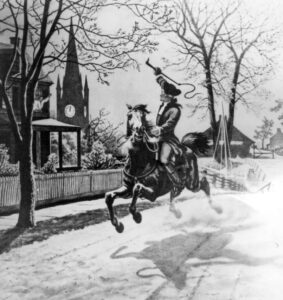 Many are familiar with the poem Paul Revere’s Ride, however, far fewer know that Paul Revere actually memorialized the events of the April 18 and 19, 1775, in an eight-page letter written several years later.
Each Patriots’ Day I remind myself to read his letter from a copy handed down, and I think about how Paul Revere was really just a common man of otherwise undue significance…. yet, capable to the task at hand.
To me everything about the heart of Revere, which you can identify within his own writing, is what defines an American ‘patriot’.
There is no grand prose, there is no outlook of being a person of historical significance, there is just a simple recollection of his involvement, an ordinary man in extraordinary times.
Unsure if anyone else would enjoy I have tracked down an on-line source for sharing and provide a transcript below (all misspelling is with the original).
Paul Revere personally recounts his famous ride. – In this undated letter, Paul Revere summarizes the activities surrounding his famous ride on 18 April 1775. He recounts how Dr. Joseph Warren urged him to ride to Lexington to warn John Hancock and Samuel Adams of British troop movements. He arranged to signal the direction of the troops with lanterns from Old North Church, and then had friends row him across the Charles River borrowing a horse for his ride.
Revere wrote this letter at the request of Jeremy Belknap, corresponding secretary of the Massachusetts Historical Society. Revere signed his name to the letter but then wrote above it, “A Son of Liberty of the year 1775”, and beside it, “do not print my name.” Nonetheless, the MHS included Revere’s name when it printed the letter in 1798.


EXPLORE THE DOCUMENT – Or Read the incredible transcript below:
Dear Sir,
Having a little leisure, I wish to fullfill my promise, of giving you some facts, and Anecdotes, prior to the Battle of Lexington, which I do not remember to have seen in any history of the American Revolution.
In the year 1773 I was imployed by the Select men of the Town of Boston to carry the Account of the Destruction of the Tea to New-York; and afterwards, 1774, to Carry their dispatches to New-York and Philadelphia for Calling a Congress; and afterwards to Congress, several times.* [This asterisk points to a note in the left margin written by Jeremy Belknap: “Let the narrative begin here.” ]
In the Fall of 1774 & Winter of 1775 I was one of upwards of thirty, cheifly mechanics, who formed our selves in to a Committee for the purpose of watching the Movements of the British Soldiers, and gaining every intelegence of the movements of the Tories.
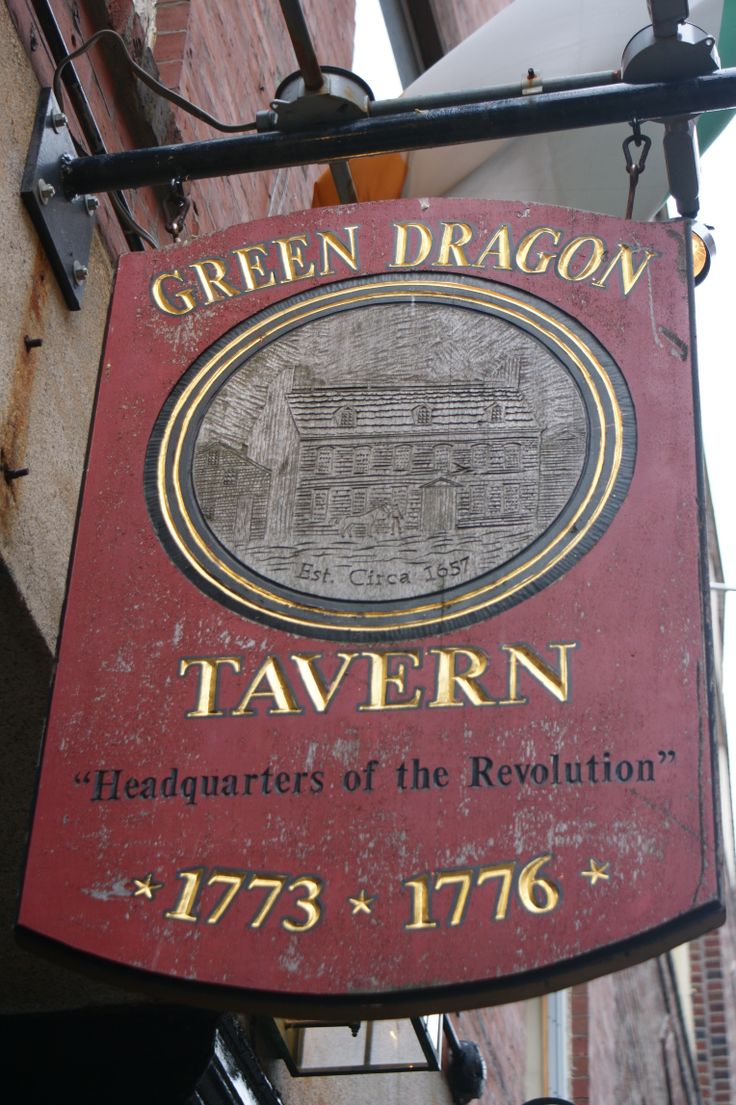 We held our meetings at the Green-Dragon Tavern. We were so carefull that our meetings should be kept Secret; that every time we met, every person swore upon the Bible, that they would not discover any of our transactions, But to Messrs. Hancock, Adams, Doctors Warren, Church, & one or two more.
About November, when things began to grow Serious, a Gentleman who had Conections with the Tory party, but was a Whig at heart, aquainted me, that our meetings were discovered, & mentioned the identical words that were spoken among us the Night before. We did not then distrust Dr. Church, but supposed it must be some one among us.
We removed to another place, which we thought was more secure: but here we found that all our transactions were communicated to Governor Gage. (This came to me through the then Secretary Flucker; He told it to the Gentleman mentioned above).
It was then a common opinion, that there was a Traytor in the provincial Congress, & that Gage was posessed of all their Secrets. (Church was a member of that Congress for Boston.) In the Winter, towards the Spring, we frequently took Turns, two and two, to Watch the Soldiers, By patroling the Streets all night.
The Saturday Night preceding the 19th of April, about 12 oClock at Night, the Boats belonging to the Transports were all launched, & carried under the Sterns of the Men of War. (They had been previously hauld up & repaired). We likewise found that the Grenadiers and light Infantry were all taken off duty.
[Page 2]
From these movements, we expected something serious was [to] be transacted. On Tuesday evening, the 18th, it was observed, that a number of Soldiers were marching towards the bottom of the Common.
About 10 o’Clock, Dr. Warren Sent in great haste for me, and beged that I would imediately Set off for Lexington, where Messrs. Hancock & Adams were, and acquaint them of the Movement, and that it was thought they were the objets. When I got to Dr. Warren’s house, I found he had sent an express by land to Lexington – a Mr. Wm. Daws.
The Sunday before, by desire of Dr. Warren, I had been to Lexington, to Mess. Hancock and Adams, who were at the Rev. Mr. Clark’s. I returned at Night thro Charlestown; there I agreed with a Col. Conant, & some other Gentlemen, in Charleston, that if the British went out by Water, we would shew two Lanthorns in the North Church Steeple; if by Land, one, as a Signal; for we were aprehensive it would be dificult to Cross the Charles River, or git over Boston neck.
I left Dr. Warrens, called upon a friend, and desired him to make the Signals. I then went Home, took my Boots and Surtout, and went to the North part of the Town, where I had kept a Boat; two friends rowed me across Charles River, a little to the eastward where the Somerset Man of War lay.
It was then young flood, the Ship was winding, & the moon was Rising. They landed me on Charlestown side. When I got into Town, I met Col. Conant, several others; they said they had seen our signals. I told them what was Acting, & went to git me a Horse; I got a Horse of Deacon Larkin.
While the Horse was preparing, Richard Devens, Esq. who was one of the Committee of Safty, came to me, & told me, that he came down the Road from Lexington, after Sundown, that evening; that He met ten British Officers, all well mounted, & armed, going up the Road. I set off upon a very good Horse; it was then about 11 o’Clock, very pleasant. After I had passed Charlestown Neck, got nearly opposite where Mark was hung in chains, I saw two men on Horse back, under a Tree.
When I got near them, I discovered they were British officer. One tryed to git a head of Me, & the other to take me. I turned my Horse very quick, & Galloped towards Charlestown neck, and then pushed for the Medford Road. The one who chased me, endeavoring to Cut me off, got into a Clay pond, near where the new Tavern is now built. I got clear of him,
[Page 3]
and went thro Medford, over the Bridge, & up to Menotomy. In Medford, I awaked the Captain of the Minute men; & after that, I alarmed almost every House, till I got to Lexington.
I found Mrs. Messrs. Hancock & Adams at the Rev. Mr. Clark’s; I told them my errand, and inquired for Mr. Daws; they said he had not been there; I related the story of the two officers, & supposed that He must have been stopped, as he ought to have been there before me.
After I had been there about half an Hour, Mr. Daws came; after we refreshid our selves, we and set off for Concord, to secure the Stores, & there. We were overtaken by a young Docter Prescot, whom we found to be a high Son of Liberty. I told them of the ten officers that Mr. Devens mett, and that it was probable we might be stoped before we got to Concord; for I supposed that after Night, they divided them selves, and that two of them had fixed themselves in such passages as were most likely to stop any intelegence going to Concord.
I likewise mentioned, that we had better allarm all the Inhabitents till we got to Concord; the young Doctor much approved of it, and said, he would stop with either of us, for the people between that & Concord knew him, & would give the more credit to what we said.
We had got nearly half way. Mr Daws & the Doctor stoped to allarm the people of a House: I was about one hundred Rod a head, when I saw two men, in nearly the same situation as those officer were, near Charlestown. I called for the Doctor & Daws to come up; were two & we would have them in an Instant I was surrounded by four; – they had placed themselves in a Straight Road, that inclined each way; they had taken down a pair of Barrs on the North side of the Road, & two of them were under a tree in the pasture. The Docter being foremost, he came up; and we tryed to git past them; but they being armed with pistols & swords, they forced us in to the pasture; -the Docter jumped his Horse over a low Stone wall, and got to Concord.
[Page 4]
I observed a Wood at a Small distance, & made for that. When I got there, out Started Six officers, on Horse back, and orderd me to dismount;-one of them, who appeared to have the command, examined me, where I came from, & what my Name Was? I told him. it was Revere, he asked if it was Paul? I told him yes He asked me if I was an express? I answered in the afirmative. He demanded what time I left Boston? I told him; and added, that their troops had catched aground in passing the River, and that There would be five hundred Americans there in a short time, for I had alarmed the Country all the way up.
He imediately rode towards those who stoppd us, when all five of them came down upon a full gallop; one of them, whom I afterwards found to be Major Mitchel, of the 5th Regiment, Clapped his pistol to my head, called me by name, & told me he was going to ask me some questions, & if I did not give him true answers, he would blow my brains out.
He then asked me similar questions to those above. He then orderd me to mount my Horse, after searching me for arms. He then orderd them to advance, & to lead me in front. When we got to the Road, they turned down towards Lexington. When we had got about one Mile, the Major Rode up to the officer that was leading me, & told him to give me to the Sergeant. As soon as he took me, the Major orderd him, if I attempted to run, or any body insulted them, to blow my brains out.
We rode till we got near Lexington Meeting-house, when the Militia fired a Voley of Guns, which appeared to alarm them very much. The Major inquired of me how far it was to Cambridge, and if there were any other Road? After some consultation, the Major
[Page 5]
Major Rode up to the Sargent, & asked if his Horse was tired? He told answered him, he was – (He was a Sargent of Grenadiers, and had a small Horse) – then, said He, take that man’s Horse. I dismounted, & the Sargent mounted my Horse, when they all rode towards Lexington Meeting-House.
I went across the Burying-ground, & some pastures, & came to the Revd. Mr. Clark’s House, where I found Messrs. Hancok & Adams. I told them of my treatment, & they concluded to go from that House to wards Woburn. I went with them, & a Mr. Lowell, who was a Clerk to Mr. Hancock.
When we got to the House where they intended to stop, Mr. Lowell & I my self returned to Mr. Clark’s, to find what was going on. When we got there, an elderly man came in; he said he had just come from the Tavern, that a Man had come from Boston, who said there were no British troops coming. Mr. Lowell & myself went towards the Tavern, when we met a Man on a full gallop, who told us the Troops were coming up the Rocks.
We afterwards met another, who said they were close by. Mr. Lowell asked me to go to the Tavern with him, to a git a Trunk of papers belonging to Mr. Hancock. We went up Chamber; & while we were giting the Trunk, we saw the British very near, upon a full March.
We hurried to wards Mr. Clark’s House. In our way, we passed through the Militia. There were about 50. When we had got about 100 Yards from the meeting-House the British Troops appeard on both Sides of the Meeting-House. In their
[Page 6]
In their Front was an Officer on Horse back. They made a Short Halt; when I saw, & heard, a Gun fired, which appeared to be a Pistol. Then I could distinguish two Guns, & then a Continual roar of Musquetry; When we made off with the Trunk.
As I have mentioned Dr. Church, perhaps it might not be disagreeable to mention some Matters of my own knowledge, respecting Him. He appeared to be a high son of Liberty. He frequented all the places where they met, Was incouraged by all the leaders of the Sons of Liberty, & it appeared he was respected by them, though I knew that Dr. Warren had not the greatest affection for him. He was esteemed a very capable writer, especially in verese; and as the Whig party needed every Strenght, they feared, as well as courted Him.
Though it was known, that some of the Liberty Songs, which We composed, were parodized by him, in favor of the British, yet none dare charge him with it. I was a constant & critical observer of him, and I must say, that I never thought Him a man of Principle; and I doubted much in my own mind, wether He was a real Whig. I knew that He kept company with a Capt. Price, a half-pay British officer, & that He frequently dined with him, & Robinson, one of the Commissioners. I know that one of his intimate aquaintances asked him why he was so often with Robinson and Price? His answer was, that He kept Company with them on purpose to find out their plans.
The day after the Battle of Lexington, I came across met him in Cambridge, when He shew me some blood on his stocking, which he said spirted on him from a Man who was killed near him, as he was urging the Militia on. I well remember, that I argued with my self, if a Man will risque his life in a Cause, he must be a Friend to that cause; & I never suspected him after, till He was charged with being a Traytor.
[Page 7]
The same day I met Dr. Warren. He was President of the Committee of Safety. He engaged me as a Messinger, to do the out of doors business for that committee; which gave me an opportunity of being frequently with them.
The Friday evening after, about sun set, I was sitting with some, or near all that Committee, in their room, which was at Mr. Hastings’s House at Cambridge. Dr. Church, all at once, started up – Dr. Warren, said He, I am determined to go into Boston tomorrow – (it set them all a stairing) – Dr. Warren replyed, Are you serious, Dr. Church? they will Hang you if they catch you in Boston. He replyed, I am serious, and am determined to go at all adventures.
After a considerable conversation, Dr. Warren said, If you are determined, let us make some business for you. They agreed that he should go to git medicine for their & our Wounded officers. He went the next morning; & I think he came back on Sunday
evening.
After He had told the Committee how things were, I took him a side, & inquired particularly how they treated him? he said, that as soon as he got to their lines on the Boston Neck, they made him a prisoner, & carried him to General Gage, where He
was examined, & then He was sent to Gould’s Barracks, & was not suffered to go home but once.
After He was taken up, for holding a Correspondence with the Brittish, I came a Cross Deacon Caleb Davis;-we entred into Conversation about Him;-He told me, that the morning Church went into Boston, He (Davis) received a Bilet for General Gage-(he then did not know that Church was in Town)-When he got to the General’s House, he was told, the General could not be spoke with, that He was in private with a Gentleman; that He waited near half an Hour,-When General Gage & Dr. Church came out of a Room, discoursing together, like
[Page 8]
like persons who had been long aquainted. He appeared to be quite surprized at seeing Deacon Davis there; that he (Church) went where he pleased, while in Boston, only a Major Caine, one of Gage’s Aids, went with him.
I was told by another person whom I could depend upon, that he saw Church go in to General Gage’s House, at the above time; that He got out of the Chaise and went up the steps more like a Man that was aquainted, than a prisoner.
Sometime after, perhaps a Year or two, I fell in company with a Gentleman who studied with Church -in discoursing about him, I related what I have mentioned above; He said, He did not doubt that He was in the Interest of the Brittish; & that it was He who informed Gen. Gage That he knew for Certain, that a Short time before the Battle of Lexington, (for He then lived with Him, & took Care of his Business & Books) He had no money by him, and was much drove for money; that all at once, He had several Hundred New Brittish Guineas; and that He thought at the time, where they came from.
Thus, Sir, I have endeavoured to give you a Short detail of some matters, of which perhaps no person but my self have have documents, or knowledge. I have mentioned some names which you are aquainted with: I wish you would Ask them, if they can remember the Circumstances I alude to.
I am, Sir, with every Sentment of esteem,
Your Humble Servant,
Paul Revere
Courtesy of the Massachusetts Historical Society
 “The Battle of Lexington, 19 April 1775,” Oil on canvas by William Barns Wollen, 1910.
There were actually five riders we have to thank. Paul Revere, Samuel Prescott, Israel Bissell, William Dawes, and Sybil Ludington all made their rides.
The last of the famous night riders was, surprisingly, a woman. Although she would not make her journey until April 26, 1777, her service to the American forces was remarkable. The daughter of Colonel Henry Ludington, Sybil, at the young age of sixteen, would make a journey double to that of Revere (totaling 40 miles) to warn the colonists at Danbury, Connecticut of the approach of the British.
Commissioned by her father, who knew that Sybil was familiar with the terrain, the young girl set out at 9pm the night of April 26 through Kent to Farmers Mills and then returned back home again, damp from the rain and exhausted, just before dawn. The men she recruited were too late to save the town of Danbury, which had been set aflame by the British, but they were able to drive the enemy troops from the area.
She was later commended by George Washington for her heroism. A statue of her was erected along her route in Carmel, New York, along with many other markers of her historic ride.
The moral of the Sybil Ludington story…don’t underestimate a girl and her horse.
There exists a Sybil Luddington American Bicentennial commemorative US Posage Stamp (1975)- it’s epic
{ http://usstampgallery.com/view.php?id=f19483c6a9fbacfebff05eb372439d8c0403745f&Sybil_Ludington&st=sybil%20luddington }
there is a blurb of a bio there – she rode on a horse named Star.
Perfect.
Perhaps not true, as there is no evidence that the ride happened, but a great story nonetheless.
Absence of evidence does not – never has & never will – equal evidence of absence; OR unTruth.
Cheers! I’ll eat some Godiva chocolate in celebration of that!
Has Leticia and Co had the statue destroyed yet??
While that’s sarcasm, I actually do wonder if Hochul and Her have had it removed…
We tend to focus on that famous ride, but a whole lot was going on during that time in the build up that created the Revolutionary War.
On December 14th and 15th 1774 was the Raid On Fort William and Mary in New Hampshire.
Here is a great article about it from a local seacoast publication here;
https://www.seacoastnh.com/Places-and-Events/NH-History/raid-on-fort-william-and-mary/
December 14-15, 1774
This historic battle, though little known outside the Granite State, was a seminal event in New England’s progress toward the American Revolution. Ignited by Paul Revere, hundreds of Seacoast New Hampshire men raided the armory of the British King in an rare act of open treason – four months before Lexington and Concord.
New traveled slowly in Colonial New England, but even though it was spread by word of mouth, by letter and by well worn newspapers, it traveled in exorably. Residents of Portsmouth were, after the passage of some weeks, as disgruntled as those of Boston over the actions of Parliament. By the middle of December 1773, they were excited over reports of the Boston Tea Party and were looking toward 1774 with apprehension.
Nevertheless, the first cargo of tea destined to bear the hated tax was unloaded at Portsmouth without incident ‘and locked in the customs house. A special town meeting was called which requested, in the interests of the peace, that the chests be reshipped to Halifax. Although this was done, Governor Wentworth kept officers and magistrates on alert to suppress possible violence. A second cargo was also rerouted to Nova Scotia, but the merchant who had ordered it felt the consequences of a growing revolutionary spirit. The windows of his house were smashed by a mob.
Tea Troubles
By May of 1774 the news on every one’s lips was the closure of the port of Boston. The Crown expected the “salt-water tea” to be paid for and the citizens of Boston to show some evidence of general remorse. The New Hampshire Committee of Correspondence, in a note which revealed its own stand on this paramount issue of the day, swore, “. . . ever (to) view your interests as our own.” Obviously, Bostonians could count on support from New Hampshire.
Governor Wentworth was aware of a radical shift both in public opinion and in the makeup of the provincial assembly, and attempted to garrison Portsmouth’s only military post, Fort William and Mary in New Castle. In May, 1774 the assembly voted to grant him 200 pounds for that purpose. No doubt he felt this grossly inadequate, but an officer and three men were appointed to administer the fort in the king’s name-a less than formidable army with which to stave off revolution.
The Assembly, which did not appear intimidated by either the “army” at the fort or the governor’s ire, voted later in the same month to establish a second Committee of Correspondence. The assemblymen were not dissuaded from their purpose by frequent adjournments and “cooling off” periods forced upon them by Wentworth and the Rockingham County sheriff. Dismissed from the assembly chamber for holding an illegal meeting, they retired to a local tavern and in that congenial atmosphere made plans for a Provincial Congress to be held at Exeter in July.
(Keep reading at the link I posted at the top)
Excellent!
Thanks, John. Great read.
Because I was unable to access the posted link above, I am including a link for those who may also have been unable to access the rest of the story.
Much additional information is given here:
https://www.americanhistorycentral.com/entries/capture-of-fort-william-and-mary-1774/
Fascinating stuff about very dramatic times.
Some great historical books on the Revolutionary War period:
“The Autobiography of Benjamin Franklin” by Benjamin Franklin
“George Washington’s Sacred Fire” by Jerry Newcombe, Peter A. Lillback
“The Indispensables: The Diverse Soldier Mariners Who Shaped the Country, Formed the Navy, and Rowed Washington across the Delaware” by Patrick K. O’Donnel
“Washington’s Immortals: The Untold Story of an Elite Regiment Who Changed the Course of the Revolution” by Patrick K. O’Donnel
“Thomas Jefferson: The Art of Power” by Jon Meacham
“Washington’s Spies: The Story of America’s First Spy Ring” by Alexander Rose
Civil War era:
“The Unvanquished: The Untold Story of Lincoln’s Special Forces, the Manhunt for Mosby’s Rangers, and the Shadow War That Forged America’s Special Operations” by Patrick K. O’Donnell
“Jack Hinson’s One-Man War” by Tom C. McKenney
I highly recommend Allen W. Eckert’s Historical Novels:
“The Frontiersmen (1967)
“Wilderness Empire” (1969)
“The Conquerors” (1971)
“The Wilderness War” (1978)
“Gateway to Empire” (1984)
“Twilight of Empire” (1988)
Paul Revere actually made two rides. In December of 1774 he rode across country to Fort William and Mary in New Hampshire to warn the Colonists there that the British were coming to confiscate the arms, ammunition, cannon and accoutrements at that place. Men stormed the Fort and forced the surrender. These were actually the first shots fired, four months before Lexington and Concord.
WOW, the Sons of Liberty “gave” us America, TY you all so much
Self evident truths…
Unalienable Rights…
Life, Liberty and the pursuit of Happiness…
What saith the scripture…
“So then, brethren, we are not children of the bondwoman {slave to the law},
But of the free {Grace of God}”
Gal 4:30
” Stand fast therefore in the Liberty wherewith Christ has made US {We The People} free, and be not entangled again with the yoke of bondage {Federal Reserve Bank}.”
Gal 5:1
“Withold not good from them to whom it is due, when it is in the power of your hand to do it “.
Prov 3:27
Personality does not factor in mathematics.
Math :
Exhibit A
We The People
Exhibit B
Government
Exhibit C
Federal Reserve Bank
This was an AB conversation with a settlement date of 02APR2025.
CAPITALISM :
The economic condition wherein the “capital” {public Monies} is owned by The People…
And
The “ism” is owned by the Government.
As God is my witness,
He has set before US,
We The People,
An open door {windows of heaven/sovereign wealth} and no man
can shut it.
Do you People want to be FREE or not…
Who the Son sets free, is free indeed.
In God We Trust
{All others pay cash}
Trust God
Fear not
Rev. John Wise of Essex/Ipswich, Mass. wrote many of his Sermons about the God given rights of men decades before the War of Independence. His words are immortalized in the Declaration of Independence. God was with America from the very beginning.
Much of the thought and ideals that found their way into the Declaration of Independence and the U.S. Constitution were Preached in the nation’s (colonies) Churches in the 10 years leading up to the American Revolution.
What once was a hotbed of fervor for liberty is now quite the opposite.
One of my prized books in my rather huge book collection is a history of the US published in……1823. Yes, that’s the date in my book. It’s a 2 volume set quite worn and loose pages and was only $25 “as is”. I grabbed it quickly (probably in the 1990s). History of US before Adams and Jefferson had died.
I must admit, I haven’t read it or probably looked at it in a number of years, but hey I’ve got it and it ain’t going anywhere.
That sounds amazing. More than 200 years old now and written in the first 50 years. I wonder if this is republished somewhere, it sounds interesting and I plan to look into that. Thanks.
Brant, it would be wonderful if you could locate an IT person to transcribe and post that history online.
But don’t let it out of your mitts!
I’m guessing it is “History of the United States” by Charles Augustus Goodrich. If so it is already available online.
There are 3 editions of it and they are available here for reading or download of scanned versions.
https://openlibrary.org/books/OL6768905M/History_of_the_United_States_of_America
Found it online:
https://openlibrary.org/books/OL7088522M/A_history_of_the_United_States_of_America
That gives me the goosebumps (the good kind) – imagine, 1823 – before the 50 year anniversary of 1776 – John Adams and Thomas Jefferson still going – they passed away on the same day, July 4, 1826 – our nation’s 50th birthday!
There is also our 5th President, James Monroe who died on July 4th, 1831, 5 years after Adams and Jefferson.
Our 4th President, James Madison died 6 days shy of the 60th anniversary of the Declaration of Independence, on June 28, 1836.
What a piece of history! That has to be an amazing read.
Put that prized possession in a mylar bag, fill it with nitrogen (or Argon if available) and refill as necessary……and don’t answer the door if the library police come knock’en.
Who’s the author?
You may like this Hidden History sword story (photos@link). No affiliation.
“Some have asked for pics of the Revolutionary War fort we discovered inside an old plantation house in West Virginia. Almost none of the original Rev War frontier log forts survive. Historians believed an old log fort know as Byrnside’s Fort was still there, inside the walls of this large house…
“I found this envelope in the house that contained a key. And it said, “keys to Major Samuel Clark’s sword case.” And I was like omg and completely ransacked the house looking for the sword.
“The older lady who was born and raised in this house, whose belongings filled the house, was named Margaret Clark. Samuel Clark was her 3 or 4x great grandfather who was a local Revolutionary War veteran.
“But the sword was nowhere to be found. And nobody who knew her knew anything about it. Finally, I ended up finding it, after posting pics of the keys.”
(photos of Margaret Clark, sword, key, family, log fort/house, more)
https://threadreaderapp.com/thread/1744722198013845734.html
Thanks, that was fascinating, I follow “civil rights atty” but wasn’t aware he had found this fort!
A long time ago, when I was young… a required book 📖 to read was
‘Johnny Tremain’
a fictional novel about the Sons of Liberty and the start of the Revolution.
A film that does a fair take on the events 250 years ago, is
‘April Morning’ (1988)
I had my grade-school daughter watch it with me, to get a sense of what that time was like.
Thanks for the tip on the film.
I read and re-read Johnny Tremain many times in grade school.
Who is the author?
There are mountains of books like this in junk shops everywhere all over New England.
New England is OLD and dying, people don’t read anymore.
Young people don’t want these books because they say they stink, they move a lot, they don’t want old books.
I’m lucky enough to have my own library in my 230 year old house- with quite a few shelves of these old books that I’ve taken for FREE from the book piles sitting out in the rain at the local dump.
I take all history books and Bibles, some save stray cats, I save these books.
Maybe that’s weird, but like that need to pick up a penny on the ground, I cannot leave the Holy Bible just sitting there in a junk pile or these incredibly old books about our history.
We’re kinda hoarders up here but someone has to keep all this important stuff. I’ve certainly done my part.
Thank God for you ! I am almost as bad – and I love my library !
Scan it into an ebook! Accidents happen!
I recommend the book, “Paul Revere’s Ride,” by David Hackett Fischer.
A page on my website features an historical depiction of the Battle of Lexington and Concord, in reference to our nation’s culture of civilian ownership of firearms. Without the 2nd Amendment, we are no better than subjects.
Fischer is one of our most underrated and important historians. The quality of his work far outranks the popular epic narratives written by his contemporaries.
“Albion’s Seed” and “Liberty and Freedom” are critical to understanding not only American history but modern American politics. Cannot recommend them more highly for those who want to understand the connection between the two.
keeler: Two more books to add to my pile 🙂
2nd this book recommendation.
“Without the 2nd Amendment, we are no better than subjects.”
The 2A groups are really getting sick and tired of being USED by politicians at all levels.
They Promise, promise, promise but do not DELIVER.
There is a crucial 2A case before SCOTUS right now and it has been delayed a hearing for a record 10x so far.
Hear, hear! Outstanding book that should be on a man’s shelf.
There is that date again
April 19th.
Comes up in all kinds of things good and bad.
Waco Tx
Murrah Building Ok City
Etc.
its easy to crowd the entire history of amazing things in 365 days.
what is hard is to predict that day when we all organize OURSELVES TOGETHER..and throw back against a central state that has neither the interest or the desire or ambition to advance US AS A PEOPLE>
consider this an event in the making each and every day, and that makes the prediction aspect clearer.
We the people ARE the power of this nation. You can accept this and bring your energy to make it so, or you can depend on the sacrifices of others who will do it no matter what.
God Bless America
May I mention, that this April 18th, is the 83rd anniversary of the Doolittle Raid on Japan.
80 patriots in 16 planes set off on a dangerous mission.
Attended a lecture on it today.
They too, are men of duty, honor, and courage.
One if by land, two f by sea, three if by Trump!
I like that a lot, 3 if by Trump. Tonight I will put 3 electric lanterns in my window.
Good one Bruce. Slainte
https://jonmcnaughton.com/crossing-the-swamp/
I have this framed painting by Don Troiani in my den…
The Redoubt, Battle of Bunker Hill, June 17, 1775
In his sequel to the already iconic painting “Bunker Hill”, here we see the latter phase of the epic battle of June 17, 1775. After appalling losses in two previous assaults, the British push forward in a third attempt to storm the American position on Breed’s Hill. As the patriots’ ammunition runs out, the British Marines & 47th Regiment of Foot pour over the earthen walls in a furious rage. The Americans are forced back out of their redoubt in one of the most brutal hand-to-hand fights of the war. Giving ground only in the face of overwhelming force, President of the Massachusetts Provincial Congress, Dr. Joseph Warren is shot dead by a British officer. Again Troiani has produced another masterwork rich in accurate detail, even down to the anchor emblems on the British Marine breastplates. With historical background certificate written by renowned authority James L. Kochan
https://www.wbritain.com/product-store/red
So, as is obvious from Mr. Revere’s letter, we have had traitors in our government from the outset.
But for the bravery and perseverance of loyal patriots, we might still be subjects of the Crown of the UK.
And the government of the UK is still pursuing totalitarian rule by coercion and force…..unchanged from 1776.
ALL central states end up in tyrant control…
this is WHY OUR FOREFATHERS advanced the idea and enumerated the rights OF THE PEOPLE TO BEAR ARMS .
they were ACUTELY aware that monsters are real and did not shy away from this reality. Christian men and women of good faith who understood duty….that is to be servants of God
God Bless America
Assume “ALL central states” meant “all nations with centralized governments”….
I agree 100%
Interesting that Revere believed Dr./Gen. Warren to be a double agent. He died at Bunker Hill.
Joseph Warren | Facts, Early Years, Life, Death & Military
His Boston Massacre Oration is a classic:

“…You will not now expect the elegance, the learning, the fire, the enrapturing strains of eloquence which charmed you when a LOVELL, a CHURCH, or a HANCOCK spake; but you will permit me to say that with sincerity, equal to theirs, I mourn over my bleeding country: with them I weep at her distress, and with them deeply resent the many injuries she has received from the hands of cruel and unreasonable men.
That personal freedom is the natural right of every man; and that property, or an exclusive right to dispose of what he has honestly acquired by his own labour, necessarily arises therefrom, are truths which common sense has placed beyond the reach of contradiction. And no man, or body of man, can without being guilty of flagrant injustice, claim a right to dispose of the persons or acquisitions of any other man, or body of men, unless it can be proved that such a right has arisen from some compact between the parties in which it has been explicitly and freely granted.
If I may be indulged in taking a retrospective view of the first settlement of our country, it will be easy to determine with what degree of justice the late parliament of Great Britain has assumed the power of giving away that property which the Americans have earned by their labour.
Our fathers having nobly resolved never to wear the yoke of despotism, and seeing the European world, at the time, through indolence and cowardice, falling a prey to tyranny, bravely threw themselves upon the bosom of the ocean, determined to find a place in which they might enjoy their freedom, or perish in the glorious attempt. Approving heaven beheld the favourite ark dancing upon the waves, and graciously preserved it until the chosen families were brought in safety to these western regions. They found the land swarming with savages, who threatened death with every kind of torture. But savages, and death with torture were far less terrible than slavery: nothing was so much the object of their abhorrence as a tyrant’s power: they knew that it was more safe to dwell with man in his most unpolished state, -than in a country where arbitrary power prevails. Even anarchy itself, that bugbear held up by the tools of power (though truly to be deprecated) is infinitely less dangerous to mankind than arbitrary government. Anarchy can be but of short duration; for when men are at liberty to pursue that course which is most conducive to their own happiness, they will soon come into it, and from the rudest state of nature, order and good government must soon arise. But tyranny, when once established, entails its curses on a nation to the latest period of time; unless some daring genius, inspired by heaven, shall, unappalled danger, bravely form and execute the arduous design of restoring liberty and life to his enslaved, murdered country.
The tools of power, in every age, have racked their inventions to justify the few in sporting with the happiness of the many; and, having found their sophistry too weak to hold mankind in bondage, have impiously dared to force religion, the daughter of the king of heaven, to become a prostitute in the service of hell. They taught that princes, honoured with the name of Christian, might bid defiance to the founder of their faith, might pillage Pagan countries and deluge them with blood, only because they boasted themselves to be the disciples of that teacher who strictly charged his followers to do to others as they would that others should do unto them.
Martial law and the government of a well regulated city, are so entirely different, that it has always been considered as improper to quarter troops in populous cities; frequent disputes must necessarily arise between the citizen and the soldier, even if no previous animosities subsist. And it is further certain, from a consideration of the nature of mankind, as well as from constant experience, that standing armies always endanger the liberty of the subject. But when the people on the one part, considered the army as sent to enslave them, and the army on the other, were taught to look on the people as in a state of rebellion, it was but just to fear the most disagreeable consequences. Our fears, we have seen, were but too well grounded.
It was a maxim of the Roman people, which eminently conduced to the greatness of that state, never to despair of the commonwealth. The maxim may prove as salutary to us now, as it did to them. Short sighted mortals see not the numerous links of small and great events, which form the chain on which the fate of kings and nations is suspended. Ease and prosperity (though pleasing for a day) have often sunk a people into effeminacy and sloth. Hardships and dangers (though we for ever strive to shun them) have frequently called forth such virtues, as have commanded the applause and reverence of an admiring world. Our country loudly calls you to be circumspect, vigilant, active, and brave.
Our country is in danger, but not to be despaired of. Our enemies are numerous and powerful; but we have many friends, determining to be free, and heaven and earth will aid the resolution. On you depend the fortunes of America. You are to decide the important question, on which rest the happiness and liberty of millions yet unborn. Act worthy of yourselves. The faltering tongue of hoary age calls on you to support your country. The lisping infant raises its suppliant hands, imploring defence against the monster slavery. Your fathers look from their celestial seats with smiling approbation on their sons, who boldly stand forth in the cause of virtue; but sternly frown upon the inhuman miscreant, who, to secure the loaves and fishes to himself, would breed a serpent to destroy his children.
You then, who nobly have espoused your country’s cause, who generously have sacrificed wealth and ease; who had despised the pomp and shew of tinseled greatness; refused the summons to the festive board; been deaf to the alluring calls of luxury and mirth; who have forsaken the downy pillow to keep your vigils by the midnight lamp, for the salvation of your invaded county, that you might break the fowler’s snare, and disappoint the vulture of his prey, you then will reap that harvest of renown which you so justly have deserved. Your country shall pay her grateful tribute of applause. Even the children of your most inveterate enemies, ashamed to tell from whom they sprang, while they in secret, curse their stupid, cruel parents, shall join the general voice of gratitude to those who broke the fetters which their fathers forged.
Having redeemed your country, and secured the blessing to future generations, who, fired by your example, shall emulate your virtues, and learn from you the heavenly art of making millions happy; with heart felt joy, which transports all your own, you cry, the glorious work is done. Then drop the mantle to some young Elisha, and take your seats with kindred spirits in your native skies.”…….
Rest in the Vine: “Our Country Is In Danger but Not To Be Despaired Of”:
Boston Massacre Oration by Dr. Joseph Warren
No, Revere suspected Dr
Church to be a double agent. Not Dr
Warren
I’m very happy to be corrected!
Truly a fitting quirk of fate that the 250th anniversary of the defining moment in the birth of the American Republic should just so happen to fall upon Good Friday.
A blessed Easter and a blessed Patriot’s Day to all of you Treepers.
Wish all kids and their parents would read such fascinating and great history. What are forefathers went through to make sure everyone has the right to be free. Thank you Sundance for posting.
I love it!
Thank you, Sundance!
What a fast year it was – I remember reading that last year at this time, reading and praying!
I was thinking the same thing!
And the story is still fantastic every time
I read it!
Thank you Paul and SD! A true patriot!. Taxachusetts could use a lot more Reveres.
Even back then, traitors masqueraded as allies in order to deceive.
And like today, many Patriots went out of their way, initially, to find a reason to trust them, eventually seeing them for what they were.
Today they’re called RINOs and other corrupt money takers.
excellent. I read these stories as advisories. Reminders.
a small group of people can make a difference when the cause of righteous and moral.
Hear my Prayer Lord Almighty. Give me the power of your spirit and allow it to guide my hand in all things.
God Bless America
I thank thee, Father for giving me a good mind, and the willingness to think!
Psalms 33:16 (KJV) There is no king saved by the multitude of an host: a mighty man is not delivered by much strength.
Thank God for Samuel Prescott who knew the woods between Lexington and Concord well and was able to escape and ensure the militias would gather at the North Bridge to confront the British, leading to the victory that day.
“Stand your ground, do not fire unless fired upon, but if they mean to have a war, let it begin here!”
– Captain John Parker
I was at the Lexington Battle Green this morning, just as I had been 50 years ago today for the bicentennial, as a band member, for the celebration attended by the President (Gerald Ford).
Typo I was there 50 years ago tomorrow, April 19 is the date of the battle, I can’t go tomorrow so decided to do it today
“ Each Patriots’ Day I remind myself to read his letter from a copy handed down, and I think about how Paul Revere was really just a common man of otherwise undue significance…. yet, capable to the task at hand.”
That is so true. It embarrasses me to think of all the times I said that I’m just one person and that I can’t change anything or effect any change.
God has put each and every one of us in a specific place and time to do what He empowers us to do. And that is enough.
I went to Paul Revere Junior High School (now PR Middle School). I remember attending more than one assembly in the auditorium at which a film was shown about Paul Revere’s Ride, in which Longfellow’s famous poem was recited. It begins:
LISTEN, my children, and you shall hear
Of the midnight ride of Paul Revere,
On the eighteenth of April, in Seventy-five;
Hardly a man is now alive
Who remembers that famous day and year.
As Sundance observes, today April 18, 2025, is the 250th anniversary of that day!
I also remember the 200th anniversary of that day in 1975.
“Patriotism is the last refuge of a scoundrel.” — Dr. Samuel Johnson
True–except it was first for Joey Autopen.
BTW, Dr. Johnson was talking about the Founders as rebels to the Crown.
I’m sure he didn’t mean this Last Refuge, though!
I remember quoting that to Sundance, and he named his blog after it. It’s kind of amazing, what he’s accomplished. I give him digs, now and then, so he will always aim higher.
And all of us!
There is a delightful children’s book called “Mr. Revere and I” by Robert Lawson, published in the 1950s. It’s the story of his horse…as told by the horse. Won the Newberry Medal.
Lawson also wrote “Ben and Me,” about a mouse befriended by Franklin. Mouse rides along on Ben’s hat through the Revolution and Franklin’s ambassadorship to France.
Never before have I read Paul Revere’s account of his midnight ride, or the doings before and after.
This is a real gift. Thank you, Sundance.
“Captain Preston,” the historian began, “what made you go to the Concord Fight?” The old soldier bristled at the idea that anyone had made him fight.
“What did I go for?” he replied. The scholar missed his meaning and tried again.
“Were you oppressed by the Stamp Act?”
“I never saw any stamps,” Captain Preston answered, “and I always understood that none were ever sold.”
“Well, what about the tea tax?”
“Tea tax? I never drank a drop of the stuff. The boys threw it all overboard.”
“But I suppose you had been reading Harrington, Sidney, and Locke about the eternal principle of liberty?”
“I never heard of these men,” Captain Preston said. “The only books we had were the Bible, the Catechism, Watts’ Pslams, and hymns and the almanacs.”
“Well, then, what was the matter?”
“Young man,” Captain Preston replied, “what we meant in going for those Redcoats was this: we always had been free, and we meant to be free always. They didn’t mean we should.”
-David Hackett Fischer, Liberty and Freedom: A Visual History of America’s Founding Ideas
Let’s not forget about Mark Lindsay, Paul Dick, Phil Volk, Drake Levin, and Mike Smith either!
An excellent biography “Paul Revere & The World He Lived In” by Esther Forbes was published in 1942. She references the 1798 account to Belknap and notes that there are “three accounts in Paul Revere’s own hand.” In addition to the formal letter to Belknap, there exists an earlier account for his family and a rough draft of that family account. Forbes states that the rough draft “is the most colloquial and shows best how he actually spoke, and his fondness for “gitting” to whereever he was going.” The Belknap one is much longer and provides more general information. The family account is said to preserve some colorful langauge of his conversation with the British who captured him which was ommitted in the account sent to the Reverend Belknap.
While I have been to the Old North Church, and followed some of Revere’s route, I have never read this particular letter; it does give you some insight into what kind of man he was: A True, and Authentic, Patriot.
Stunning…thank you.
God Bless, Sundance – you’re the BEST!
“…an ordinary man in extraordinary times.”
No.
It is a man’s actions that define him, born of his character, values, and motivations.
Paul Revere was no “ordinary” man. He was exceptional, as were each one of the Sons of Liberty. And the more he would protest this truth, the more it would hold true.
Listen, my children, and you shall hear
Of the midnight ride of Paul Revere,
On the eighteenth of April, in Seventy-Five:
Hardly a man is now alive
Who remembers that famous day and year.
And just think, that man who is hardly now alive has been found by Elon Musk’s DOGE geniuses to still be collecting Social Security!! The same man was brought under the Poor Law of 1601, saw the pensions of the Civil War and began celebrating the passage of the Social Security Act of 1935. Here we are in 2025 and this man is now over 250 years old and still collecting Social Security according to the records of the Social Security Administration!!
The other side of the story…
For more than 100 years the American Colonists in Upstate New York and New England had been terrorized by vicious raids and war parties from the French and their Indian allies in Canada. In fact, much of Vermont, New Hampshire and Maine were part of Canada and considered Indian Territories. Indian raids murdered farm families as far South as Dutchess and Putnam Countries in New York. The Seven Years War which ended in 1763 was the last in a series of wars between France and England. The major battles in the Americas we learned about in school Braddock’s Defeat, Lake George, Ticonderoga, Fort No 4, Louisbourg, Quebec and the famous raid by Roger’s Rangers cost the lives of thousands of British soldiers. In fact, the British lost a total of 180,000 soldiers in the worldwide war against France and her allies which many historians consider the actual First World War. The surrender of the French in Canada did not actually end the war when Chief Pontiac decided to continue fighting the English in North America for another year ending in the battles of Devil’s Canyon, Bloody Marsh and the siege of Fort Pitt. The British expended a fortune in blood and treasure to defend the Thirteen Colonies. The taxation after the war was an attempt to recover some of the expense.
Even the Boston Massacre had two sides to the story much like the Ukraine War and January 6th. Here’s the side of the story from Captain Prescott that you weren’t told in high school…
The debates over taxation and representation were only part of the tensions between the British government and the American colonies. There were others, the most significant being the future of the native nations and colonial expansion beyond the Appalachians.
But those issues were in some ways incidental. There were deeper cultural issues between Great Britain and her North American colonies which led to conflict.
American colonists came from four distinct dissident groups who settled in four distinct waves in four distinct regions: the Puritans who settled in New England between the 1620 and 1650, the Royalists who settled the in South from 1650 to 1660, the Quakers who settled in the mid-Atlantic from 1675-1725, and the Northern English, Scots, and Irish who settled in the Appalachian foothills from 1720 to 1775.
All of these groups left the British Islands because they were in conflict with the British government, and that opposition was ingrained into their cultures. Disagreements over taxes, representation, and land settlement were flash points which exposed these deeper cultural conflicts.
After Independence these four cultures would come into conflict with each other over issues such as Western expansion, slavery, and tariffs. These cultural fault lines continue to exist and effect American politics to this day, albeit the issues are different.
Fedsurrections and Revolutions of Color are two sides of the same story.
The Battle of Golden Hill – Six Weeks Before the Boston Massacre
https://allthingsliberty.com/2014/10/the-battle-of-golden-hill-six-weeks-before-the-boston-massacre/
When I clicked on a copy of the original letter document Sundance provided in this post this is what I got:
“theconservativetreehouse.wordpress.com is no longer available.
This site has been archived or suspended for a violation of our Terms of Service.
For more information and to contact us please read this support document.”
🤣 Like this letter of Paul Revere was some disinformation or misinformation!!! Screw you wordpress!!! Just silly!!! Godspeed Sundance this Holy Good Friday!!!
One is by land, two is by sea, and three by gosh they’re chasing me. So goes a childhood memory.
On the 18th if April in ’75, nary a man is left alive who remembers that famous date and year….
I just read the book noted by TJ below. Some striking things. Revere did ride along with others, but probably his biggest impact was the work he did before the British left Boston. He helped organize the ways people would seek safety, move to their militia locations, and the signals people would use to alert others. To me it seemed like the original social media entity. Not many phones, just many horses. And part of his ride was not even riding, it was hauling with a colleague the trunk containing all of John Hancocks writings to safety away from the fight and protecting the from destruction. Also of interest was an appendix note about how Longfellow, in the run up and start of the Civil War, tweaked the legend to inspire patriotism in the fight—with liberties taken regarding the actual truth. Terrific book.
Thank you, Sundance!
Blessings upon you and yours!
There is a letter dated 1737 from my people telling family back in Solengen the wonders of America. I have a copy of that letter. 20 years later the Delaware (Lenei Lanapi) massacred them and took three of their children to Kittanning as captives. Both captive boys were rescued by Capt. Bouquet then fought in our Revolution. I, too, celebrate as an american patriot.
Between my husband and myself we have nine men who fought in that war.
One of our neighbors’ kin got here in 1660 as a Captain of one of the first British troops. Another neighbor’ kin was a Hessian who decided America was better than where he came from and he stayed.
I always like to be reminded and to re-read this letter. Thank you for posting this, Sundance.
Thank you Sundance, I enjoy reading every year.
Thank you sincerely for the reminder.
In recent years, April nineteenth had assumed a different infamy for me.
God bless Paul Revere and the other patriots!
🇺🇲🐎💕
You post it & I read it too. Every year.
Thanks SD!
And let us also remember Capt. Samuel Whittemore, a seventy-eight year old American farmer.
Armed with his musket, a set of dueling pistols (that he had captured during the war against Chief Pontiac) and a sword (that he captured from a French officer during the French and Indian war,) Whittemore crouched behind a wall near his home as the British retreated to Boston through Menotomy. As the British approached, he shot two soldiers dead and possibly killed one more.
Whittemore was shot through the face, bayonetted 13 times and left for dead. But he recovered and lived another 18 years.
Never too old to resist tyranny.
https://www.historynet.com/samuel-whittemore-revolutionary-war/
I am a west coaster but had the opportunity to visit Boston 12 years ago on business. We snuck out the last day on impulse and walked the Liberty Trail. One of the great
experiences of my lifetime, and I had no idea I’d feel that way about it. (I have a similar picture of the Green Dragon.) I was impressed with Revere’s home. Originally built on the outskirts of town it has been absorbed by the city now. Very colonial as you would expect with a nice sturdy house and outbuildings which I assume were for his silversmithing business. All of it was so amazing. I remember I felt emotionally
stirred and connected. I’d recommend all patriots and students of history do this if you havent already. We are very blessed to have this country.
There are still quite a few 17th and 18th century homes scattered across southern New England, including one that has documented pieces salvaged from the Plimoth Colony’s original fort.
As you point out they all are sturdy and when you go inside one they have a certain presence. It’s hard to describe but there is a certain heaviness and gloom that, rather than being foreboding, comes across are warm and comforting. Even after three centuries you can feel the character of the people who built these homes and the wilderness they were built in and from.
The North End was a densely populated hub.
A few minutes walk away and you may have bumped into, “Old Ironsides”(ship).
“The North End and its residents, like everyone in Boston, witnessed and engaged in the alarms, disruption, and general unrest of the Revolutionary War era.
“Significant events that took place in the North End in the 1760s and 1770s included the sacking of Thomas Hutchinson’s mansion on Garden Court Street during the Stamp Act riots of 1765; the murder of Christopher Seider on Middle Street a few weeks before the Boston Massacre; Paul Revere’s memorial “Illumination” of both young Seider’s death and the Massacre in the windows of his North Square home in 1771; and the meetings of the North Caucus at the Green Dragon and other taverns where the destruction of a few shiploads of British East India Company tea was planned in November and December, 1773.”
https://www.paulreverehouse.org/north-end/
Thank you Sundance!
I’ve seen Revere’s house in Boston which still stands and Old North Church of lantern fame while stationed at Fort Devens in 1975-6. I live in Warren County here in Virginia which is named after the Good Doctor who was later killed at Breed’s Hill. These names still ring down through the ages. We should always thank them all for their actions during the Revolution.
“…Mark hung in chains.”
https://www.paulreverehouse.org/mark-hung-in-chains-slavery-paul-reveres-midnight-ride/
Very interesting Sundance. I bought a large hard bound book on Paul Revere years ago that I read on the beach
That was a great letter.
And you could feel in his words that Revere had time to catch his breath before writing.
Wow, I did not know Revere had been abused by the British.
The account regarding Dr. Church was very interesting. A spy who did it for money. That sounds familiar.
I wonder if we traced the DNA if we’d find any distant cousins who have a similar affinity.
I am so grateful for you posting the true story every year. I read it a couple years ago for the first time. I, even in my ’70s and attending “good” schools in my youth was taught a lie, or half-truths which when told don’t come close to the real story.
The heart, and perseverance of Paul Revere does come out in his letter, and it makes me proud just reading it.
In four, perhaps eight years, when the SHTF again, I hope I am up to the task at hand!