I have written, deleted, remained quiet and also absorbed frustration likely similar to many of you. Now, perhaps, it is worth presenting the brutal truth of the matter; or, as was said in my family, it’s time to call the baby ugly.
Since the resignation of Joe diGenova as counsel to U.S. Attorney General Todd Blanche there have been many opinions shared. diGenova himself has given statements to some media outlets {NBC, non-paywall}. Other outlets have encapsulated with their customary spin {Citation}, and diGenova has also talked to others we might consider closer allied to a presentation of truth {source}.
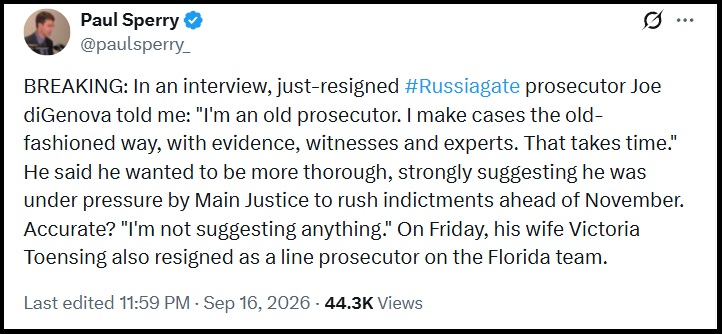
As with all matters of significance, there are points missed, context missing, structural understandings that go beyond quick articles or soundbites. This is one of those examples. It’s highly likely the White House and Main Justice had a strong opinion about the pace of the South Florida effort and the lack of substantive action; I mean, aren’t we all? However, the root of the issue is one I am very familiar with, and with that in mind here’s the part that very few really understand.
If I had to give you the cliff notes version it would sound like this: Yes, the slowness is the problem, but the context is not entirely accurate. One of diGenova (and anyone else’s) problems, is that they don’t know the background material well enough. I have personally encountered this so much I no longer get frustrated; it just is what it is.
The investigators, prosecutors, inquisitors et al, spend too much time trying to figure out the storyline, and it is the storyline that is critical. Because, well, in brutal honesty, they don’t know it. They know it in a cursory fashion, at a high level; at a level of political talking points, media hits, clickbait headline discussion; but unfortunately, that’s not good enough for this case.
A granular level working knowledge of the specifics of Spygate and Russiagate are needed. That level of learning, understanding takes up so much time that it becomes almost impossible for them to act decisively and quickly. It is the complexity of the matter that becomes a self-fulfilling defense. Joseph diGenova was/is no exception. This is the central problem with all of these guys; they just don’t know the material well enough.
I’m not making excuses, I’m stating facts. Facts that are based upon my personal experience after almost a decade deep inside this issue.
That’s the cliff notes. If you want the full understanding, keep reading.
.
Right about here someone will likely ask, ‘well, why don’t you help them’? I’ll explain that also. It’s more complicated that you might think.
The one thing you must remember about exposing Washington DC corruption with Washington DC people is their primary prism. It took me a while to figure it out, but after a while of seeing the pattern, I realized their outlook is a feature of everyone.
Everyone associated with the system of exposing corruption, soup to nuts – everyone, comes into the matter with this outlook. They are deathly afraid of losing their personal credibility, while simultaneously they demand full credit for any resulting positive public opinion.
They are afraid of the story, but they want credit if it becomes mainstream. Now, think carefully about that for a moment, because it is the one common characteristic amid all of them. I repeat, all of them. No one wants the risk – Everyone wants the credit. This forms the baseline for what I am describing.
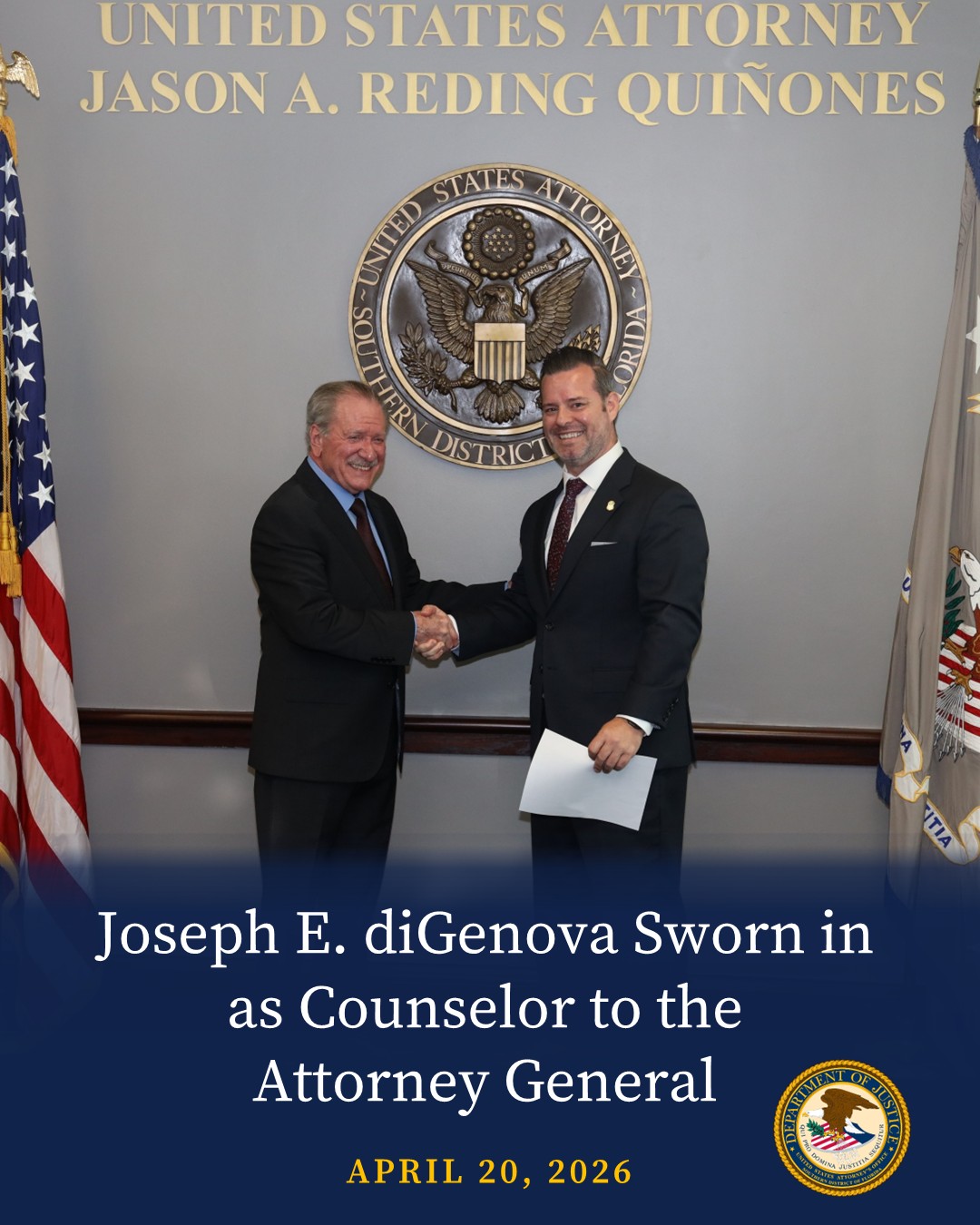 Joe diGenova wanted the job; he wanted to investigate Spygate/Russiagate and deliver accountability. However, diGenova was limited in the outset to the information he understood, which to his credit was more than most but still only at a surface level.
There are others like diGenova, and all carry the same challenge inherent within their ability.
What does this look like in real life? Well, when I have a conversation about the storyline of Spygate/Russiagate that originates back in 2015 (note with some small references to the previous 2011 IRS operation), it takes me about three hours to walk through the timeline of activity. If there are questions, that conversation can take another few hours. Let’s put the total at four hours just to be fair.
Four hours. That’s per person.
You start with the 2nd asst to the 1st asst of the primary. That’s 4 hours of explaining. Then you wait until you are given a meeting with the 1st asst of the primary. That’s another 4 hours explaining everything you previously explained. Then you wait again until the 2nd and 1st asst have explained to the primary. Then the initial background vetting takes place, just to make sure the storyline factually makes sense, and ensure you are not nuts. Then you may, maybe not, get to explain it all again to the primary. Another 4 hours, and the primary will have questions. If they don’t have questions, you are pissing in the wind and all effort to this point is time wasted.
Once the primary agrees on the merit of the storyline, then you are tasked to explain it to the designee of the primary who will then go look closer at the information you are citing, just to ensure the evidence of the citation you are referencing is factually accurate. Another four-hour outline and conversation. If that evidence is factually accurate, the designee of the primary then begins the process to capture it, declassify it, make it public, or add it to the list of evidence needed to continue.
If there are any other stakeholders in the process, they too will request the 4-hour explanation of why this matters.
Everything you just read can pertain to one, singular document; one singular point in the storyline. How many weeks just passed?
It took me eight months to convince around a dozen people of the need to review, retrieve, declassify, return and then ultimately release the House Permanent Select Committee on Intelligence (HPSCI) transcript of testimony from former Intelligence Community Inspector General, Michael Atkinson. No one wants the risk – Everyone wants the credit.
[SIDEBAR: For a case study in ‘No one wants the risk – Everyone wants the credit’ look at John Solomon; who, in my personal opinion, was/is the biggest mistake by President Trump in the effort of transparency in Term-2. Special Govt Employee John Solomon is to White House transparency as Joe diGenova was to Main Justice accountability].
No one knows the granular details. No one fully understands the storyline, the connections, the matrix of names and activities, so nobody really knows where to look. Worse still, no one is willing to say, ‘we don’t know’ – until Tulsi Gabbard. DNI Tulsi Gabbard was the first person in a position of importance who was willing to walk into the situation admitting a lack of knowledge, yet wide open and enthusiastic to understand the specific issues.
No one wants the risk – Everyone wants the credit. This also applies to an odd fear of personal harm (or targeting) from understanding the issues. To me this is like being afraid of mythical dragons. Walk boldly in the light, be right with God and there is no sense of fear. However, I digress.
Please accept this is not me saying I’m the only one who understands the granular details; far from it. There are parts of the storyline I just don’t care about because they seem self-evident. Ex. State Dept officials involved in supporting the targeting of Donald Trump. Of course they did, Hillary Clinton was the Secretary of State and that institution is soup-to-nuts compromised. What’s to prove? What’s the value in exposing their activity? It’s all self-evident.
There are many researchers in a small group on the X platform who have a solid understanding, a granular level understanding, and who can cite chapter and verse of evidence to highlight details in the storyline. I’m sure there are other people on other platforms who can do the same, but not many. The point is not a detail or a series of details; the challenge is the entire storyline of complex details that weave together.
It’s the storyline that makes each point of evidence hold value.
When a prosecutor is building a conspiracy case the storyline is the most critical aspect.
The storyline highlights the motive and intention of each of the participants as they branch off into their specific activity and then return to build upon the sum of the targeting. This is the challenge for anyone who first enters with a willingness to understand.
When it comes to the Office of the President, again no one wants the risk – everyone wants the credit. The concentric circles around the Office of the Presidency are full of lawyers (legal filters), advisors/staff (territorial filters), stakeholders and those who look at everything through the prism of political risk to the office. No one wants the risk – Everyone wants the credit.
Catherine Herridge will not walk into a Trump hotel out of fear for being seen. No one wants the risk – Everyone wants the credit.
Maria Bartiromo. No one wants the risk – Everyone wants the credit.
Bill Alderman. No one wants the risk – Everyone wants the credit.
The need for control is a reaction to fear. No one wants the risk – Everyone wants the credit.
Do you remember when I outlined specifically how President Trump could cut through the fog of obstruction by those who seek control and operate from a position of fear as it pertains to declassifying information? {IMPORTANT REMINDER}
That process of releasing information is as true and effective today as it was when I published it in 2020. However, no one associated with the Office of the President has the guts to stand against the institutional and political fury of that approach. Additionally, everyone associated with the territorial objectives of Washington DC would work to ensure President Trump never took that approach. This is one small example.
Joe diGenova asked for the job with all the best intents and objectives. However, it is also true that a lack of granular understanding of the details led to months and months of time wasted in piecing it together. That delay likely led to Main Justice and White House frustration, which culminated in diGenova’s exit. Two things can be true at the same time.
That’s the cold, ugly reality of the situation as outlined by me, a simple guy, who has tried, failed and in some small measures succeeded in getting information extracted from within a system that both protects itself and is surrounded by those who fear it.
If the South Florida team cannot succeed in organizing a conspiracy case, then my advice or hope is that they take all the evidence to the White House and do what should have been done years ago…..
…. RELEASE IT!
My suggestion was to just release everything and fire everyone.
Stop trying to put people in jail.
The courts are too corrupt.
Just fire them all and then be done with this nonsense.
Putting people in jail is a pipe dream and it’s never gonna work anyways.
Focus on the immediate future.
I’ve been reading this stuff for years on this crap and you have done a wonderful job Sundance but it’s time to move on.
I know a lot of people will disagree on that point but the American people have no clue what’s going on and are more concerned with high prices.
That is indeed a very ugly baby…….thanks for breaking this stuff down for us Sundance.
If the corruption is that deep, then it isn’t worth saving