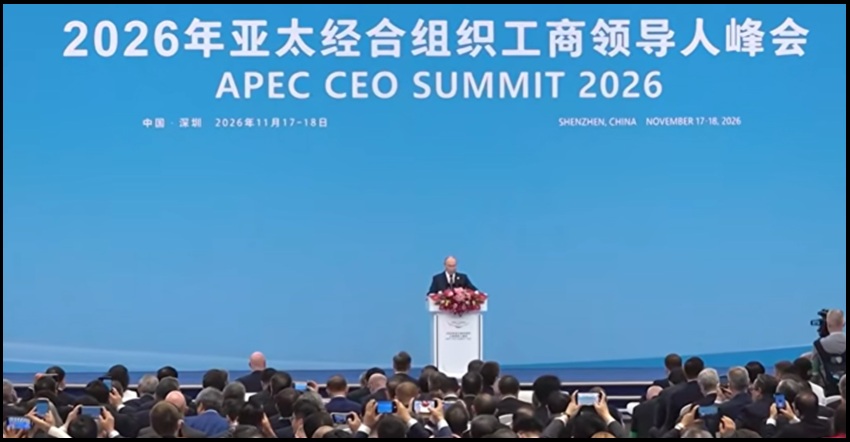
Russian President Vladimir Putin delivers remarks to the APEC audience. Interestingly, the audience is full. The video is English subtitles and from what I can determine, pretty accurate. Working on a full translation transcript, but the chapters are below:
Opening & The Rise of the Asia-Pacific Region
[00:00] Putin greets business leaders in Shenzhen, praising the city as one of the world’s most modern, dynamic metropolises and a key hub of investment, innovation, and social transformation in China and Asia.
[01:06] Recalling when Russia hosted the 2012 APEC summit in Vladivostok, he notes that the region’s growth has surpassed even the boldest forecasts. He characterizes this as a “tectonic shift,” stating the Asia-Pacific region is now the planet’s main industrial and technological hub, accounting for over 60% of global GDP, 36% of the population, 50% of goods trade, 35% of services trade, and over 60% of foreign direct investment.
[02:39] He credits developing Asian economies for jumping from being mere assembly hubs for Western firms to becoming global locomotives of innovation in robotics, digital development, and AI. He notes that emerging markets nearly doubled their share of the global economy from 35% in 1990 to 61% in 2026.
Global Shifts & The Failure of Sanctions
[03:34] Putin argues that a fairer, multipolar, and horizontal world order is emerging from the Asia-Pacific, replacing outdated hierarchical structures. He criticizes former global hegemons for attempting to contain developing nations through unfair competition, which in turn drives regional countries to strengthen their state, social, and economic sovereignty.
[04:56] He states that traditional tools of economic coercion—such as sanctions, tariffs, and export restrictions—have lost their power to crush rival economies. Pointing to Russia as the world’s most sanctioned country, he claims attempts to isolate it have failed.
[05:54] Artificial trade barriers, he explains, hurt the countries imposing them. He singles out the European Union, arguing that by voluntarily abandoning the Russian market and cutting off cheap, stable Russian energy, the EU has damaged its industrial potential, weakened its competitiveness, and driven up budget deficits, debt, and inflation, lowering European living standards.
Russia’s Economic Performance & Pivot to Asia
[07:01] Conversely, Putin says external pressure pushed Russia to strengthen its technological sovereignty and domestic production. Over the past three years, he claims Russia’s GDP grew by over 10%, making it the largest economy in Europe, alongside 2.3% unemployment, controlled inflation, and a public debt-to-GDP ratio within 17%.
[07:51] He highlights a major shift in trade currencies: the share of the US dollar and euro in Russian export payments dropped from 85% in 2021 to 9% today. He adds that Russia did not abandon those currencies—it was barred from using them, and those who imposed the restrictions only punished themselves.
[08:51] Noting the diverse Russian business delegation in Shenzhen (spanning high-tech, finance, agriculture, and heavy industry), Putin states that the Asia-Pacific region’s share of Russia’s foreign trade has exceeded targets, rising from over a quarter in 2014 to 53% today.
Infrastructure, Tech, and Food Security Proposals
[10:15] Logistics & Transport: Russia proposes strengthening regional transport links and offers expanded land and sea transit. This includes modernizing the Trans-Siberian and Baikal-Amur railways, expanding Pacific ports and 24/7 border crossings, and developing the Trans-Arctic Transport Corridor and the Northern Sea Route.
[11:18] Digital & AI: Putin touts Russia’s digital transformation, citing two flagship large language models, urban service platforms operating in roughly 40 countries, top-10 global e-commerce marketplaces, and widespread e-government services. He offers Russia as a reliable supplier of digital and satellite solutions that protect partners’ data sovereignty, and invites attendees to the Future Technologies Forum in Russia in February 2027.
[12:50] Agriculture: Highlighting Russia as the world’s top exporter of wheat and fertilizers (exporting food to over 160 countries), he pledges to expand agricultural supplies to ensure regional and global food security.
The Russian Far East & Eurasian Integration
[13:24] Putin invites APEC investors to the Russian Far East, noting the success of existing preferential zones and the Free Port of Vladivostok. He announces that starting January 1, 2027, a unified preferential regime will launch across the entire Russian Far East and Arctic, featuring a special legal sandbox to rapidly test technologies like drones, industrial robots, and AI.
[14:57] Discussing the Eurasian Economic Union (EAEU), he notes that its free trade market has tripled over the last three years from 185 million to 570 million people, following deals with Iran, the UAE, and Mongolia, with an agreement with Indonesia taking effect early next year. Negotiations are underway with India and Tunisia, with prospects being explored with Pakistan, Jordan, Egypt, South Africa, and Zimbabwe, alongside deepening ties with China—potentially expanding this preferential market to 4 billion people under Russia’s Greater Eurasian Partnership initiative.
Trilateral Talks & Closing Remarks
[17:01] Emphasizing the need for equality, partnership, and dialogue over hegemony and ultimatums in a turbulent world, Putin expresses optimism about the upcoming trilateral meeting between the leaders of Russia, China, and the United States on the sidelines of the APEC summit.
[18:08] He underscores the vital role of business diplomacy in building trust between nations, thanks China for hosting the summit, and wishes Vietnam success as next year’s APEC chair. Finally, he invites participants to the upcoming St. Petersburg International Economic Forum and Eastern Economic Forum in Vladivostok, and notes that Russia has submitted a bid to chair APEC in 2035.
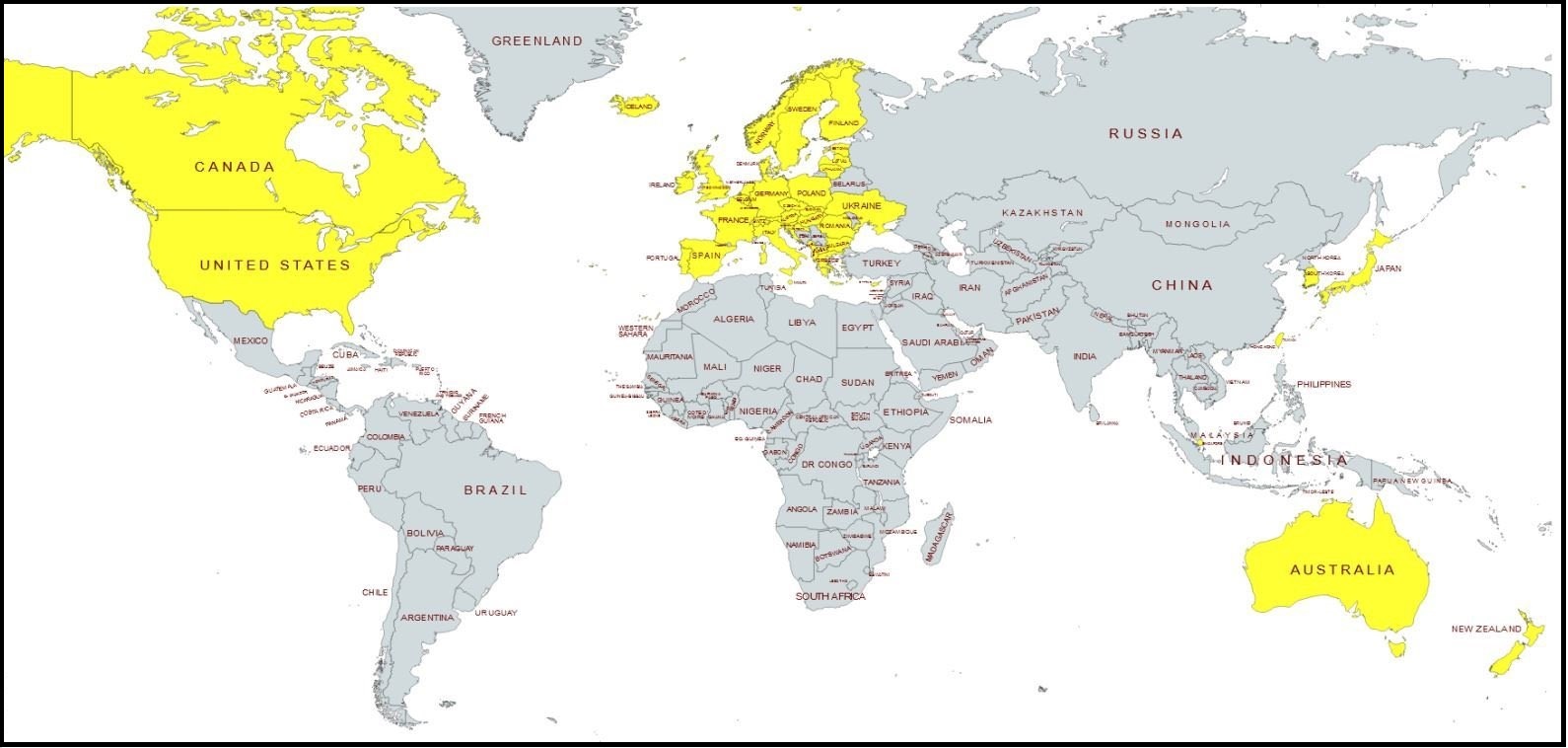
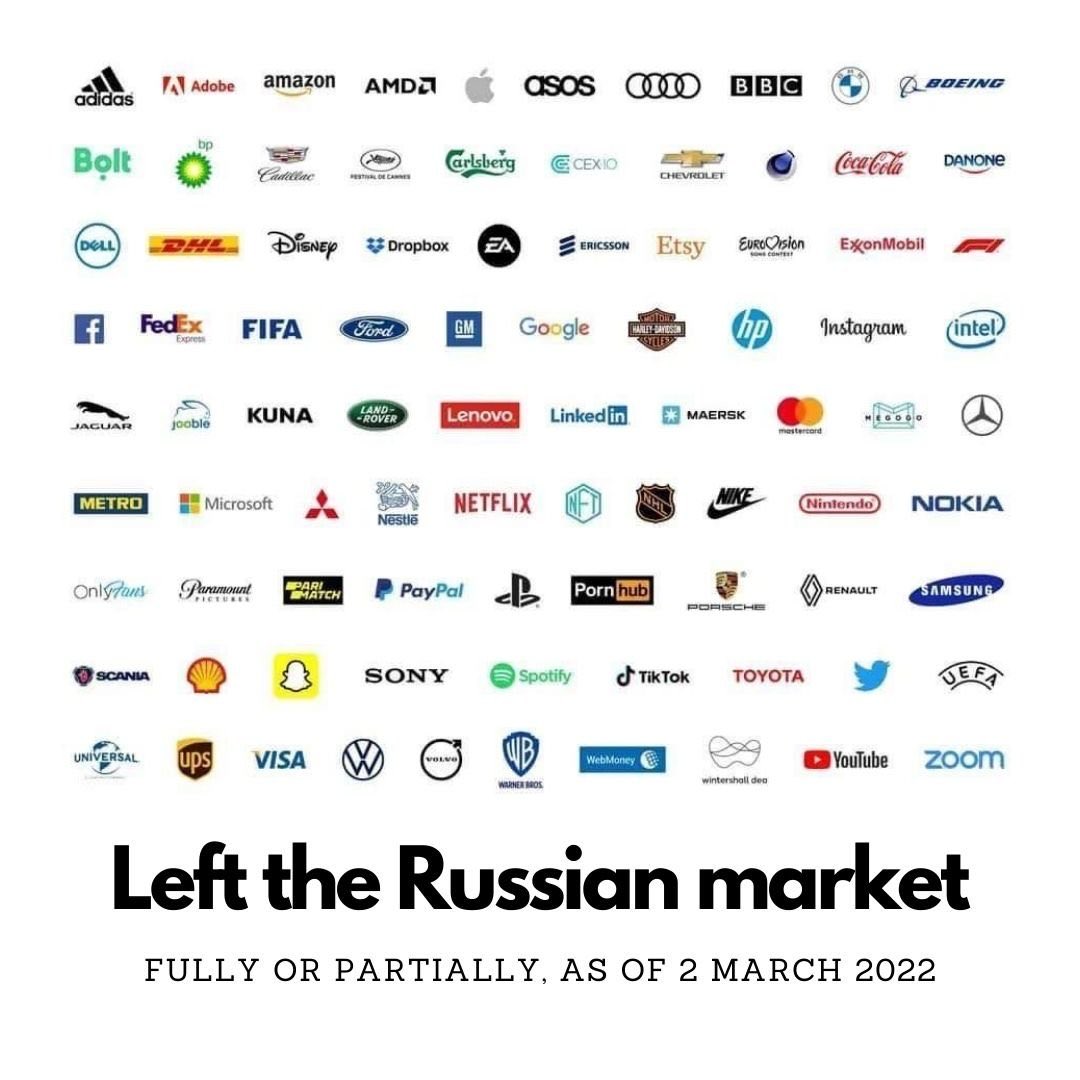
There is a world of peace and prosperity waiting for us if the U.S. forms a strong alliance with Russia and gets out of London’s rent seeking globalist trap of commodities manipulation.
Two great Christian nations. I pray for that.