To say the person inside the opaque glass enclosure was stunned, physically flummoxed and surprised in the moment just before the security officers arrived to escort me to the guarded holding area, would be an understatement. And trust me, there’s been some stunned moments visible in the eyes of people who encountered me.
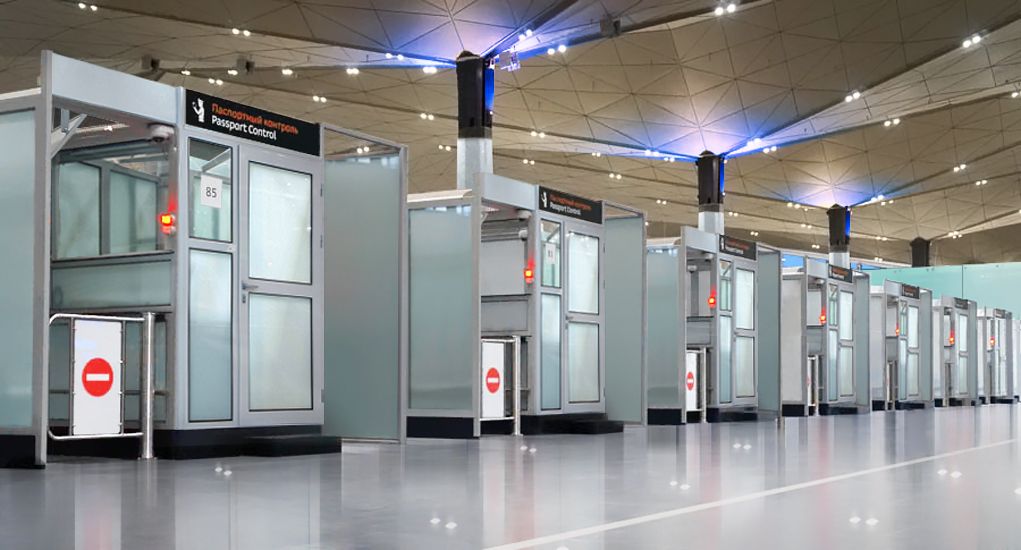
“You need to come with us,” was the end result of a brief conversation at passport control. Followed by “We need to ask you some questions.” A few hours later I exited onto the streets of the forbidden zone, with an ear-to-ear grin that would only be understood by those in my family who saw how it started as a child. However, before getting to that part of the story, let me begin with the end in mind.
This journey is not for those of worried disposition, and I do not recommend it for anyone who does not carry a strong stable constitution of snarky and pragmatically humorous outlook. In many ways this journey is exactly what you would expect, in other ways it is so completely the opposite it’s bizarre.
Y’all already know the motives and intents of how it started [Background] so, I’m going to skip the part about why I chose to do this, and instead focus on the stuff that’s likely of greater interest, the discovery stuff. I’m only here to find out the truth of stuff in Russia vs what we are led to believe.
To begin, I have found the majority of people do not understand the truth of real things and do not believe that its possible for an American to travel to Russia. Perhaps you would be surprised at the number of people who have bought into the pretenses sold by media and don’t think such a journey is physically possible.
The funny thing is, within the system of travel requests and travel permissions, nothing has changed; yet, everyone acts like everything has changed. It’s a weird dynamic to navigate a system that everyone -on both sides- believes no longer exists, but it does.
Almost all of the Russian visa centers, consulates and offices within the Western Zone, are no longer operable. For example, in the USA there are only two offices to submit an application to travel to the “forbidden zone.” One office in Washington DC another in New York. Neither accepts mail applications nor mailed documents, so that makes the logistics more challenging, but not impossible. It depends on how determined you are.
I should also add that some U.S. politicians have no idea what is legally possible. I say this because oddly some asked me to give them instructions on the process. (I have no idea why.) I should also note that everything in this process I’m describing is done with legitimate compliance, nothing is sketchy.
Current travel to the FZ is a little goofy; then again, it always was. You first have to get a letter of invitation – a strangely worded process from what I can only fathom was a former Soviet era approach that somehow remains in place. You get the letter of invitation from a quasi-official process. Keep in mind, everything RU is “quasi-something.”
So, you text a phone number +1(202) 436-XX55 [I filtered the number because I don’t want any unsuspecting knucklehead to try it out and get on some list, but if you want it – email CTH]. Within your text you need to give them your name, email address and approximate date for your travel. The travel voucher people will respond with a link to fill out a voucher application with details. Once you fill out and submit the form, they send you a bill. You pay the bill, and you get a travel voucher/invitation via pdf attachment. This is your “invitation.” The cost of the invitation depends on the type of travel visa you need.
After you get the travel invitation, you then fill out a lengthy VISA application form on a Russian consulate site. The questions are lengthy, detailed and generally you are giving them your life story. Then you print the application, attach your photograph, and you must take it to a Russian VISA center. Another quasi-governmental process.
In the USA you cannot mail the documents. You must physically take the visa application, travel invitation and your passport to Washington DC or New York. You pay the visa center to process your request. You must pay in cash. You leave the documents and your passport with the center, who then send everything to the consulate for review and/or visa approval. The center gives you a receipt with a consulate link to track your application.
You check the link provided on your receipt, and when you notice the process has returned to the visa center (a few weeks), you must then travel back to pick up your passport and visa. You do not know if you are approved or not until you pick up your passport and check. If yes, there is a full-page visa sticker inside. If no, then nothing, and you don’t get an explanation.
You can tell following the official and legal process is a little complicated, a little expensive (with travel) and annoying, but generally, it’s not unmanageable. From beginning to end, give yourself about a month to complete the tasks.
Once you have the visa, you can then plan travel. However, given the nature of the current politics, you cannot travel directly. You have to travel to a place where you can transition to travel into the RU. Turkey, a NATO member, but not an EU member state, is the hub most people use to transfer from the west to a flight into the Russian Federation.
Turkey, particularly Istanbul, is making a ton of money as an RU transit hub. Their economy is booming as the gateway into and out of the Russian federation. However, you don’t have to use Turkey; once you have an RU visa, you can fly into Russia from any Grey Zone country.

There are not many people doing this. During my trips to the visa centers, I could tell the only people there were operatives of various opaque three-letter agencies and some American contractors (some glowing brightly). The Russians and the USA agents/contractors all knew each other well and conversed with great ‘openly visible’ affection. It was like visiting a secret club where everyone else knew the rules except me. lol.. Seriously… it was casually funny.
This was a travel request process with great deliberateness, and I undertook it with extreme compliance for the detail needed. At the same time, I went through the process with a lighthearted approach and laughed at the silly stuff I discovered along the way. That humorous approach became very useful when the RU passport control officers, uniformed military, took me into the airport holding room for “questioning.”
Apparently, not many people are getting RU travel visas, and the arriving officers were a little surprised that everything was done “by the book” so to speak. After lengthy questioning (which was a little funny if you are not prone to intimidation), fingerprinting (took six guards in case I went full Jason Bourne on them), pictures (yes lots of them, the lineup kind) and general waiting while sitting on a green metal chair in an empty room while officers called other officers to find out what to do, I conjured up mental images of low-earth orbiting satellites suddenly activating and various computer networks coming online in dark and unused basements, the tone changed…. slightly.
I was escorted to passport check kiosk #47 for the friendly “welcome to Russia” part.
Big heavy stamp, thud SHIOO-WHACK noise!
“Wait, wha.., that’s it?… Da!
At this point the airport was generally closed, everything was dark, and as I descended the stopped escalator (now a stairs), I noticed my checked bag sitting on the floor in a big empty room at the end of a long-ago-stopped baggage claim conveyor belt.
I grabbed my bag, laughed at the hollow sound of the dark green/rusty exit door slamming behind me, and was greeted by a couple of laughing Ruskie wolverines sitting on the hood of a car eating pizza and smiling. “Comrade!“, funny – not funny.
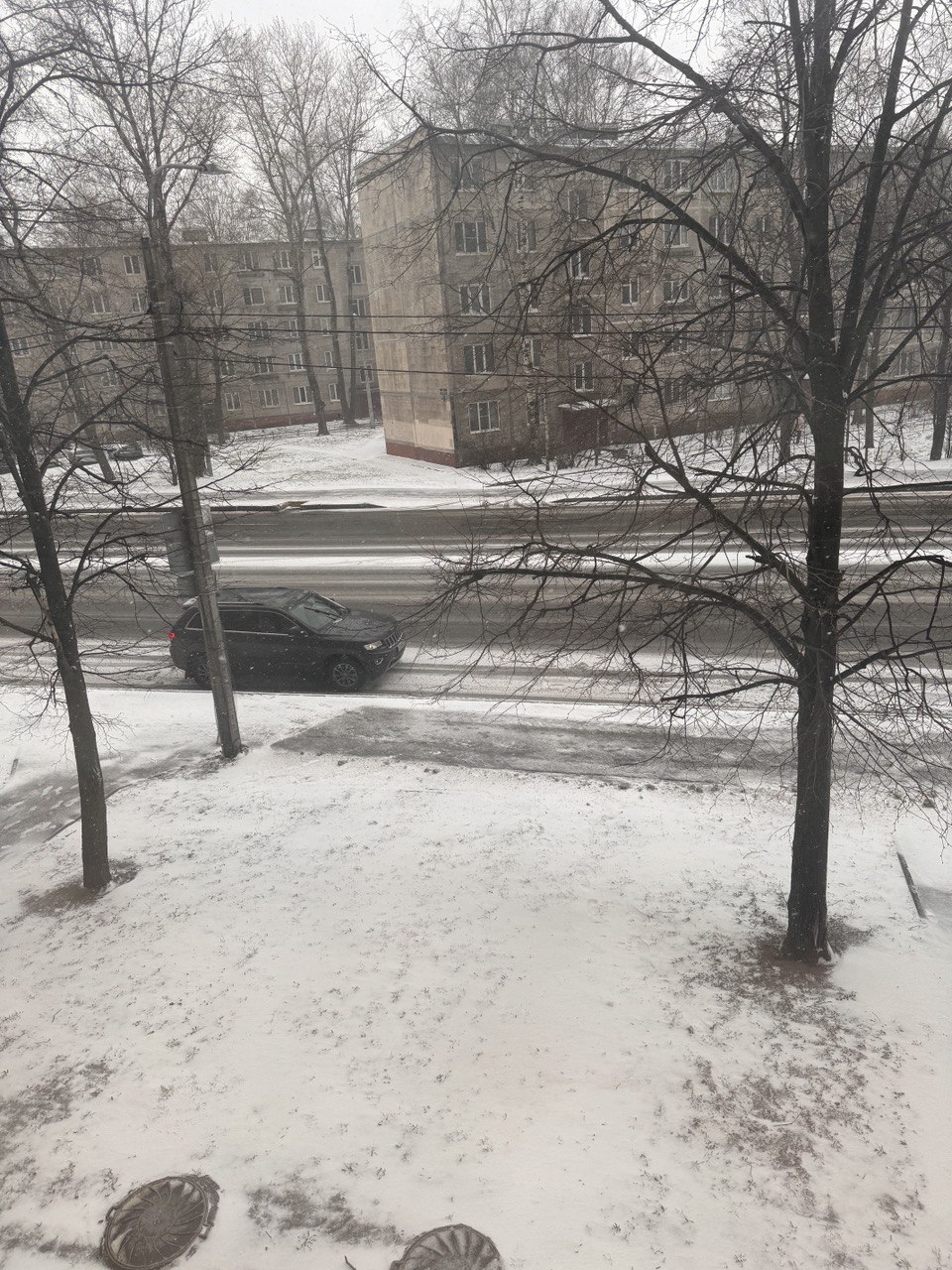
Oh, and it’s the middle of April and snowing!
I’ll have much more later… Fascinating stuff about the WEST vs RU communication networks, blocked online systems, banking etc in the next article.
Oh, and remember how much you paid attention to the daily happenings of the U.S. war in Afghanistan? That’s the analogy for how the average Russian I have encountered thinks of Ukraine, which is to say – not much really. There’s far more discussion of Ukraine in the USA than there is in Russia.
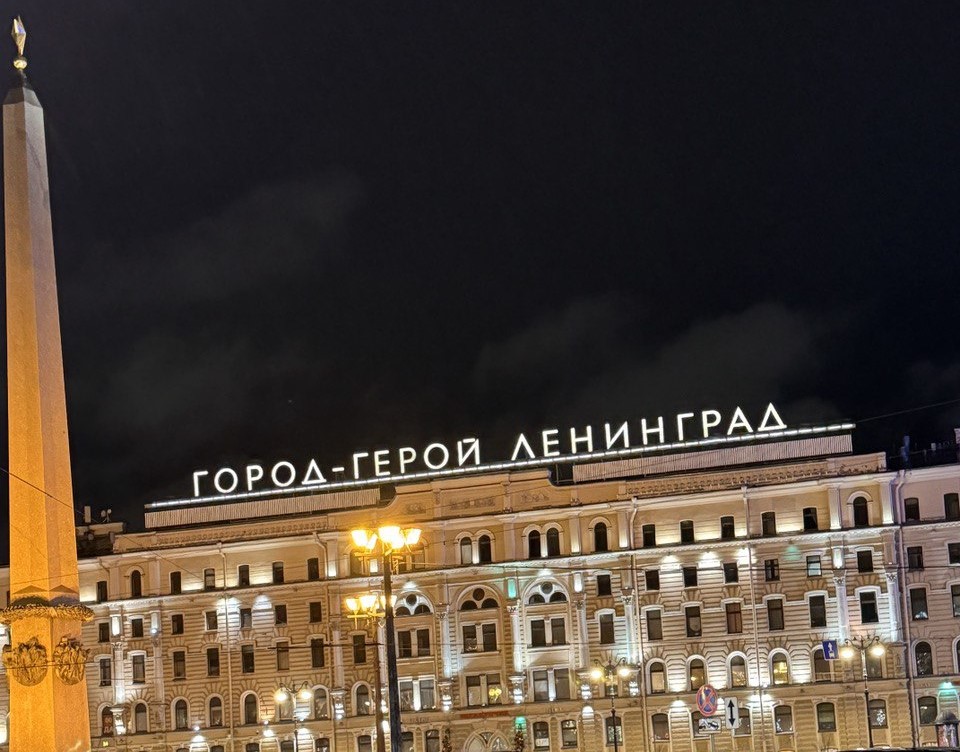
Another odd little social detail I noticed. I’m in the most culturally progressive, young, urban, hip, coffee shop type geography in the country (St Petersburg); everyone has a newer model cell phone, and I noticed something different immediately. People don’t walk around attached to their devices here, you just don’t see it. People physically talk to each other, use phones for actual phone calls, and at dinner there’s no one with their head in their cell phone in the entire restaurant. It’s like 1990’s USA.
Ask me anything in general terms and I will try to respond shortly. Remember, one question per comment.
Sundance, you mention most foreigners you see there are Chinese or other Asian. Putin and Xi have declared “unlimited partnership.” How do ordinary Russians feel about being partnered with China; Is it a partnership they prefer or is it a partnership they have been forced into by the machinations of the US shutting them out of any alternatives?
At the airport did the Russian security check inside your suitcase/bag?
Not that I am aware of. They did however, request to review my cell phone in my presence.
Would a satellite phone be secure and sufficient for private communication in the U.S.A. ?
As long as Starlink is not involved, perhaps yes.
Thank you Sundance for your reply. It is much appreciated.
Thanks for the truth, Sundance. Everyone is asking, and you are answering, some important questions.
Stay safe!
Trying. 🙂
I’m an old Bobby Fischer chess fan. In your visit to Russia do you still get a sense that chess is still an important part of Russian culture?
Not that I can see.
When Mr. Wray of the FBI claimed in a speech that “The threats America faces—from the PRC [People’s Republic of China] and many others besides—are immense,” he forgot to mention the threats from the FBI, CIA, NSA, etc., who are among the “others.”
No questions.
I just wanted you to know that you and your loved ones are always in my prayers.
Stay safe, be blessed.
We love you man!
MAGA
God please save America
X1000
Thank you, I always enjoy your perspective. I’d like to contact you, but the link provided on the web page does not work for me. My emails just bounce back. How do you suggest I get an email to you?
Much thanks,
The email link works. This is the first I have heard about an email contact issue. Who is your email provider?
It could be your VPN (if you use one). I often need to change VPN servers to get something to work. I use Proton VPN; they have hundreds—maybe thousands—of servers worldwide.
Hi, Sundance — I appreciate what you are doing, and pray you have a safe trip. I’ve always wanted to visit Russia — especially Moscow, so I’m finding your observations interesting.
I’m just curious — is there a Mrs. Sundance, and if so, how does she feel about your travels? Is she worried about your safety?
Thanks for taking the time to report back to us, and Godspeed…
Hi Sundance, I’ve been with you for a long time and thoroughly enjoy and appreciate CTH. Quite a while back I watched an informal interview with Peter Lavelle of Cross Talk show on RT. It was held in a coffee shop and was very informative about living in Russia. He said there was no noticeable crime, he wasn’t afraid to walk or go anywhere, the Russians were fun loving, nice people and that he enjoyed living there.
I’ve paid attention to Russian politics & Putin’s speeches for years, they always made sense to me.
Thank you for “carrying on” and look forward to your posts.
Dear Sundance:
Do regular Russians read Dostoyevski, Pushkin, Solzenitszen, etc; Do they have classics on their Bookshelves; 1984, animal farm or Brave new World; are they alluded tp in conversations?
Russians are very well educated, some independently so, on all topics of BIG oppressive government. They seem to understand how to work around a corrupt and oppressive system quite well. Americans could learn lessons from those who experienced the Soviet era and learned the art of communication.
yup. i have a friend who immigrated from Poland to Chicago in 1986. he kept his business to himself. he would often ask people ‘why do you need to know that?’ if they would ask any questions about his job, etc.
i can remember when i would have thought that rude, but I now do the same thing! i also avoid social media because i have always known it was just a data-gathering operation. this is one of the few sites i actually post on.
Thank you for sharing that. I am going to use that” why do you need to know that ? ” to respond to people that ask me…
How much do you get paid at work…
OR
How much did you pay for your new car.
Gee Wiz !!
I am from the generation that thinks how much money you make, what you spent on certain things, what you do behind your closed bedroom door and who you vote for is no one else’s business. Personally, I take offense at anyone who asks any questions about those topics because it’s NONE OF THEIR BUSINESS.
Tell us more, please!
What was the cultural dynamic between classes of people, men and women, families, old versus young, etc.
People are private in Russia. That said, general social cohesion appears to be very strong. The younger generation does not look negatively at the older people, there is a lot of respect.
That’s refreshing!
Interesting to read SD’s response and compare to historical experiences there during the decade or so after then end of Communism.
As an older guy, I got along well with the younger guys; guys in their 20’s and 30’s, better than the older guys who were fewer and more reserved. However, in public, everyone I interacted with appeared reserved and distant.
My one strong memory was that the interaction between men and myself seemed more bonded and symbiotic than that experienced in my male friendships in the U.S.. By ‘interaction’ I mean in private, off the streets. Hetero men were more ‘expressive’ for lack of a better term. I met very few John Wayne types.
I will opine that the men definitely tested my vodka handling skills. Being Russian by ancestry I think I did OK, though i’ve never been a real drinker. That was a problem in the FSU back then, alcoholism, in males. IDK if it still is.
IDK how it is now but when I was there, economic realities had multiple generations living under the same roof, sometimes in the same room with nothing more than a curtain defining a bedroom. That was a unique dynamic of young with old that I never experienced in my life in the U.S.
Sundance, I send many prayers for your safe travels and diligent work. Without the TreeHouse I don’t know what I would do.
Here’s a very interesting article “Scuffles in Brussels”, something of which you may already know.
https://www.thecatholicthing.org/2024/04/22/scuffles-in-brussels/?mc_cid=e9197fbeea&mc_eid=6be20a8c08
I read the article andthere was also another article mentioned at the end: Remembrance and Foreboding. I didn’t care for it the second one, but I do appreciate you link to the scuffles article. Thanks.
I was a little suspicious that with all of the EU guards, the conference leaders were able to “sneak” a particular person (archbishop)in through a back door. Hmmmm.
No questions here (I think?), at least none that are being triggered at this moment.
I’ll leave it at “WOW” for the moment, as I look forward to the next thread!
Safe travels, SD!
Could you describe their attitudes towards you as an American, those of the officials as well as the every day people? Thank you.
Regarding economics; Does there seem to be a “Main St” vs “Wall Street” dynamic in Russia?
Sundance,
I saw your one word reply (Very) to NCMama’s question, “Are you concerned with how our government will react to your adventure?”
My guess is that this communication will now be deemed a counterintelligence target and we are all now part of a broader surveillance effort.
Are you aware of any signs of surveillance by OUR government?
I guess that is a yes.
I would guess that it’s been that way for a long time. The real question is: do you care? Will that stop you from coming to this site and engaging?
Sundance, in your travels thus far, have you come across Russian painters that you particularly appreciate?
Sundance, can I join you?
Sure
Sundance, did you seen any USA tourists at all?
None. Zero. It’s only me.
Prayers for Sundnace’s safety and success.
Always MAGA 👊👊🙏🏻🙏🏻🇺🇸🇺🇸❤️❤️
Wow, sounds wonderful, lack of people’s heads in their phones .
Enjoy SD !
Kiosk #47 is a nice touch
A bit thick today. What is the purpose of ‘this’?
Yea, it doesn’t seem earth-shatteringly enlightening and worthy of being super-secret to me either.
The mere existence of a Rick Steves Russia Travelogue will create a quiet tsunami of suspicion and 702-class data recording. That is one purpose of ‘this’.
Regarding the limited cell phone use… what do you think has created that behavior? Lack of social media, flip phone, peoples’ awareness of the dopamine reward scheme?
You speak Russian. How did you learn it and did you keep that gifted skill
in the vest during questioning?
Previously answered. Niet, He does not speak the language and has translator ap.
In the last AMA, he answered”Da”!
What a great post. The Q & A session is really a cultural lesson in modern social studies (as we knew that term in the 60’s).
Being that you are in Saint Petersburg, which is close to the Finnish border, what does the average Russian citizen think about Finland recently joining NATO? How are relations now between the two countries?
Sundance, have you ever asked any Russian citizen this question: What are you willing to die for?
LAST NIGHT a program on the TV just popped up (!)after we were watching something else. It was a Harvard philosophy prof. (UGH) asking questions of a group of foreign students studying and living here in the US. Mostly it was about the (paraphrasing) the “moral responsibilty of nations to take in all refugees and foreigners and what did they think about that.
Suffice it to say my head was exploding by the time all was said and done. AND THESE ARE THE YOUNG PEOPLE WE ARE LETTING INTO OUR COUNTRY-OMG. There were maybe 2 out of the group who said anything close to common sense . I would have liked the prof to ask them the question: What are you willing to die for?
Thank you for the insights into your travels. What is your feeling about the honesty/genuineness of those you contact?
They are 100% honest with me.
Do they have chemtrails like we do in the States?
I’ll let Sundance answer, but I’d wager they do … if they have jet planes … which I’d wager they do
You DO understand that jet engines expel fuel exhaust and water vapor, right?
It’s what makes those white stripes across the sky
Gnomesayin’ ?
Wow. You sure seem sure of this, and you shouldn’t be.
I’d like to know what the average Russian thinks about this war and about Americans in general. Are they aware of the propaganda and hatred being pushed by the American government? What do they think of Donald Trump?
Hi Sundance. I am curious if your reaction to the visit will be similar to Tucker’s. Am looking forward to your post after you return. God bless you and stay safe.
SD, many thanks for your ground breaking, difficult work you perform every day. Also, A+++ for originality with your boots on the ground real time reporting from Russia. I know of no better source on Earth to bring me news from present day Russia.
My question, how do ordinary Russians feel today about immigrating to America for a better life? (BTW, I’m not claiming that a better life in USA is a given). Also, what do ordinary Russians think about their country and especially Putin being made into the current Bogeyman and scapegoated in US and Europe?
Side note: A fellow treeper recommended Always with Honor by General Pyotr Wrangel. (Russian Civil War 1917 – 1921) told by the Leader of the White Army. I just finished it. Think Dr Zhivago but from the perspective of the Leader of the ANTI Bolshevist forces.
Russia is always a riddle. As Churchill said in 1939, when asked what role Russia would play in WW2: I cannot forecast to you the action of Russia. It is a riddle wrapped in a mystery inside an enigma, but perhaps there is a key. That key is Russian National interest.”
I’d be more curious to know how ordinary Russians feel today about Americans immigrating to Russia for a better life…
I’d expect that “tribalism” is rising world-wide, as war is rising. All immigration seems inherently dangerous to me today.
Do the young “artists” with portfolios of St Petersburg city scenes highlighted in gilt, still approach tourists to sell their wares – they all had the same “artwork”.
My sense is they scope out the tourist to see who have some thing to steal and then phone ahead to the next location where the tour bus is parked and another gang make their hit. We had that happened – you start noticing those who are scanning the crowds looking down, when all the tourists are looking up at the ceilings, art work etc. They have drilled down tourist robberies to a fine art – all interconnected.
Started visiting Russia in the 1970’s when it was full Soviet and everything was in decay – the churches had all been turned into propaganda “museums” and were crumbling .I thought at the time, this could be a really pretty city if they only fixed things up. Fast forward to 2020s – the city now dazzles . Yet feels grim in another way – the pervasive grift.
BTW, my tape to my parents about my 1970’s trip to Moscow and Leningrad was somehow missing from its envelope after it passed across US border from my home in Europe. Envelope was delivered with the note — “contents missing”. Sure – who would pass up first hand accounts from behind the Iron Curtain back then. How would I know if they ever opened a”file” on me too?
What was the purpose of your trip?
Check the prior responses; asked and answered earlier.
Sundance, are there any special tips that you may have gleaned from Russian folks on how they survived the break up of the USSR that might be useful to Americans as we face what may be a similar experience?
Thanks.
Sundance, thanks for helping all Treepers gain a greater understanding of the real Russia and its citizens. Isn’t ironic how your journey, and similarly the one taken by Carlson, would seem to be exactly the type of approach done many years ago by various media? Remember those into China, or similarly misterious nations, to help Americans appreciate their cultural gifts, their special places, and how their people are really just like everyone else?
Sundance — thank you so very, very much for giving us this insight into Russia — and also for your courage in bringing this to us.
This article/thread has been fascinating to read. Your honesty & truth is quite refreshing.
I suspect that China is also nothing like we’re led to believe as well.
It’s not a great place to be when you no longer trust your government — or your media.
Thank goodness CTH & Sundance exist.
“Bring a Western phone into the Grey zone and you have a directional communication tool that is of great value. Bring a grey zone phone into the yellow zone and you have a directional communication tool of great value. There are tools available and I want them secure before SHTF.”
Someone has already asked and been answered about the how.
Are you able to explain this? I am sorry I don’t understand. It seems these things are important and yet how to communicate without”showing your cards” as they say.What would be the “value”.”secure”? And it seems like “SHTF” is a given. I am 77 but my wife is much younger.I have followed the treehouse for a long time but never commented much until now. It seems like you have figured out what will help when “SHTF”. For example,after reading here, I asked my advisor why my IRA was in US dollars in a bank in NYC. He acted like I was losing it.
What do you foresee as a SHTF scenario. I have read a lot here. I guess I still don’t get it. Thank god I live where most of my neighbors are cows, but I still get a lot of things from Walmart. Thanks
I appreciate your description of what you see. There have been a couple of recent recounts of today’s Russia that are certainly overly rosy and embellished, perhaps to give a nod to their hosts to pave the way for future visits. I welcome the candor. I am most certainly interested in what you can discern of the silo our current subjugators are building around We The People. I wonder how long we will continue to have the ability to look over the wall through alternative media to see what is really going on in the world. It seems that every day there are less outlets that have anything of import to say. Maybe it’s because the parties involved in the day to day battles are holding their cards closer to their vests, or perhaps the censors are starting to have greater success. I would love to have an intriguing question to ask, but I am more interested to hopefully hear a better explanation of what we are up against. Godspeed.
One bite, everybody knows the rules. How’s the pizza?
Asked and answered; see prior pages.
Sundance,
Do you speak or understand Russian? How’s the language barrier during your international travels?!
O Glorious St. Christopher
you have inherited a beautiful name, Christ-bearer,
as a result of the wonderful legend
that while carrying people across
a raging stream you also carried the Child Jesus.
Teach us to be true Christ-bearers
to those who do not know Him.
Protect all of us that travel
both near and far and petition Jesus
to be with us always.
Amen.
Sundance answered this in prior pages.
Museums! Museums!
Are you going (did you go) to the Museums?
That’s one place we want to go… St. Petersburg.
And the symphony orchestras in St. Petersburg and Moscow.
Now, have a good vodka and a good Havana… make it an Edicion Limitada.
I take it the urban streets are safer over there, huh?
Quick question: did you learn any Russian before you left? Ok. Another question. Does anyone that lives there, that you’ve met, speak English?
Reminded me of a trip to China I made with a girlfriend about 1987.
I’d had a premonition that we would be detained in Communist China…and, WE WERE!
I remember the men in green and beige uniforms who NEVER SMILED and we were just put into a room by ourselves and not told how long we would have to wait or what was happenng. She was very nervous–my premonition made it worse for her.
Turns out the guy in Hong Kong who sold us our overnight trip to Guanghzou forgot to issue VISAS.
Dude! This is AWESOME SAUCE RED-SQUARED!
Only question in my mind: Can you score a meeting & interview with Putin a la Tucker?
/only half-joking (LOVE YOU Sundance — No Homo!)
I’m wondering generally what the daily cultural life is like? Are Russians inundated with insipid reality shows like America?
Just noticed this
https://www.bnnbloomberg.ca/russian-court-freezes-jpmorgan-assets-under-440-million-claim-1.2063321
When I was young (decades ago) I remember my father saying, “America is the only thing keeping Russia and China from taking over Europe and splitting it down the middle.” A lot has changed in the last 30 years with the rapid evolution of the global (multinational) predators and the advancement of NATO, but I am honestly curious what you think an average Russian person’s opinion would be of this comment 30 years ago or today. A strange question, I am aware but it has been on my mind lately. Feel free to disregard but please answer if you have the time wish to share your opinion and knowledge.