**BUMPED**
The authority for the United States government to capture the electronic records of all Americans without warrant falls under the auspices of FISA-702. Reauthorization of the current authority is being debated. This is a deep walk into why this issue is so important to our government.
 Having researched almost every aspect to the construct and the argument, I am confident FISA-702 authority underpins a much bigger, quasi-constitutional justification for the collection of U.S. citizen metadata. Without the 702 authority the legal justification for the apparatus of surveillance no longer exists. It really is that simple.
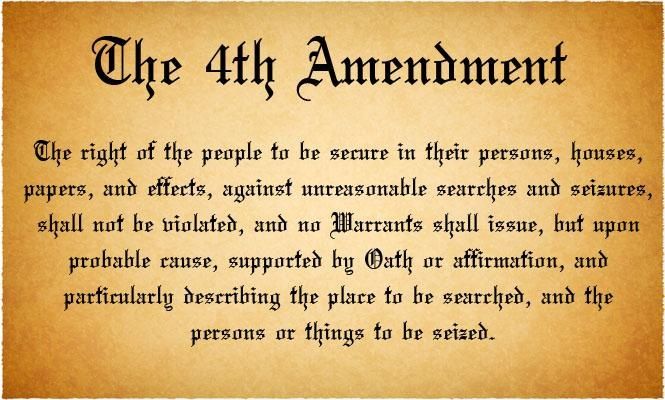
It is not the just the illegal searching of the NSA database that presents the issue, although that aspect has received the majority of attention, the capture itself violates the Fourth Amendment. The only way the government can justify the capture of U.S. Citizen data is if there is some quasi-constitutional or national security reason for it. That’s where FISA-702 comes in.
Take away “702” search authority, and the data collection argument collapses. Any “incidental” search of the database then loses any plausible legal justification. 702 is the camel’s nose under the privacy tent that forms the baseline for all data records to be intercepted, stored and ultimately available for review.
♦ Only one legal case has ever pushed into the sphere of challenging this unconstitutional exploitation. A 2025 decision in the U.S. v. Hasbajrami in Brooklyn, New York, where Eastern District Judge LaShann DeArcy Hall identified the misuse of FISA-702 “backdoor searches” regarding defendant, Agron Hasbajrami.
Hasbajrami plead guilty to charges of attempting to provide material support to a terrorist organization, alleging that he intended to travel to the Federally Administered Tribal Area of Pakistan, where he expected to join a terrorist organization, receive training, and ultimately fight against U.S. forces and others in Afghanistan and Pakistan. However, after his guilty plea, while he is serving time in prison, prosecutors admitted some of the evidence against him came as a result of privacy violations, unlawful FISA-702 searches.
 Hasbajrami sought to have the evidence against him thrown out on 4th amendment grounds (fruit of the poisoned tree) and withdraw his guilty plea. The Second Circuit Court of Appeals denied Hasbarjami’s blanket evidence suppression motion for the exclusion of all FISA Section 702 collection in his case but did not weigh in on whether the warrantless Section 702 database queries were constitutional, instead remanding the case back to Judge Hall for a review of that question.
Judge DeArchy Hall received the case again and reviewed all of the government motions against the request to suppress the evidence. What results is a very well-constructed explanation and opinion of how FISA-702 was misused in the case [SEE 60-pg Opinion HERE].
The judge determined that U.S. government officials did factually violate the technical rules and procedures for the use of FISA-702 searches, and the DOJ should have gone to court to obtain a warrant to look at Hasbajrami’s private communication.
In essence, yes, the 4th amendment protections of Hasbajrami were violated. However, the issue of overturning the resulting evidence becomes a matter of legal distinction.
The defendant, who admitted guilt (twice) did not claim the evidence was a result of misuse or a wrongful approach in searching the NSA’s library, from which FISA-702 search results are determined (a structural flaw in the defense motion). Instead, the defendant filed a suppression motion on the issue of his 4th amendment rights being violated.
The judge opinion holds that the FBI’s Section 702 queries violated the Fourth Amendment; however, the court ultimately denied the defendant’s motion to suppress the resulting evidence on separate grounds.
The value in the ruling by Judge Hall, is a few fold:
First, it is an excellent review of the FISA-702 origin and all of the constitutional arguments that surround the controversial law.
Second, the ruling clearly shows that FISA-702 searches are currently being used unlawfully and continually by government officials.
Third, the ruling clearly shows how “backdoor” 702 searches are violations of the Fourth Amendment. [Albeit in this case, of no value to the argument put forth by Hasbajrami.]


[SEE CASE RULING HERE]
The ruling essentially underpins the reality that government officials are using their access to the complete library within the NSA collection and storage database to conduct searches of U.S. communication that removes the constitutional protections of the 4th amendment.
Mr Agron Hasbajrami was ensnared by this surveillance process and admitted his guilt thereafter.
However, the issue is not Hasbajrami’s intent, or even his guilt. The issue is this constant surveillance state, the metadata library and the tens-of-millions of searches that are done on the private papers of American citizens. In essence we have a domestic surveillance state looking for suspect people who are operating against the interests of government.
Do not forget, now we have over 10,000 log-in portals with access to the NSA database, including an FBI workstation at the DC office of the Perkins Coie law firm that ties into the NSA database {GO DEEP}. Perkins Coie is a national security contractor with the DOJ and FBI .
Mr. Hasbajrami was caught wanting to join a terrorist organization. However, as we have witnessed in the reality of the J6 roundup, a “terrorist organization” may well be defined as your local “patriot group”, “parent’s advisory committee” or designated “anti-vaxxers.”
♦ The Fourth Amendment aspect to the ‘warrantless’ government capture of American citizen records has never been fully argued in court; the modern definitions are opaque, and the govt has a vested interest in retaining the untested status quo. The last thing the executive and legislative branches of government want is a valid 4th Amendment privacy case to reach the Supreme Court.
 The Intelligence Community (IC) has told Congress, particularly the House and Senate Intelligence Committees, that all hell will break loose if they don’t reauthorize full electronic surveillance of Americans.
Congress has historically been scared of the “seven ways from Sunday” IC.
However, Director of National Intelligence Tulsi Gabbard slowly began to change things; specifically change things as they pertain to the domestic use of intelligence agencies.
According to intelligence experts, Speaker Johnson and most Republicans believe the IC justification. I do not buy this argument, because too much recent evidence exists showing how Congress is aware how this metadata capture is being continually exploited.
The only way to really test congressional knowledge is to question them. No one is questioning them. The congressional position is willful blindness.
The IC argument is: we have let thousands of terrorists into the country through the southern border crisis. They say: “we need to monitor terrorists, and if you take away the 702, the foreign terror cells will activate and start killing us all. Do you want that blood on your hands?” You cannot take away surveillance tools.
The DC conversation is, “Ok, we’ll reauthorize it, but you cannot use it against us – and all the sex parties and perverted stuff we do when no one is around; you must promise to keep our secrets hidden“… Then, just like the 2024 reauthorization, they exempt themselves.
The IC agree to accept a reauthorization that exempts Congress. The IC keep the process – just promise not to use it against Congress. This outlook is similar to what we saw in the CR bill extension that included text forbidding the FBI from seeking search warrants against Senator’s telecommunications.
If you ask me why, I now take the position that FISA-702 is the gateway to the massive surveillance system being put into place using Real ID and the AI facial recognition software provided by Palantir (CIA exploit). In essence, the gateway that allows the full-scale surveillance state, is opened by the prior authorization of FISA-702 that negates any 4th Amendment protection.
All of the surveillance mechanisms being updated and enhanced by AI search and capture, come from the IC being allowed to exploit the NSA database. That same database access is the targeting mechanism for FISA-702. If warrantless searches of the NSA database were stopped, the Palantir/IC and Tech Bro collaboration could hit a brick wall. The significance of this FISA-702 issue is much bigger than most can appreciate.
 There is still no warrant requirement in the newest version of the FISA (702) reauthorization bill as proposed [SEE HERE]. The new modifications are only nine pages, and I previously recommended all those interested review the language.
The House proposal was originally for a three-year extension of 702 with a new structural compliance report process requiring the FBI to submit a monthly report to the Civil Liberties Protection Officer (CLPO) within the office of the Director of National Intelligence.
Essentially, the ODNI becomes the compliance auditor for how the FBI uses the process.
The CLPO reviews the names and summaries of intents that have been searched through the use of FISA (702) as submitted -monthly- by the FBI. If there are any violations or concerns the CLPO notifies the Intelligence Community Inspector General for investigation. Both the CLPO and the ICIG report to the ODNI (Tulsi Gabbard, currently).
“The Inspector General of the Intelligence Community shall investigate each query referred … to determine whether the query constitutes a violation of laws, rules, or regulations or an abuse of authority.” It’s another layer of compliance review intended to stop search abuses within the database that is held and maintained by the NSA and U.S. Cyber Command.
Here’s the issue with that part: The FBI can only submit the names that were searched if they are aware of them. Meaning, the FBI doesn’t maintain the audit trail, so the FBI only knows who was searched using 702 based on the FBI ‘searcher‘ reporting their search.
This compliance process doesn’t address unlawful database searches that are not reported because they are unknown to the FBI compiling the report.
The NSA and Cyber Command would still need to be monitoring and auditing the searching of the NSA database; and those searches may, or may not, be done by FBI officials who are filling out reports telling the DNI of their activity.
If a non-FBI person is abusing the database; or if an FBI agent simply doesn’t report his search; that/those search(es) would not show up on the monthly report to be delivered to the CLPO. Hence, how would the Civil Liberties Protection Officer even know?
That layer of compliance just doesn’t make sense.
If this audit process was going to be a compliance review, then the report should come from the NSA/Cyber Command, not the FBI. And the NSA/Cyber Command could simply provide the audit trail to the Civil Liberties Protection Officer (DNI) monthly.
This could even be done today, without any FBI involvement whatsoever.
The simple fact that congress is putting the FBI into the compliance loop tells me that congress is trying to maintain a system that can be exploited for unlawful or unauthorized searches.
FINAL THOUGHT – This contextual information has begun penetrating Washington DC stakeholders. A non-pretending review of the history behind the FISA(702) issue is enough to make a person pause. Perhaps, just perhaps, this is one of the reasons why SSCI Chairman Tom Cotton and SSCI Vice-Chairman Mark Warner are both in a hurry to see Tulsi Gabbard depart and the ODNI revert back to being their ally.
~ Support CTH Mission Here ~
The dirty little secret also is; they know EVERY person who has abused this data collection. Those people’s data is collected also. They have it all. They just don’t use it against their own. #DCCrimeCartel
In agency: Great report to have in hand when performance reviews are due. Either way…
I’m so cynical I believe the CIA doesn’t give a 💩 if Congress passes the FISA-702 searches or not, they will search anyone domestic or foreign they want! The CIA as constituted is beyond the Constitution let alone beyond the 4th Amendment. I wouldn’t be surprised at all if Sundance has been and continues to be searched!! Sundance fits their definition of a Domestic Extremist! Godspeed Sundance! JMO
Bubby I think you’re half right. CONgress does care. They want to handcuff their adversaries by rescinding FISA 702 searches while they continue to surveil as needed without fear of repercussion.
Removing FISA 702 searches hamstrings the good people who follow the law, much like removing guns hamstrings the good people who follow the law.
In President Trump’s hands, this valuable information can finally bring the traitors to justice. We can argue the Constitutionality of such a law *after* we hang all the traitors.
There are simply voyeurs in Government who want to “secretly” know … everything about you. Everything about everyone. Because the technical capacity exists to do this, they “must” do it. You know, for national defense. They even want to use data continuously being sent by your cell phone to track your movements in your own house.
Never mind the simple wisdom of the Fourth Amendment. Never mind the evil that can be done against you without your knowledge or consent.
Well, we can be ‘ungovernable’….
I mean, what would they do with an over abundance of electronic data, dealing with Aunt Ethel’s bunions, all day every day, from sun up to moonrise…24/7/365?
This has certainly fueled the demand for “mass storage devices.”
To counteract all of those endless “tape libraries” of IBM magnetic tapes, which turned out to have been stored so long without having ever been read that the magnetic fields began migrating from one layer of tape to the other . . .
IBM sold those “miles of tape,” anyway.
Who believes if 702 no longer exists that their data won’t still be collected? Companies do it regardless without legal informed consent. If any politician in government was serious about upholding our constitution and bill of rights then this currently wouldn’t be an issue; zero companies or individuals would be able to collect a citizen’s data without written expressed consent and concrete proof of who they are sharing it with. Data brokers are making profits off of other people’s personal information and behaviors while the consumers are paying for the devices and services that allow it. What a wonderful business model for profit. And those who purchase the information are rarely held accountable for the ways it’s used.
Actually, they do collect written consent. If you have ever read the “terms” of cell phone ‘apps’, websites, phone and computer operating systems and other software, you would see your ‘legal informed consent’. Contracts of adhesion are generally upheld as constitutional “freedom of contract”.
If state and federal congresscritters were honest decent prople, they would make contracts of adhesion foisted on the public via public regulated/regulatable industry (internet, phone, operating systems, credit cards, any government support…) null and void.
How about agreeing to be a peon, indentured servant or other slave to give up civil rights of the 13th and 14th amendments? Its the same thing as being forced to agree to give up 4th Amendment privacy rights and 5th Amendment non-self-incrimination rights by freedom of contract, just to use a phone or computer which is a ‘modern’ requirement.
But of course, our federal and state congresscritters aren’t honest decent people interested in what is good and right, and protecting their citizens from powerful evils…..
End user agreements aren’t and never will be a legally binding consent agreement. If it was you wouldn’t agree to it after the purchase of a product. You would be informed prior to the purchase. Also, informed consent is different than acknowledging a disclosure agreement. The lack of understanding of these matters is what allows it to be easily misinterpreted as legitimate legal grounds when in fact it’s deceptive. Just my opinion on the matter.
Most of the time our ‘consent’ is obtained whenever we agree to smart tech usage agreements and subsequent updates. When we don’t agree, a hack or breach will take place anyway, leaving all private information vulnerable to attack, after which they can sell you a security patch.
I can see breaches weaponized to sell tech products in the same way that viruses are weaponized to sell medical products. It’s a great business model when you think about it. For them.
The legal definition of informed consent is different than what people have been conditioned to accept as consent.
“Consent” isn’t legal consent. The lack of legal challenge has allowed it to be framed as consent. It’s the users lack of knowledge that is eroding civil liberties and consumer protections. Just my opinion.
Kudos.
At some point, I hope the citizenry will also become intolerant of PRIVATE SECTOR eagerness to collect personal information. I have noticed almost all retailers have an elaborate manipulation to discourage customers from paying cash: discounts, long lines for cash purchasers, even lectures from cashiers. Half the cashiers can’t even make change correctly. Cash payment adds 5 minutes of discomfort to every purchase. It’s not by accident.
I have put products back on the shelf and left over store clerks demanding my cellphones number to use a debit card. Who lost this battle? The store did. Mass data collection is not getting the attention it deserves and it’s a significant issue on how our information is accessed and what it’s used for. The lack of government response is very telling in my opinion. Most people are unaware of this topic and the serious implications on their lives and that’s by design, too.
It’s a lot like the govt’s inquisitiveness, but in the private sector. The store loses, as you point out, but seems perfectly willing to do so. One suspects enlightened self-interest is not at work. More like a mass psychosis within business, with an undercurrent of “Nudge” style manipulativeness. Rationales I have heard: “We’ll get robbed if we keep that much cash.” “We want to be touchless.” “We’d have to have more or smarter employees.”
Kids can’r operate cash registers anymore. They don’t know how to make change or do the math in their heads. They are only trained to press the buttons with the pictures on them.
They also can’t tell time on a clock that has moving hands. It’s very sad.
I agree.
Had the defendant in the trial been President Trump, any of his associates, advisors or attorneys or even a J6 Defendant or a Proud Boys member, etc the judge would not have found a problem with the backdoor 702 FISA search…
“A 2025 decision in the U.S. v. Hasbajrami in Brooklyn, New York, where Eastern District Judge LaShann DeArcy Hall identified the misuse of FISA-702 “backdoor searches” regarding defendant, Agron Hasbajrami.”
A question to ask is “Does the congressional exemption extend to family members and business associates?
If not, President Trump naming Bill Pulte as the acting DNI is really making them nervous.
Only three hops from family members to the D’s and R’s money launderers!
If Bill Pulte redirects his investigative focus away from mortgage fraud investigations and toward congressional money laundering of bribes and NGO money through family members, there will be a new meaning to One Fish, Two Fish, Red Fish, Blue Fish!
End 702. Acknowledge the abuse. Move forward.
Sure. In January 2029. What’s the rush?
TY Micky!
In my opinion, there is absolutely no constitutional reason for any government agency to have a blanket surveillance search capability over any American citizen. The privacy of hundreds of millions of Americans will no longer exist. One will not be able to travel from Point A to Point B without some faceless person of an intelligence agency knowing about it.
Any surveillance using FISA must be done with a warrant. I am quite certain that the Founding Fathers would be aghast if they knew that American is close to becoming a full-scale surveillance state where the comings-in and going-outs of every citizen is known by the state.
People actually thinking that congress and their private instruments the so called IC, won’t call it intelligence, really cares if its passed or not. They will do whatever they want, case in point J6ers. Still be lied about and abused. They don’t even worry about something coming back at them because they’ll just vote it down and out.
Just explain Samantha Power’s FISA queries, and then justify continued authorization of 702 over citizen’s 4th Amendment Constitutional rights.
“Without the 702 authority the legal justification for the apparatus of surveillance no longer exists. It really is that simple.”
Won’t matter.
The usual suspects will continue to spy on American Citizens.
If the 702 rules expire and vaporize away – when the usual suspects continue to surviel their political opponents and other innocent citizens there will no longer be a paper trail for a future President Trump or a future AG Todd Blanche to expose and prosecute the guilty domestic spies.
If they can pull data from it, they can load data into it.
Beria stirs.
There is so much about this article that is upsetting, but one fact stood out. Please tell me that Perkins Coie no longer has access to the NSA database and that they are no longer being used by the CIA, FBI, or any other three letter entity in DC. Knowing the role that they played in the Russia, Russia, Russia hoax and their connection to the Clintons, who in their right mind would continue to hire them to do anything within government?