I’m catching up on the latest information from the White House and President Trump, and this interview is well worth watching.
.
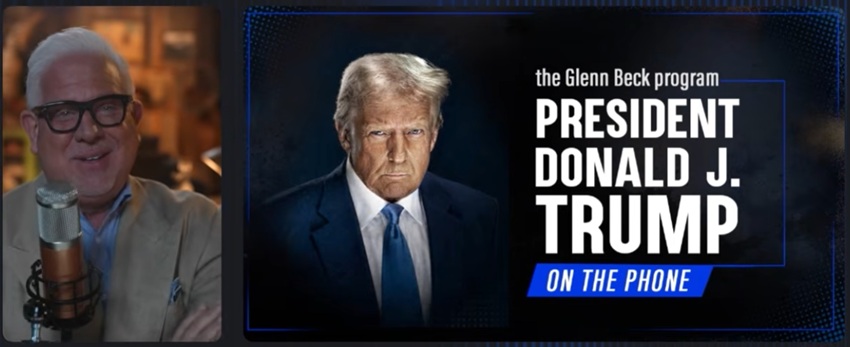
I’m catching up on the latest information from the White House and President Trump, and this interview is well worth watching.
.
I remember reading about PDJT had, in November 2025, directed the Department of Justice to investigate these companies for potential price-fixing, collusion, and market manipulation. PDJT has been saying beef prices will be coming down too, soon. Has there been a lot of background work already accomplished?
Apparently there are 4 firms owning over 70 meat brands, dictating terms from ranch to grocery shelves.
With Attorney General Tood Blanche, Antitrust division Chief, Gail Slater and Agriculture Secretary Brooke Rollins (USDA) and Peter Navarro’s voice on the issue; the probe will hopefully take care of security concerns about the foreign ownership of the packers. The Big 4, together slaughter roughly 85% of U.S. grain-fattened cattle. What a traversty!
Company HQ / Ownership :
JBS USA Brazil (parent: JBS S.A.) World’s largest meat processor
Cargill Minnesota, USA Largest U.S.-based food conglomerate
Tyson Foods Arkansas, USA Largest publicly traded U.S. meatpacker
National Beef Packing Brazil (parent: MBRF Global Foods) Owned by the 2025 merger of Marfrig and BRF.
All four companies have previously settled civil antitrust lawsuits over alleged beef price-fixing, and all have denied wrongdoing in the current probe.
A key point of emphasis from Secretary Brooke Rollins and the administration: two of the four are Brazilian-owned, which she framed as a national-security concern, not just an antitrust one. The DOJ is specifically examining whether the companies reached illegal agreements over how they purchase cattle from ranchers — including through contracts that reference a pricing benchmark some producers say is manipulated.
A related piece of the puzzle is the DOJ’s settlement with Agri Stats, a data company that the government alleged enabled anticompetitive pricing in the poultry, pork, and turkey sectors by aggregating competitors’ production and sales data into a “monopoly price” recommendation.
That case, which was set for trial in May, was resolved just days after the meatpacking probe was announced — and Blanche suggested it “directly affects” pricing in those other protein markets.
Gail Slater gave up and left her post in February.
Thank you. You are correct
Didn’t Tyson just close their beef processing plant?
Putting thousands out of work?
Some lame claim about being unprofitable?
I’m sure that that excuse was true, what with all the executive officers making hundreds of million’s each. /s
I am glad that Glenn brought to DJT’s attention that one of the reasons all of this got consolidated was the USDA’s overbearing regulations, as there are some ridiculous reg’s that pass down to me… I think the last food reg book I studied was over 700 pages of bloat.
Yes I am required to pass a test on all 700 pages too. All food place’s must have a “food service manager certification” (employee) on at all open times “supervising”.
I happened to be in a big “M” restaurant when a manager announces all personnel need to wash their hands within the next 15 minutes as free to do so, real customer confidence builder that you have such an issue with “hand washing”, I am sure it had to be repeated in Espanol, I must digress from here.
Brave AI on Tyson’s closure of a plant:
Tyson Foods is permanently closing its beef processing plants in Joslin, Illinois, and Eagle Mountain, Utah, while also seeking a buyer for its facility in Pasco, Washington.
The company announced the restructuring on August 13, 2026, citing historic cattle shortages and significant financial losses in its beef segment, which is projected to post an adjusted operating loss of $500 million to $650 million for the fiscal year.
The immediate closures result in approximately 3,200 job losses, with 2,500 workers displaced in Illinois and 723 in Utah.
Tyson has stated it will compensate affected employees for 60 days and will consolidate its beef operations around three central facilities in Dakota City, Nebraska; Holcomb, Kansas; and Amarillo, Texas.
This move follows the recent closure of a third plant in Lexington, Nebraska, in January 2026, further shrinking U.S. beef processing capacity amidst a national cattle herd at a 75-year low.
Just think of what it will cost to transport the cattle even farther to reach a USDA processing facility.
I remember when Tyson fired roughly 12–1500 Americans, and hired almost twice that many illegal immigrants and made no apologies about doing so. This was during the Biden era so you have to assume that they actually made brownie points with the Biden administration. The meat companies don’t just have a monopoly on meats. They have a monopoly on so many other food items.
Two cattlemen discussed the corrupt history of JBS in their podcast over a year ago.
Start at 6:20.
The Most Corrupt Corporation in America – Lonesome Report – 5/6/25
https://mightyearth.org/article/jbs-comes-clean-about-bogus-climate-and-deforestation-goals/
Most US people have no thoughts or care about tariffs. Beck saying this tariff war with Canada is hurting the midterms is a stupid statement. Cheetos man doing his part for “The Resistance.”
Otherwise, love hearing from our VSPDJT!
Most of what Glenn Beck says and has been saying for years is stupid.
He’s just stupid.
He also repeats mainstream narratives on a regular basis just like the example previously cited about the tariff war hurting the midterms.
So far, I’m 18 minutes into this interview on 2X speed and I can’t figure out why this interview is so important.
Beck skated over this recent beef catastrophe, telling President Trump how he (Beck) is a rancher and that there were too many regulations on beef.
Something odd is going on with the beef industry and it appears to be some sort of concerted effort to put US producers out of business so that there is a near-complete reliance on foreign beef.
There also seems to be some sort of concerted effort going on to keep beef prices (like gasoline prices) artificially inflated.
This issue with the alleged contaminated beef out of Argentina for example:
“China has blocked a 22-tonne shipment of Argentine beef after tests reportedly detected chloramphenicol, a banned antibiotic long prohibited in animals raised for food.”
What?
Chloramphenicol has been banned for a very long time in various countries, so how did it get into the beef?
Deliberately injected to taint it?
Was the beef indeed contaminated or did China just lie about it to cause problems?
If anyone has watch this whole video and knows why it is important, please enlighten the rest of us?
0.o
22-tonne shipment is small in comparison to the total amount shipped on any day or week. This story is part of the scaremongering and price gouging effort against US beef production and President Trumps efforts to MAGA. Spit
Yes, it’s obvious fear p0rn and price gouging.
Just wondered of there was anything behind it.
The tainted beef scare after the poo poo lettuce scare; what’s next?
0.o
Great discussion, especially on the beef cartel, a subject we, here on CTH, have known for a while. What a gracious and effective President and very pointed, thoughtful questions and observations from Glen, especially on the outlawing of Sharia law.
Screw beck….this satanic tool!!!…beck is part of the satanic Mormon cult…..like all Mormon cultists….lies he is a Christian when a first day Bible college student knows a Mormon is no more a Christian than a Muslim is….mature Christians here know that ….the problem is the majority of the last three generations have never been to church….as someone who has spent 35 yrs in full time ministry….the sad reality is over 60% of supposed Christian churches are totally compromised and the biblical iq among professing Christians is abysmal….that is why pimping a satanic tool like beck is s problem….200 yrs when Satan inspired joey smith to start this cult…he ended up in Utah because Christians in thAt era read the Bible and knew a theological scam from 1000 miles away!……btw …look at how many high profile Christians suck up to beck…let him lie he is a Christian…and never correct him so they can sell their latest book!!!..hope those lost souls are worth it!!!