
(report 1) Back in 2005, Bergoglio drew high marks as an accomplished intellectual, having studied theology in Germany. His leading role during the Argentine economic crisis burnished his reputation as a voice of conscience, and made him a potent symbol of the costs globalization can impose on the world’s poor.
Bergoglio’s reputation for personal simplicity also exercised an undeniable appeal – a Prince of the Church who chose to live in a simple apartment rather than the archbishop’s palace, who gave up his chauffeured limousine in favor of taking the bus to work, and who cooked his own meals. (link)
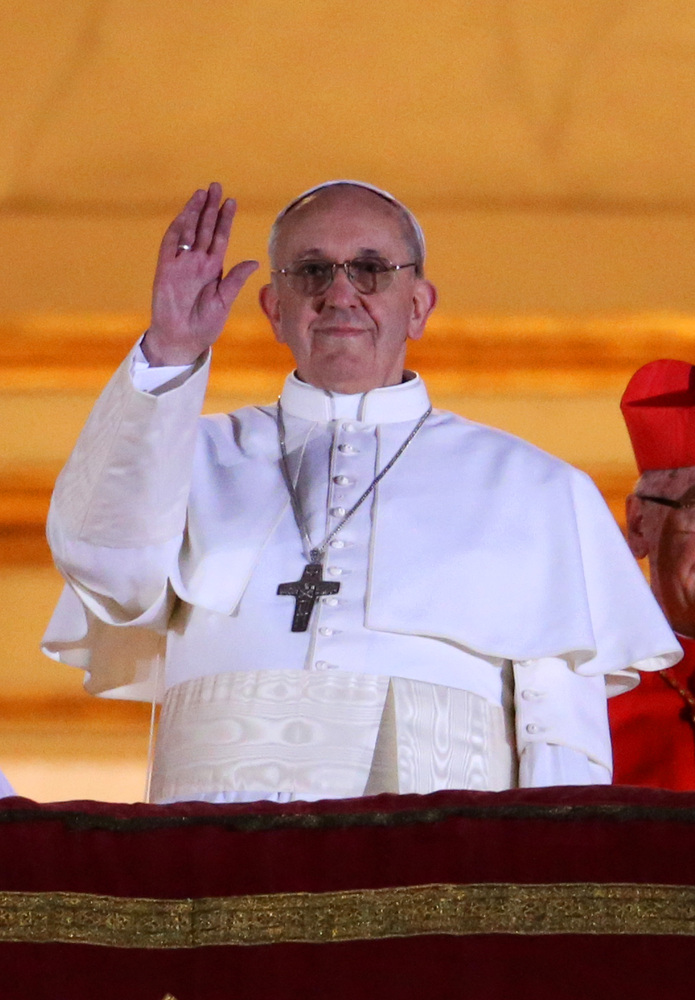
(report 2) The archbishop of Buenos Aires, Jorge Mario Bergoglio, has been selected to become the next Pope, leading the Catholic Church. Like his predecessors, Pope Benedict XVI and Pope John Paul II, he is a staunch pro-life advocate when it comes to abortion.
He once called abortion a “death sentence” for unborn children, during a 2007 speech and likening opposition to abortion to opposition to the death penalty.
In an October 2, 2007 speech Bergoglio said that “we aren’t in agreement with the death penalty,” but “in Argentina we have the death penalty. A child conceived by the rape of a mentally ill or retarded woman can be condemned to death.”
The remarks came during the presentation of a document called the Aparecida Document, a joint statement of the bishops of Latin America. (link)
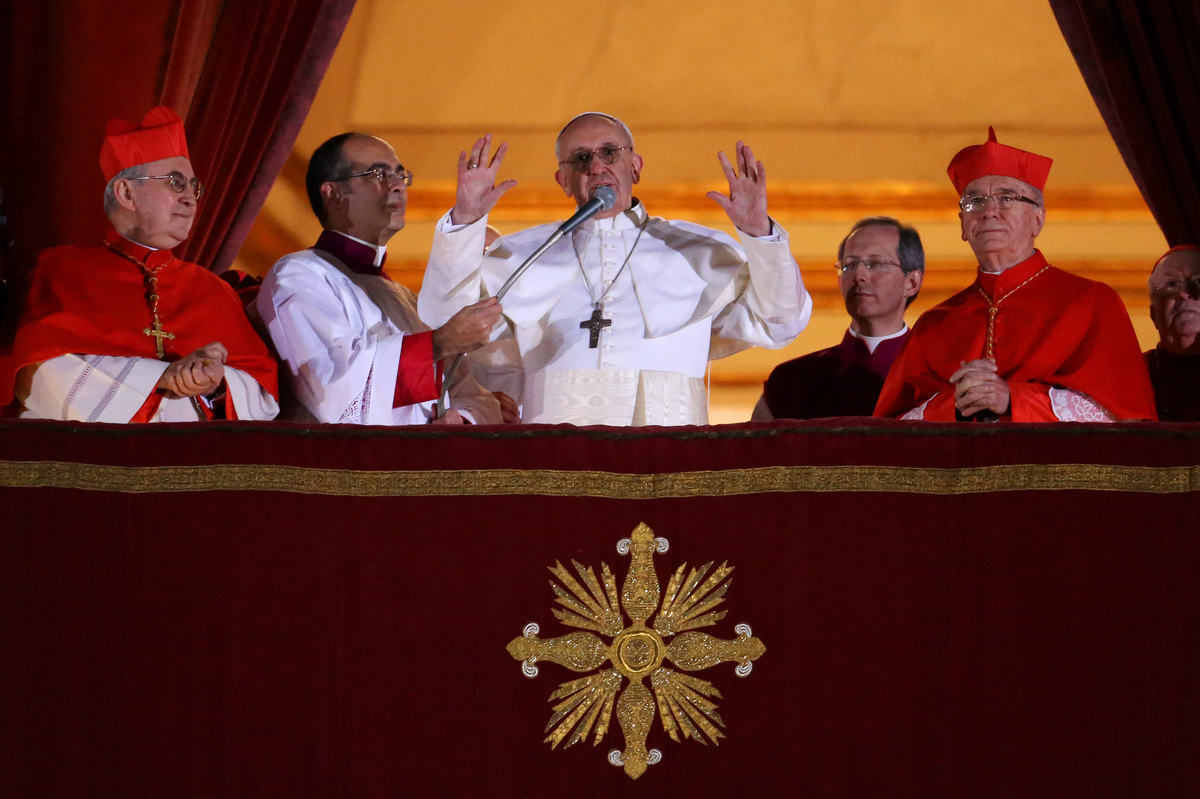
(Western Media Press) Cardinal Jorge Mario Bergoglio of Buenos Aires has been elected to be the 266th pope of the Catholic Church, taking the name Pope Francis.
He is the first Latin American pope to lead the church, as well as the first Jesuit priest.
Francis, 76, appeared on the balcony of St. Peter’s Basilica on Wednesday more than an hour after white smoke was released from the Sistine Chapel chimney at 2:05 EDT (7:05 p.m. CET) to signal that a new pope had been selected. Speaking from the balcony, he gave his first address as pope, the traditional Urbi et Orbi (to the “City and the World”), as crowds waved, cried and cheered for the new leader of the world’s 1.2 billion Catholics.
He prayed for the church, the papacy and for his predecessor, Pope Emeritus Benedict XVI.
Francis was elected to the papacy after two days of conclave meetings with five rounds of voting. Voting in the conclave, which began Tuesday afternoon, is confidential and cardinals were sworn to secrecy, but Francis received at least 77 votes, which is the minimum two-thirds required to become pope. There were 115 cardinals eligible to vote in the conclave. All were under 80 before Benedict’s retirement, as required by Vatican rules. In 2005, when Benedict was elected, it took two days and four votes to elect him.
Francis, whose papacy is effective immediately, will be formally installed in the coming days. It’s unclear when the installation Mass will happen, but Vatican spokesman Fr. Frederico Lombardi said earlier on Wednesday that Tuesday, March 19, the feast of St. Joseph, is a possible date. He spoke before white smoke signaled news of a new pope, and it was unclear if he expected a decision on Wednesday. Lombardi also said in the same interview that the new pope would likely celebrate Mass with the cardinals the morning after his election.
The day of a papal installation typically begins with a visit with cardinals to the grottos of St. Peter’s Basilica, where the first pope, St. Peter, is said to be buried. There, the new pope is expected to say, “I leave from where the apostle arrived” before a procession to the square and the installation Mass (the Mass lasted two hours for Benedict’s installation in 2005).
At the installation Mass, Francis is expected to receive the Fisherman’s Ring made for his papacy (the one Benedict wore was given up when he retired on Feb. 28 and purposely damaged by Vatican authorities per tradition) as well as the pallium, the woolen stole that’s a symbol of his authority.
When Benedict was elected, 12 church representatives knelt in front of him at the installation: three cardinals, one bishop, a priest, a deacon, a married couple, a nun and man from a religious order, and two young people who have had their confirmations — a key sacrament of the faith. A similar group is expected to kneel in front of Francis as a symbolic pledge of obedience.
After the Mass, the new pope customarily is driven around St. Peter’s Square to greet groups of priests and laypeople from around the world who have come to see him. In the days after, he is expected to visit the three main Roman basilicas aside from St. Peter’s: St. Paul’s, St. John Lateran’s and St. Mary Major’s. The first visit is usually to St. Paul — outside the Vatican City walls.
For his first few weeks as pope, Francis will live in a temporary apartment away from the official papal residence. Vatican spokesman Lombardi previously showed reporters a video of new pope’s short-term home, which has a study, a sitting area and a carving of Jesus Christ’s face on the headboard of the bed. Francis will stay there while the official papal apartment is renovated. The apartment was sealed after Benedict’s resignation and church rules say it can’t be reopened for any reason until there is a new pope. (link)