The background for Americans to best understand this story is HERE.
 In the update to the attempted judicial coup d’etat carried out by globalist Prime Minister Donald Tusk last night, Polish media are now reporting the plane carrying Poland’s President Karol Nawrocki was denied landing permission as the President was urgently returning to deal with the leftist government effort.
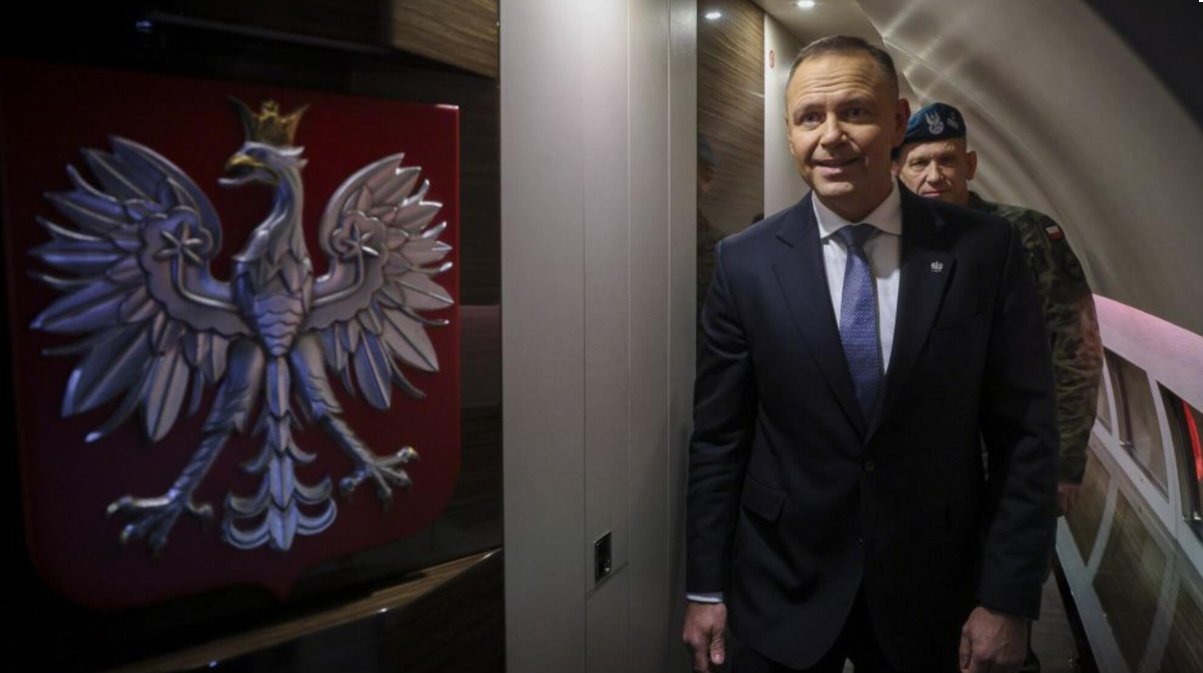
The media are reporting that military pilots of the airplane carrying President Nawrocki refused to follow the orders from the air traffic controllers and landed the President back in Warsaw. {Source Here}
If these reports are accurate, Prime Minister Donald Tusk has no plausible deniability to distance himself from the grossly unconstitutional effort. Calls are now being made to cancel the Parliamentary assembly and hold new elections to restabilize the government.
For those unfamiliar with the Polish legal system, the Constitutional Tribunal is an independent constitutional body responsible for reviewing the constitutionality of legislation, but it also has other very important competences concerning the constitutional status of the President of the Republic and the President of the National Bank of Poland. Its independence and the legal status of its judges are protected by the Polish Constitution.
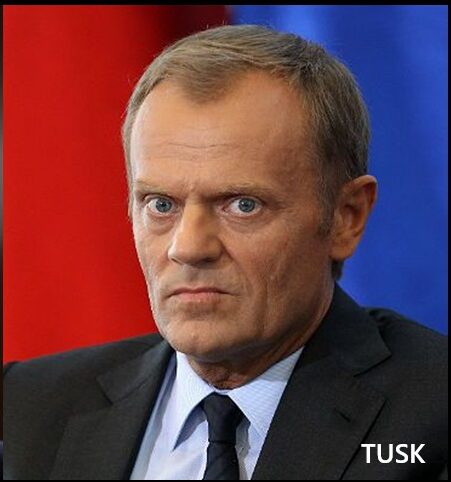 Since this spring, Prime Minister Donald Tusk’s government has been taking steps aimed at gaining control over the Tribunal, most recently by attempting to install a former minister from his own cabinet as a new “judge” of the Tribunal. The government presents these actions as an effort to restore the rule of law. However, the methods employed raise fundamental questions about respect for the Constitution itself.
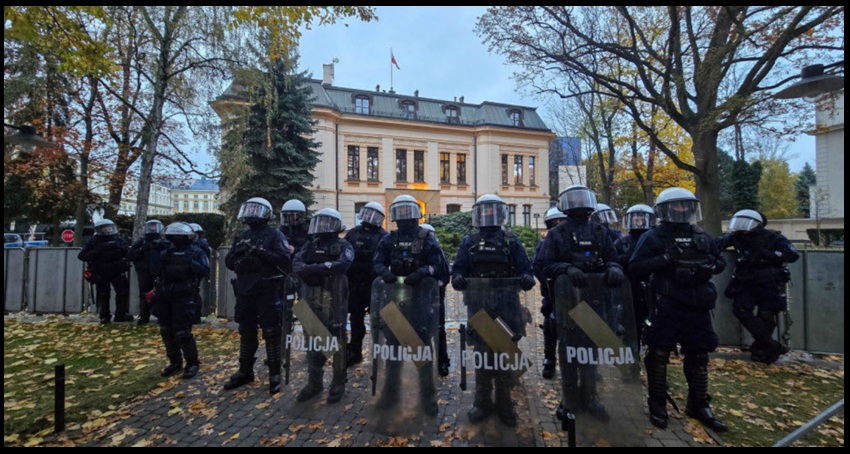
On Friday, 30 October, approximately 3,000 police officers were reportedly deployed in connection with the situation at the Constitutional Tribunal, following a notification from Anna Korwin-Piotrowska, who claimed the authority to assume the Tribunal’s leadership. Claiming that the President and Vice-President of the Tribunal were absent, she issued decisions announcing their suspension from official duties. The legal basis for these decisions is strongly disputed, including by the First President of Poland’s Supreme Court.
Zbigniew Kapiński, First President of Poland’s Supreme Court, issued an official statement strongly opposing the actions taken at the Constitutional Tribunal. His objections concerned both the involvement of the police and the legal basis for “suspending” the Tribunal’s leadership. He referred specifically to Articles 7, 10 and 173 of the Polish Constitution, which establish the principles of legality, separation of powers and judicial independence.
He also challenged the application of Article 130 of the Law on the Organisation of Ordinary Courts, arguing that it did not authorise a person without the relevant statutory powers to suspend the Constitutional Tribunal’s President and Vice-President. Kapiński warned that police powers must not be used to restrict the functioning of constitutional institutions or enforce political decisions concerning their leadership.
Professor Jacek Chlebny, President of Poland’s Supreme Administrative Court, issued a separate official statement addressing the events of 30 October. He described the police presence around the Tribunal and the obstruction of its President and Vice-President as unprecedented. He raised fundamental concerns about compliance with the principles of the rule of law and stated that constitutional boundaries had been crossed.
Prof. Chlebny also emphasised that restoring public confidence in the Constitutional Tribunal requires a political compromise, but that any action must remain within the existing legal framework and respect the Tribunal’s constitutional independence.
Serious legal objections have therefore been raised independently by the First President of the Supreme Court and the President of the Supreme Administrative Court. Their official statements provide a documented basis for examining the events and the constitutional questions they raise. This is not merely a political dispute between the government and the President of the Republic.
When police forces were deployed at the Tribunal, President Karol Nawrocki was travelling to Senegal. Immediately upon being informed of the situation, he interrupted his flight and returned to Poland. After arriving in Warsaw, he held consultations with the First President of the Supreme Court, Zbigniew Kapiński, and the Constitutional Tribunal’s President, Bogdan Święczkowski.
During the night, President Nawrocki travelled to the Constitutional Tribunal together with the First President of the Supreme Court. Despite the police presence and attempts by Anna Korwin-Piotrowska and other individuals at the entrance to physically prevent the President from entering the building, he entered the Tribunal and challenged the authority of those claiming to have assumed its leadership.
The confrontation at the entrance was physical, with individuals blocking the President’s passage. The Presidential Chancellery rejects allegations that the President was the aggressor.
President Nawrocki subsequently stated that the constitutional order of the Republic of Poland had been violated and that a constitutional state institution had been taken over by force.
He called for the withdrawal of police forces from the Tribunal’s premises and the restoration of the legal order. He also enabled the Tribunal’s lawfully serving Vice-President, Judge Bartłomiej Sochański, to enter the building and convened urgent consultations with representatives of parliamentary parties to stabilise the political situation and restore constitutional order.
Prime Minister Donald Tusk, meanwhile, defended the government’s decisive action as necessary to “restore the rule of law”. The President’s position is that restoring the rule of law cannot justify disregarding constitutional safeguards, bypassing statutory procedures or using police forces in a dispute over the leadership of an independent constitutional institution.
The European Commission, which was highly active in commenting on disputes concerning judicial independence under previous Polish governments, has so far not issued a comparable public assessment of these events. Commission President Ursula von der Leyen has likewise remained silent.
The question is whether the same standards of constitutional legality, separation of powers and judicial independence will be applied to the current Polish government as were demanded of its predecessors.
The rule of law cannot depend on which political party is in power. Nor can the independence of constitutional institutions be protected by disregarding the constitutional rules that guarantee it.” {source}
As of right now, October 31st at 11:07am, 12 hours after the scenes in Poland, @BBCNews have removed all reports, articles and coverage of the Dictatorship of the Polish Prime Minister @donaldtusk trying to cancel democracy. Why? It doesn't fit their agenda. The BBC is supporting… pic.twitter.com/iQby0e6Vu5
— TheLastEnglishMan🇬🇧 (@EndangeredBrit) October 31, 2026
🚨 POWERFUL!! A Polish member of the European Parliament whose grandfather FOUGHT communism and whose father helped FOUND Solidarity just begged Americans on Fox.
"Socialism is death, slavery, lack of any freedoms. Please don't do it."
Poland lived through decades of it.… pic.twitter.com/ujtFvAZ7HL
— Gunther Eagleman™ (@GuntherEagleman) October 31, 2026
Translation:
“There was supposed to be a message from the Prime Minister, we received a message from the spokesman of the Strong Together. Resignation!”
This reminds of the saying “when you aim for the king, you better not miss”.
Mr. Tusk and his EU cronies missed by a wide mile.
Thank goodness for this!
I think the term is when you aim for the king, take only one bullet. You will not get a second shot.
Yes, I wonder if the ignorant women socialist nazis in this country think they can stand in a moment like this.
A quick search suggests that Poland has “strict” requirements for ownership of firearms. …
Is this attempted overthrow of a legitimately elected Polish President a “dress rehearsal”?
In my heart of hearts, I can’t help but believe that the timing is meant in part to be a message, a warning from the Divine for our own nation as we inch closer to the midterms. And as insurrectionist forces here prepare to execute the same after and in no way even attempting to deny the exposure of their traitorous perfidy.
How many are paying attention is the question.
Every bit of detailed information I have read has come from X and social media posts. And here of course.
Nothing from the enabling and complicit Enemedia names we all know and despise and which despise us.
It will be interesting to see tomorrow if on the Sunday Gabfests these horrifying developments will be a topic. I’ll be surprised… no, shocked… if this coup gets any mention. Because as we all know MSM is an embedded enemy working with those who wish to destroy this nation.
But there is no question that prodigious evil is at work and that America herself is a target.
Scott Presler has posted a link where anyone can report any suspicious activity encountered on November 3.
https://protectthevote.com/report-fraud
Armour up, friends, and do not forget the most powerful weapon any of us will ever wield….prayer.
Not only for Poland and her people but for all free peoples, and for the glorious America we love 🇺🇸
Thank you Betsy.
Every time I see violence I wonder if it a “dress rehearsal” as you say.
Especially when people started dropping off trunk loads full of shields, helmets and boxes of bricks to the “protesters”.
That was here in USA.
Is Judge Boasberg in the USA, and his pals working on something similar for the USA?
Is Poland part of the coalition with the UK and France that wants to fight Russia?
There is too much chaos in the EU, and Canada wants to join; clearly, there is zero benefit to the Canadian working class
Just announced yesterday Canada will become an alliance partner; but not a member. A novel arrangement. Just what Europe needs, another deadbeat on their books.
Bozoberg would if he could. He belongs in prison for obstruction of justice.
Disagree
He belongs dangling from a gallows
Slotkin cia stooge and Obama are. They were over there not long ago organizing these movement see my post
The Germans moving on Poland-what else is new.
I saw a report that Senator Slotkin was just in Poland….
Donald Tusk needs to be arrested and tried for sedition/treason! Absolutely unreal that he wait for the President to begin travels before he executed his plan.
I never liked him.
I swear there is something big happening in Europe… it seems like WEF are trying to implement their plans to become the sole rulers of the world (lol! or maybe not so lol….).
Where is Victoria Nudelman?
Trotting the globe with her fellow Horsewomen of the Apocalypse: Powers, Jarrett and Rice spreading their war, petulance, famine and death wherever they trod while their three headed dog Cerberus (McCord, Boasberg and Sunstein) guard the Potomac River.
Was Slotkin picking up best practices tips for their Democrat coup, after losing at the polls in next few days?
https://www.thegatewaypundit.com/2026/10/watch-hidden-camera-video-exposes-sen-elissa-slotkin/
From the article:
During the same conversation, Slotkin also referenced a recent trip to Budapest.
“I just went to Hungary. I went over to Budapest because they just got rid of their authoritarian leader after 16 years. And I’m like, how did you handle 16 years of corruption? We don’t have that much, but we have so much.”
The remarks align with public comments that she has made in recent weeks.
Slotkin took an official trip to both Poland and Hungary in Sept. to study how coalition movements navigated pushback against conservative governments and institutional transitions.
Upon returning, her public takeaways focused on the playbooks used to challenge rightwing populist parties and how governing coalitions maintain institutional control once elected, and coincidently how to handle institutions like the judiciary and the state media
On her return she spoke ata public forum alongside Anne Applebaum, whose husband is Radosław Sikorski the foreign minister in Donald Tusk’s government and one of the central figures managing Poland’s current posture toward both Brussels and domestic opposition.
Slopkin should be investigated.
https://x.com/ErikaCA47/status/2116385710554960028
The WEF are a group of self loathing talking heads. Keep your eyes focused on the people that control the guns.
You can bet your bottom dollar many Clowns In Action operatives like Slotkin and Samantha powers are in and out of any country they want destroyed.
https://x.com/ErikaCA47/status/2116385710554960028
Slotkin has some explaining to do.
Lock them commies up or the next time it will be to late.
Tusk Tusk …..
Tsk, Tsk.
Shows your disapproval of something or someone’s behavior.
Polexit
EU… 🖕
Polish MEP Dominik Tarczyński is explaining what is happening right now at Poland’s Constitutional Tribunal, calling it nothing less than a COUP D’ÉTAT!
“In Poland, we have a liberal-left government led by Donald Tusk, who is the Prime Minister. What is happening right now with the Constitutional Tribunal is that they want to take it over and fill it with their own people.
Why? Because they want to get rid of the Polish currency, bring us into the eurozone, and eliminate our secure borders. They are being pushed by the Germans, who want to spread the burden of illegal migration and send migrants to Poland.
First of all, the Polish złoty is our constitutionally protected currency. They have to change the Constitution to replace it, and without the Constitutional Tribunal, they cannot do that.
So, number one, they want to get rid of our currency and force us to adopt the euro and join the eurozone. Then they want to take our gold reserves, the largest in the European Union, to Frankfurt, to the European Central Bank, which is a German-based institution.
They also want to open our borders. And they want to make sure that when they lose the next elections, which are coming next year, the Constitutional Tribunal will be unable to do anything to stop their actions or reverse what they have done.
There are many more reasons, but I want you to understand one thing: they are under German influence. They are globalists, and we are fighting not just for Poland, but for Europe.
Be like Poland. Be strong. Our nation is strong, and we are going to win this fight!”
“ they want to get rid of our currency and force us to adopt the euro and join the eurozone. Then they want to take our gold reserves, the largest in the European Union, to Frankfurt, to the European Central Bank, which is a German-based institution.
They intend to raid Poland’s treasury just like they did Canada’s.
Removing currency allows total control of dissent, like they did with the Truckers.
Coming to a DSA-controlled Congress near you…
Given Tusk’s globalist background and the well-documented pattern of trial running totalitarian control measures in other nations, we should evaluate what is happening in Poland in regards to our own government, and specifically to the future of the Judicial Branch. Nor should we overlook the Brazilian judiciary’s actions within minutes of that nation’s most recent election being concluded.
Yes Brazil is a judicial tyranny. We must hold the Senate on Tuesday otherwise our Judges are gone.
The eyes are the window to the soul and Tusk doesn’t have a good soul.
This was all planned and you know many players are involved.
I expect no less from the Dems should they be given any control of any branch of government.
Was just in Poland last month and met with Lech Welensa who is a avowed globalist.
Me thinks he approves of such actions.
Eric Daugherty
@EricLDaugh
53m
🚨 JUST IN: Pro-EU tyrant Polish PM Donald Tusk just PANICKED, releasing a video where he blames the constitutional court situation on the RIGHT, and demands upholding “democracy”
Cont…
https://nitter.click/EricLDaugh/status/2116615501224808646#m
Thank you for the preview what Democrats will do, after they “pack the US Supreme Court”with their cronies. This is exactly what they plan to do.
Democrats actually think they can do better with no guardrails, than our 250 year old governing documents. Tell them Tuesday to go away, and never come back.
That is what arrogance produces. Destroying the greatest form of government for Communism.
Sounds like it’s time to give the old phrase “a hanging judge” a whole new meaning.
I dont know how to speak Polish and I sure cant read it,
a Polish radio station is posting screenshots of this X account:
x.com/MaciejBerek
This account is backing the takeover of the Court, if the translations are correct.
Ah, reading further down his tweets, he was appointed by the parliament (sejm) as a judge to the Constitutional Court but was not allowed to assume his office. All of the ensuing drama was caused by this man.
Here is another post explaining the drama:
POLAND’S CONSTITUTIONIONAL TRIBUNAL CRISIS DEEPENS
The conflict escalated in early autumn after the Polish parliament elected Maciej Berek — a supporter of the ruling coalition and minister without portfolio — as a Constitutional Tribunal judge. The decision caused tension even within the ruling coalition itself. Tusk called Berek a “competent, brave and selfless” man and the best candidate to put the tribunal’s work in order.
The new judge was to take office in mid-September, but President Nawrocki refused to swear him in — along with two other Sejm candidates — while tribunal chairman Bogdan Święczkowski barred them from work. Berek’s letters to the president, he says, went unanswered — so he took the oath in parliament, declaring he did so “in the presence of the president,” and sent notarized documents to Nawrocki’s chancellery.
Protesters have been gathering regularly outside the tribunal ever since. On October 30, government-backed judge Anna Korwin-Piotrowska announced the temporary suspension of Chairman Święczkowski and his deputy Bartłomiej Sochański — both opponents of the court reform — declaring herself tribunal head as the longest-serving judge. Święczkowski and Sochański rejected her claims; Sochański called the move a “coup d’état.”
https://t.me/militarysummary/32509
Like I said, I have no idea cause I dont speak it or read it.
The radio station is https://polskieradio24.pl/
Same here… I used nitter.click and my browser then translated the text.
It was an interesting read, though!
Polish President is in charge of the military, he should activate a troop deployment.
Have Tusk arrested and hold parliamentary elections, see how the people are thinking about what is happening.
As the man in the video is saying, socialism/communism is death. The Polish citizens know better than anyone what that means.
‘The media are reporting that military pilots of the airplane carrying President Nawrocki refused to follow the orders from the air traffic controllers and landed the President back in Warsaw.”
That!! Is a big deal. Encouraging to know that there are more maybe many who will stand up to evil at a crucial time.
Pray for Poland.
Poland is called to defend its Christian roots and resist cultural assimilation, particularly regarding Islamic immigration and EU mandates that conflict with traditional values.
A million Poles praying for divine protection against these forces is seen as a critical act of national obedience.
Fulfilling the Messianic Role: As the “Christ of Nations,” Poland’s suffering is viewed as redemptive.
The nation must endure persecution without despair, trusting that its martyrdom will lead to the liberation of Europe and the spiritual renewal of all nations, similar to Christ’s resurrection.
Avoiding National Destruction: Prophecies warn that if Poland departs from God’s laws, it faces existential ruin, summarized by the prediction: “Either Poland will be a Catholic country, or it will cease to exist.” Additionally, some prophecies suggest Poland (identified as Elam) may face invasion by Germany (Assyria) if it loses its divine protection, necessitating reliance on God rather than military alliances like NATO.
Any media interviews of Victoria Nuland on this topic?
PostAmbassador Tom Rose on X: “The events unfolding tonight at Poland’s Constitutional Tribunal are very serious indeed. We appear to be witnessing an unprecedented confrontation over the government’s use of state power and the independence and authority of a constitutional institution. Both sides offer sharply different accounts of what happened and why. Whatever the facts ultimately establish, thousands gathering outside the Tribunal make an already dangerous situation more combustible. The last thing Poland needs is a confrontation that spirals into something far worse. America is on Poland’s side. It is not our place to judge or interfere in its internal affairs. Our concern is for the stability, security, and democratic future of a country we are proud to call our friend and ally. I hope everyone involved—government officials, law enforcement, and demonstrators alike, to take a deep breath, and don’t take any action that could provoke violence or further escalation. Americans and @POTUS care deeply about this country, its democracy, and its future. But Poland’s strength ultimately must come from within—from its people, its institutions, and their shared commitment to the rule of law. Poland has come too far and accomplished too much to let political differences, no matter how strongly felt, put any of that at risk.”
So he pretends not to know. And more about democracy. Fire him now!!!!!
What did George Soros have to say?
yeah, exactly. That guy and his inside team seem to have the ability to do whatever they want whenever they want and no one can do a thing about it. People complain, but who cares about complaining. Do something about it already……
Why try to compromise with totalitarian coup plotters? That’s insane. Lock them up or execute them.
The Tusk usurpation sounds like what Democrats want to do to the Trump administration in America. They are already talking in much the same manner.
The silence of the EU relative to these events is disgusting, arguably a sign of complicity, and…..expected.
Pray.
St. Michael the Archangel,
defend us in battle.
Be our defense against the wickedness and snares of the Devil.
May God rebuke him, we humbly pray,
and do thou,
O Prince of the heavenly hosts,
by the power of God,
thrust into hell Satan,
and all the evil spirits,
who prowl about the world
seeking the ruin of souls. Amen
Amen!
He looks like the guy in the movies who makes casual conversation with his bound victim as he examines his instruments of torture. Just sayin’…
Paging Jan Sobieski….. Jan Sobieski…
THIS Jan Sobieski? Had to look it up.
John III Sobieski was the elective king of Poland (1674-96), a soldier who drove back the Ottoman Turks and briefly restored the kingdom of Poland-Lithuania to greatness for the last time. Sobieski’s ancestors were of the lesser nobility, but one of his great-grandfathers was the famous . . . . . . .
https://www.britannica.com/biography/John-III-Sobieski
I’m sorry, isn’t this treason? Jail, NOW, is a appropriate response. Expose it all.
Yes and yes, but they are leftist/liberals and when do they ever face the consequences of their actions, almost never
The only functioning law in Europe is the Law of the Jungle. Coming soon to America unless we deport these Communists and Islamists.
There should be a global coalition of independent nations to combat the spread of communism, socialism and globalism itself.
A global coalition to fight globalism?? Is that sort of like forming an official committee to outlaw committees? Where is Wordman?
I guess you missed the independent nations part.
Never mind. I guess it’s better just to let the communists keep running circles around us.
Pay attention folks, the Marxist are active.
You cannot co-govern or even co-exist with communists. It’s impossible. If you try, they will kill you. Simple as that.
Sounds like a real mess. Proof again everything the Left touches turns to siht.
Polish President Nawrocki is the Supreme Commander in Chief of the Military.
So if his military pilots landed his plane in Warsaw against traffic controller orders then it looks as if the military is still following the Polish constitution, hopefully.
Insaw that report about the air traffic controllers denying landing
Tusk is a bad man. Always said and did dark things
Treason for him and those who made this attempt.
If slotkin tries this shit next week
There better be an order to arrrst her, Obama and the rest criminals
She’s admitting and gloating
https://x.com/ErikaCA47/status/2116385710554960028
https://thepostmillennial.com/news/revealed-elissa-slotkin-dems-plot-lawfare-signature-cases-against-trump-admin-if-they-take
Her and Obama were in Poland just a week ago or so organizing these efforts
Obama.
I found it quite odd that there was little to no reporting of this entire story at all. Checking the British news sources drew blanks.
And now I understand why.
That these various coups all achieve strategic leftist/communist outcomes is the definition of Cold War by coordinated, unseen powers. It’s on.
People on the left keep using word and phrases like democracy, liberalism, or rule of law in ways which are the exact opposite of their real meaning. To the left “rule of law” simply means they they get to make the law, and you get to obey it. That is ALL they mean by “rule of law”. They do not see the law as something which they themselves are bound by.